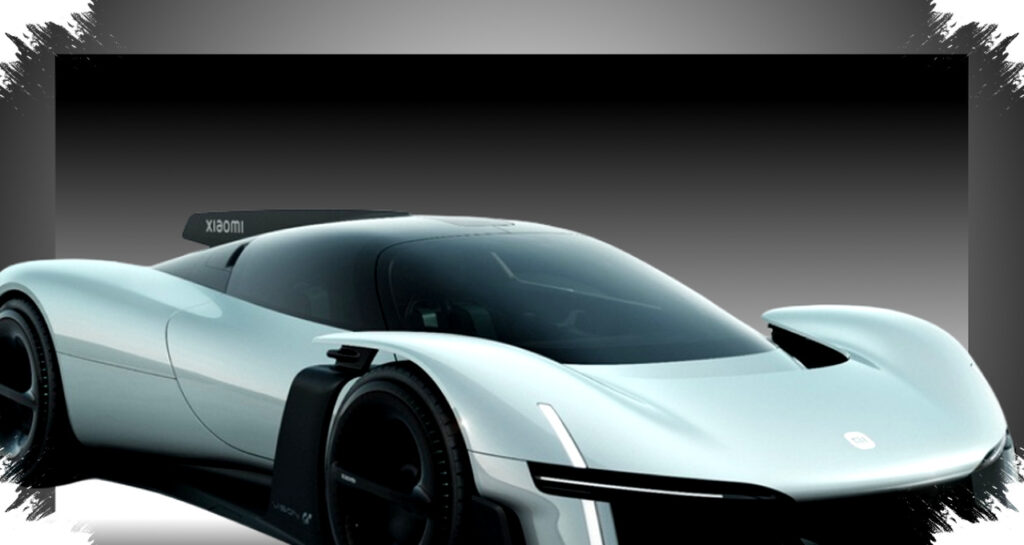
Xiaomi has entered the digital hypercar arena with the launch of its Vision Gran Turismo, designed exclusively for the popular racing game Gran Turismo 7. This marks Xiaomi as the first pure technology brand to join the Vision Gran Turismo project, a virtual platform where leading auto manufacturers showcase futuristic concept cars. The announcement took place in Barcelona, signaling Xiaomi’s move beyond electric production vehicles into virtual automotive innovation.
This digital hypercar carries Xiaomi’s design philosophy of "Sculpted by the Wind," focusing heavily on aerodynamic efficiency and visual fluidity. Leading the design was Tianyuan Li’s team, crafting a teardrop-shaped silhouette from above. The car’s cockpit integrates seamlessly into a body rich with air channels and aerodynamic vents. This design achieves a drag coefficient of only 0.29 while generating considerable downforce of -1.2 and maintaining an aerodynamic efficiency rating of 4.1. These figures indicate that the car remains sleek at high speeds on straights but ensures strong stability during fast cornering.
Advanced Aerodynamics and Innovative Features
One of the standout technical innovations in the Xiaomi Vision Gran Turismo is the use of the Active Wake Control System. This system collaborates with specially designed Accretion Rims to optimize airflow around the wheels. Instead of merely being aesthetic, the rear halo-shaped lights serve as substantial air ducts that enhance both cooling and vehicle stability. Kazunori Yamauchi, the creator of Gran Turismo, praised Xiaomi’s digital hypercar as a "role model" for modern automotive design, reflecting its forward-thinking aerodynamic engineering.
Distinctive “Sofa Racer” Interior Concept
Unlike traditional racing interiors, the Vision Gran Turismo introduces an innovative “Sofa Racer” cabin layout. The dashboard, doors, and seating merge into a continuous circular design akin to a futuristic lounge. This unique approach emphasizes comfort and immersion rather than pure functionality. Xiaomi leverages its expertise as a technology company by embedding its “Human x Car x Home” ecosystem into the vehicle. Features like Xiaomi Pulse enable the hypercar to interact using light and sound. More impressively, it can detect the driver’s mood and dynamically adjust the cabin’s ambiance to suit emotional states. This seamless integration between machine and driver highlights Xiaomi’s strength in smart living technology.
Bridging Real-World Racing and Virtual Performance
Xiaomi’s Vision Gran Turismo project follows the success of their SU7 Ultra, an electric hypercar that achieved a record-setting lap at the Nürburgring circuit in Germany. Through its digital hypercar, Xiaomi extends its competitive spirit to the virtual domain, pitting itself against historic automotive powerhouses such as Ferrari and Porsche within Gran Turismo 7. This effort speaks to Xiaomi’s ambition to become a major player in high-performance electric vehicles, leveraging both physical engineering and digital innovation.
Key Technical Specifications of Xiaomi Vision Gran Turismo:
- Drag Coefficient: 0.29
- Downforce: -1.2
- Aerodynamic Efficiency: 4.1
- Active Wake Control System for optimal airflow
- Accretion Rims wheel technology
- Halo-shaped rear lights functioning as air ducts
- Integrated Xiaomi Pulse smart interaction system
While Xiaomi’s Vision Gran Turismo currently exists only in the virtual racing world, its technological advancements and design philosophies are likely to influence future production models. The hypercar’s aerodynamic technologies and smart cabin ecosystem exemplify the fusion of automotive performance and advanced digital technologies. With this project, Xiaomi showcases how a technology brand can redefine what a high-performance electric vehicle can represent, both virtually and potentially on real roads.
Xiaomi’s entrance into the Vision Gran Turismo universe signals a new chapter in automotive innovation, blending digital creativity with deep aerodynamic science and smart technology. This move not only raises the profile of digital hypercars but also foreshadows developments in physical electric hypercars. Continued integration of such cutting-edge features may soon materialize in Xiaomi’s forthcoming production vehicles, enhancing driver experience and performance through intelligent design.
For enthusiasts of both automotive design and digital gaming, Xiaomi’s Vision Gran Turismo is a pioneering example of how technology companies can expand into traditionally automotive domains. Its debut in Gran Turismo 7 promises to inspire worldwide gamers and engineers alike, pushing the boundaries of what electric hypercars can achieve in virtual and real environments.