


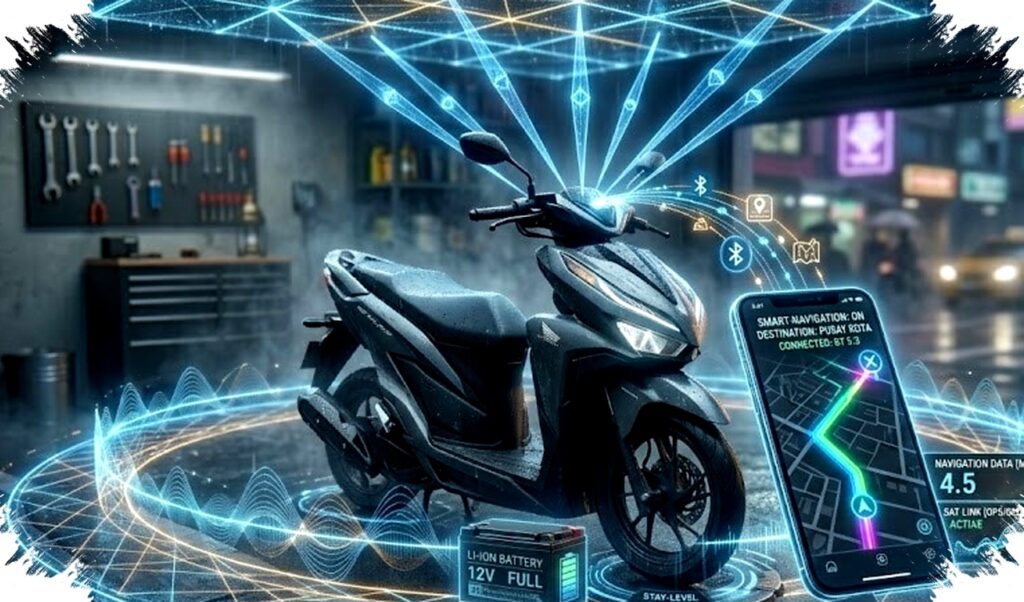
The 2026 Honda Stylo 160 introduces a revolutionary Smart-Navigation feature that merges convenience with safety for riders during their travels. This system links your smartphone directly to the motorcycle’s digital dashboard, allowing turn-by-turn directions to be displayed without the need for a phone holder. By removing the traditional external mount, riders can enjoy navigational guidance while keeping their hands free and focus on the road, enhancing overall riding safety.
At its core, the Smart-Navigation system utilizes Bluetooth to connect the smartphone to the motorcycle’s instrument panel wirelessly. Once paired, navigation data from the phone’s map application seamlessly appears on the dashboard screen. This integration ensures that riders never have to glance away to check their phones, reducing distractions and streamlining the journey planning process. The dashboard displays clear and concise guidance such as the next turn direction, distance to the destination, and orientation, all designed to keep riders informed without overwhelming the display.
How Smart-Navigation Works on the Honda Stylo 160
- Download the official Honda connectivity app on your smartphone.
- Enable Bluetooth and open the app to scan and pair with the motorcycle.
- Once connected, the dashboard will indicate active linkage through an icon.
- Select your route on the smartphone’s map application.
- Navigation cues are transmitted automatically to the dashboard’s display.
This straightforward connection eliminates the hassle of mounting your phone on the handlebar, which traditionally exposed devices to weather risks or accidental drops. With this system, smartphones can be safely stowed in pockets or compartments. This not only safeguards your device but also reduces distractions and physical clutter on the handlebars, contributing to a cleaner and more comfortable riding experience especially during longer trips or the seasonal homecoming journeys known as mudik.
Beyond navigation, the Stylo 160’s connectivity suite can manage additional features such as incoming call alerts and message notifications, thereby transforming the motorcycle into a smart, connected vehicle. This reflects a broader trend in the motorcycle industry toward integrating digital technology and connectivity solutions primarily seen in automobiles. Industry experts note that these advances elevate user experience by merging performance with digital convenience, making two-wheel travel smarter and safer.
The dashboard interface of Honda Stylo 160 is crafted for simplicity and readability. Designers prioritized minimalism to ensure information is visible at a glance without causing rider distraction. Display elements utilize bold icons and clear fonts to relay directions efficiently. This thoughtful UI design makes it easier for riders to maintain attention on the road while staying informed about their route progression.
This innovation in motorcycle navigation technology proves especially beneficial for those traveling to unfamiliar places. Whether riders are navigating crowded city streets or venturing on intercity highways during festive seasons, the Smart-Navigation feature simplifies route following. Riders can reduce frequent stops to check phones or reorient themselves, thus maintaining smoother and more confident rides.
The Honda Stylo 160’s Smart-Navigation also represents a step forward in bringing intelligent connectivity to everyday motorcycling. Integrated technology such as this enhances the overall value proposition and appeal of scooters by blending utility, safety, and modern digital lifestyle compatibility. It encourages riders to embrace new tech solutions that improve convenience without compromising mobility or control.
In summary, the 2026 Honda Stylo 160’s integrated Smart-Navigation system offers a practical, intuitive way for motorcyclists to handle navigation needs. The wireless connectivity and dashboard integration remove the traditional constraints of phone holders and screen distractions. This aligns well with the growing demand for smarter, connected motorcycles designed to meet the needs of contemporary urban and suburban commuters. As motorcycles continue evolving beyond pure mechanical machines into digitally connected platforms, innovations like these pave the way for safer, more seamless mobility experiences.