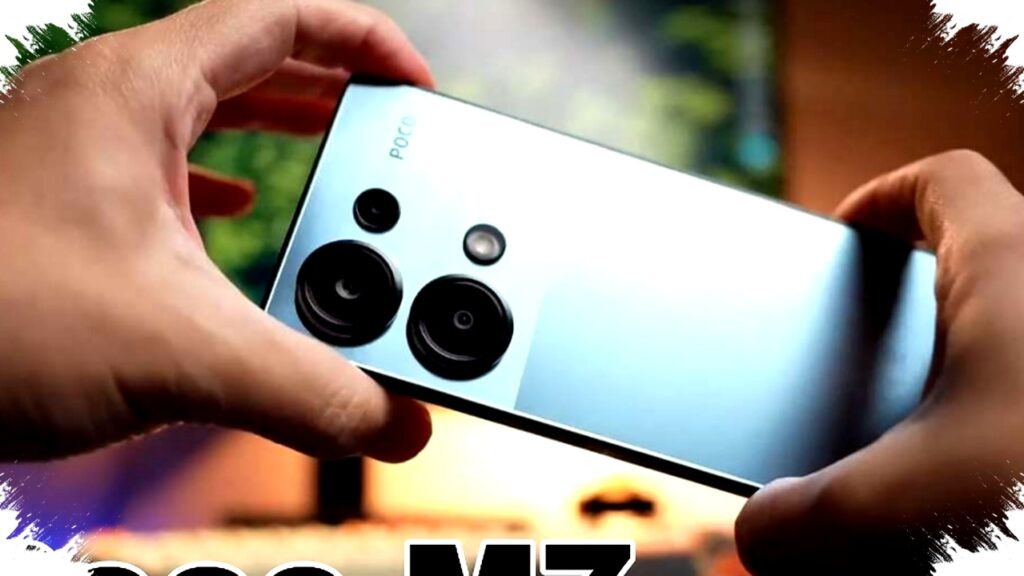
POCO has expanded its entry-level lineup in Indonesia with the launch of the POCO M7, a smartphone aimed at users who want a large battery, a sharp display, and a price that stays close to the $130 mark. At an official starting price of about $130, the phone tries to answer a simple demand in the budget segment: long battery life without giving up a Full HD+ screen.
The device arrives at a time when many buyers in this class are comparing daily usability more than benchmark numbers. POCO M7 focuses on that need with a 7,000mAh battery, a 6.9-inch FHD+ display, and a design that still looks modern enough for younger users.
What POCO M7 offers in the budget segment
POCO positions the M7 as a practical option for students, first-time smartphone buyers, and users who want a secondary phone with strong endurance. The formula is clear, because the company combines a large battery, a high refresh rate panel, and a fairly clean software package in a single device.
The phone is sold in one memory configuration, 8GB RAM and 256GB storage, which is relatively generous for its price class. It also runs Android 15 with HyperOS 2 and is promised two software updates, a detail that improves its long-term appeal.
Key specifications at a glance
| Feature | POCO M7 |
|---|---|
| Price | Starting around $130 |
| Battery | 7,000mAh |
| Charging | 33W wired charging |
| Reverse charging | 18W |
| Display | 6.9-inch IPS, FHD+ |
| Refresh rate | 144Hz |
| Main camera | 50MP |
| Front camera | 8MP |
| Chipset | Snapdragon 685 |
| Memory | 8GB/256GB |
| Software | Android 15, HyperOS 2 |
| Protection | IP64 |
The strongest headline feature is the battery, because 7,000mAh still stands out in a market where many phones in this bracket settle for smaller cells. POCO also includes a 33W charger in the box, which matters for users who do not want extra accessory costs.
Battery life is the main selling point
A 7,000mAh battery usually translates into less anxiety during heavy daily use. For many users, that means social media, video streaming, messaging, and light gaming can last through a full day and beyond with less need to hunt for a charger.
POCO adds 18W reverse charging, so the M7 can also serve as an emergency power source for another device. That feature is useful for earbuds, another phone, or a watch, although the phone’s large battery and thickness show that POCO prioritized endurance over slimness.
The company has not used silicon-carbon battery technology here, so the body remains relatively thick compared with some newer competitors. That is a trade-off buyers may notice immediately in hand, but it also helps explain the phone’s capacity and pricing strategy.
A large FHD+ screen for entertainment and gaming
The POCO M7 uses a 6.9-inch IPS display with Full HD+ resolution and a 144Hz refresh rate. That combination makes the screen one of the phone’s more attractive features, especially for reading, scrolling social feeds, and watching video content.
The panel is not AMOLED, so it will not match premium contrast or deep blacks. Even so, an IPS screen at this price remains acceptable, and the sharp FHD+ resolution should feel more refined than standard HD+ panels found on cheaper devices.
The 144Hz refresh rate also helps the phone appear smoother during everyday navigation. Users who play lighter games or enjoy fast scrolling will likely appreciate that extra fluidity, even if the chipset limits heavy gaming expectations.
Design stays simple but looks current
POCO gives the M7 a fairly clean rear design with a vertical camera module and a slim camera bump. It is available in Midnight Black, Titan Gray, and Ripple Green, which gives buyers some personality without making the phone look overly flashy.
The front side uses a punch-hole cutout for the selfie camera, which makes the display feel more modern than older waterdrop styles. However, the bezels remain noticeable, and that is another reminder that this phone competes in the affordable category rather than the premium one.
Water and dust resistance also improves practicality, because the phone carries an IP64 rating. That level should help against splashes and dust exposure in daily use, although it is not intended for full water immersion.
Camera setup aims for basic everyday use
The rear camera system is led by a 50MP main sensor, supported by an additional camera whose exact resolution was not specified. POCO also adds AI-based processing to help improve scenes in lower light, which can be useful for casual photography.
The 8MP front camera is aimed at selfies and video calls, and it should be enough for social media use. This is not a camera-focused phone, but the hardware is consistent with the needs of buyers in this segment who mainly want dependable point-and-shoot results.
For users who prioritize camera quality above all else, the M7 may not be the strongest pickup in its class. Still, the phone covers the basics and adds enough software support to make everyday imaging workable.
Performance is adequate, but the chipset is not new
Inside the POCO M7 is Qualcomm’s Snapdragon 685, a 6nm processor that is no longer among the newest chips in the market. Even so, it still has enough power for messaging, browsing, video streaming, and popular light games such as Mobile Legends.
The phone is not built for demanding 3D gaming or long sustained heavy workloads. That limitation matters because competitors in the same price range are starting to offer more aggressive performance tuning, which could attract buyers who want more speed per dollar.
POCO includes only a single speaker and removes the 3.5mm headphone jack. That may disappoint users who still prefer wired audio, and it also means the entertainment experience is less immersive than phones with stereo sound.
How it compares with rivals in the same price band
The $130 smartphone category is crowded, and POCO M7 faces rivals such as the TECNO Pova 7, Infinix Hot 60 Pro, and Samsung Galaxy A07. Each competitor focuses on a different balance of performance, battery life, software, and brand preference.
That makes POCO M7 a choice for users who value battery endurance and a high-refresh FHD+ screen more than raw speed. Buyers who want stereo speakers, a newer chipset, or different camera tuning may find stronger value elsewhere, depending on current local pricing and promotions.
- Long battery life is the biggest advantage.
- The display is sharper and smoother than many phones at this price.
- The chipset is usable, but it is already aging.
- The included charger adds value and reduces extra spending.
- The IP64 rating and Android 15 support improve day-to-day practicality.
POCO M7 therefore lands as a balanced budget phone for people who want a dependable daily driver rather than a performance-first device. With its large battery, FHD+ display, and official pricing around $130, it enters one of the most competitive segments in the market while keeping the focus on endurance and usability.