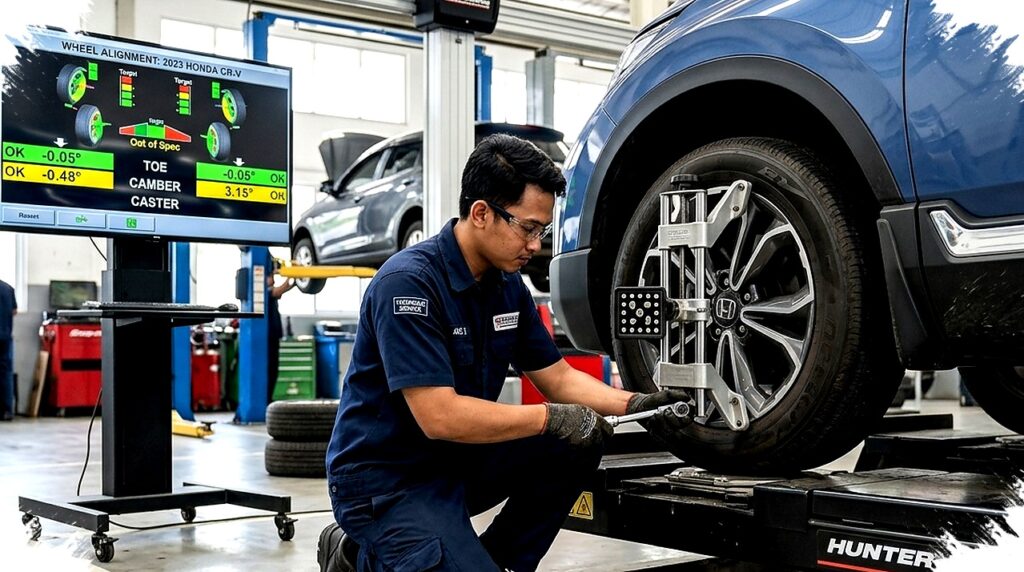
If your steering wheel suddenly pulls to the left after a long holiday road trip, the most likely cause is a wheel alignment issue or an imbalance in the suspension and tire system. The problem often shows up after driving over potholes, uneven roads, or carrying heavy loads during the trip home.
A post-journey inspection matters because a car that no longer tracks straight can become harder to control and less safe at higher speeds. That is why a promo package for spooring, balancing, and free nitrogen refill can be a practical way to restore stability without waiting for the problem to get worse.
Why the steering wheel can drift left after traveling home
A steering wheel that pulls to one side usually means the wheel angles have changed from factory specifications. When a car hits a pothole or a sharp bump, parts such as the tie rod, camber, and toe can shift slightly, and that small change is enough to affect the direction of travel.
The driver may notice the car drifts left even when the steering wheel is held straight. In some cases, the wheel also does not return smoothly after a turn, which is a common sign that the front-end geometry needs attention.
Heavy luggage and long-distance driving can make the problem more obvious. Extra load increases stress on the tires, suspension, and steering components, especially on roads that are not smooth.
What spooring and balancing actually do
Spooring is the process of adjusting wheel alignment so the tires point in the correct direction again. Balancing is different, because it focuses on distributing wheel weight evenly so the tires rotate without vibration.
Both services work together to improve stability, reduce steering pull, and make the car feel more composed on the road. After a trip that includes rough surfaces or repeated impacts, these checks often help restore normal handling.
According to the Indonesian Ministry of Transportation, vehicle stability is strongly influenced by the condition of the suspension and wheel alignment. SAE, the Society of Automotive Engineers, also notes that incorrect wheel alignment can cause uneven tire wear and shorten component life, while also increasing rolling resistance that can affect fuel efficiency.
Signs your car needs alignment after mudik
Drivers should pay attention to several common symptoms after long-distance travel. These signs often appear gradually, but they should not be ignored.
- The steering wheel does not sit straight when the car moves forward.
- The car pulls to the left or right without steering input.
- Tires wear unevenly on one side.
- The steering wheel vibrates at certain speeds.
- The wheel does not return naturally after turning.
If these symptoms continue, the problem can spread to other parts such as the suspension system, steering linkage, and tires. That can raise repair costs later and reduce driving comfort in daily use.
Why free nitrogen refill adds value
Many service promos now include free nitrogen filling together with alignment and balancing. This matters because nitrogen pressure tends to stay more stable than regular air across changing temperatures.
Stable tire pressure helps maintain more consistent handling during long drives and daily commuting. It can also reduce the chance of sudden pressure swings that may affect tire performance, especially after a vehicle has just gone through a demanding trip.
Nitrogen is not a cure for alignment problems, but it supports tire maintenance by helping the pressure remain closer to the recommended level. For drivers who just finished a holiday journey, that extra check can be useful before the car returns to regular traffic.
Why timing matters after a long trip
Post-mudik servicing is not only about convenience, but also about safety. A car that drifts to one side can force the driver to make constant corrections, which becomes tiring and increases risk on busy roads.
The longer alignment problems are left unchecked, the greater the chance of premature tire wear and strain on related parts. Small symptoms can turn into repair bills if the car continues to be used in that condition for weeks or months.
This is why many workshops recommend checking the undercarriage soon after a long journey. The sooner the issue is found, the easier it is to correct.
Simple checklist before booking the service
Here is a practical sequence drivers can follow after returning from a holiday trip:
| Step | What to check | Why it matters |
|---|---|---|
| 1 | Steering wheel position | Detects whether the car still tracks straight |
| 2 | Tire wear pattern | Reveals uneven contact with the road |
| 3 | Vibrations at speed | Helps identify balance issues |
| 4 | Suspension response | Shows whether impact has affected the undercarriage |
| 5 | Tire pressure | Confirms the tires are within recommended limits |
If one or more of these signs appear, a spooring and balancing session is usually worth considering. Adding a nitrogen refill can also help keep tire pressure more consistent after the service.
What drivers should expect after service
After proper alignment and balancing, the difference is often easy to feel. The steering wheel should sit more naturally, the car should move straighter, and vibration should decrease at cruising speed.
The ride may also feel smoother because the tires now spin with better weight distribution. In daily use, that can support better comfort and help extend the life of the tires and nearby components.
For drivers who often use their cars for family travel, this kind of maintenance is a smart follow-up after holiday congestion and rough roads. It helps return the vehicle to a safer baseline before the next long trip begins.
Why a promo can be a smart decision
A service package that combines spooring, balancing, and free nitrogen refill gives drivers three benefits at once. It addresses the pulling issue, reduces vibration, and helps maintain tire pressure without extra cost for the refill.
That makes the promo useful not just for cost savings, but also for preventive maintenance. When a car starts to pull left after mudik, quick action can protect safety, lower wear, and keep the vehicle ready for everyday driving.