


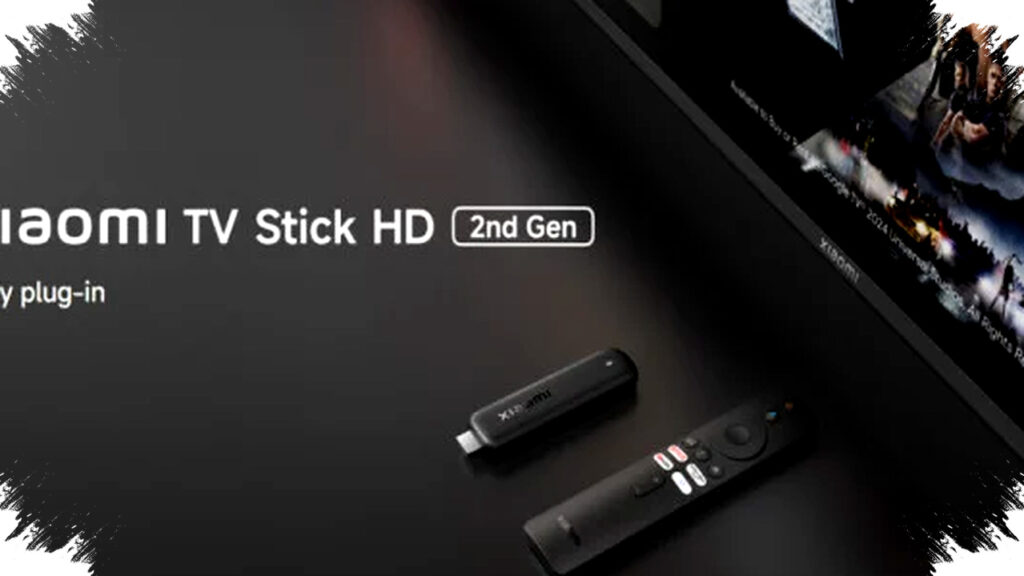
Xiaomi has quietly expanded its home entertainment lineup with the Xiaomi TV Stick HD (2nd Generation), a compact streaming device that is already listed on the company’s global website. The appearance suggests an international launch is close, and it positions the new model as a more affordable option alongside the existing TV Stick 4K.
The device is aimed at users who want to turn a regular TV into a smart TV without replacing the television itself. By plugging the stick into an HDMI port, users can access modern streaming apps, voice control, and a more personalized interface in a form factor that is easy to carry.
Google TV Brings a More Personal Interface
Xiaomi TV Stick HD (2nd Generation) runs Google TV, which gives it a stronger software edge in the entry-level streaming category. Google TV organizes content in a more user-focused way, with recommendations based on viewing habits and support for multiple user profiles.
That matters because many budget streaming devices still rely on simpler launcher-style interfaces. Google TV makes discovery easier by combining apps and recommendations in one place, while still giving direct access to popular services such as Netflix, YouTube, and Apple TV.
The inclusion of Google Assistant further improves usability. Users can search by voice, open apps, and control compatible smart home devices using the remote’s dedicated button, which reduces the need to move through menus manually.
Compact Hardware for Everyday Streaming
The Xiaomi TV Stick HD (2nd Generation) keeps the small, plug-and-play design that helped this product category become popular. It measures 107.4 x 30 x 14 mm and weighs about 44 grams, making it easy to move between rooms or pack for travel.
This portability is useful for people who stay in hotels, visit family, or use different screens at home. Since the device only needs HDMI access and power, it can quickly convert a basic television into a streaming hub in just a few steps.
- Plug the stick into an HDMI port.
- Connect the power cable through micro USB.
- Sign in to Google TV and install apps.
- Use the remote or voice control to start streaming.
Xiaomi also includes an HDMI extension cable and a USB power cable in the box. That can help in setups where the TV’s HDMI port is hard to reach or blocked by nearby wall mounts and cables.
Display and Audio Support Target Everyday Use
The new stick supports up to 1080p resolution at 60Hz, which keeps it focused on Full HD viewing rather than 4K playback. For many households, that is still enough, especially when the device is paired with older TVs or entry-level Full HD panels.
Xiaomi also adds HDR10+ support, which can improve contrast and boost detail in compatible content. The result should be better picture quality for supported streaming titles, even if the device does not target the premium 4K segment.
On the audio side, the device supports Dolby Audio and DTS:X. Those technologies can deliver a more immersive sound stage, but the real-world result still depends on the TV speakers or connected audio system being used.
AV1 Support Is One of the Key Upgrades
One of the standout technical additions is AV1 codec support. AV1 is designed to deliver better video efficiency than older codecs by maintaining quality while using less bandwidth, which is especially valuable for streaming over unstable or limited internet connections.
The device also supports VP9, H.265, and H.264, giving it broad compatibility with modern streaming services and media files. That flexibility matters because streaming platforms increasingly use newer compression standards to balance image quality and data usage.
For users, AV1 support can translate into smoother playback and more efficient streaming over Wi-Fi. It also helps future-proof the device as more services continue shifting toward newer codec formats.
Performance Gets a Measurable Boost
Inside, Xiaomi uses a quad-core Cortex-A55 processor paired with a Mali-G31 MP2 GPU. Xiaomi says CPU performance is up by as much as 38 percent compared with the previous generation, which should improve navigation and app loading.
The device includes 1GB of DDR4 RAM and 8GB of internal storage. That configuration is modest, but it is common in entry-level streaming hardware where the focus is on core playback and a few essential apps rather than heavy multitasking.
For streaming the interface, opening apps, and moving between services, the improved chip should deliver a smoother experience than older low-cost sticks. The real benefit will likely be most noticeable when switching between apps or waking the device from standby.
Connectivity and Remote Features Add Convenience
Xiaomi equips the TV Stick HD (2nd Generation) with dual-band Wi-Fi support at 2.4GHz and 5GHz. That should help users maintain steadier streaming performance, especially on busier home networks where 5GHz can offer better speeds and less interference.
Bluetooth 5.0 is also included, making it easier to connect wireless headphones, speakers, or other accessories. This is helpful for late-night viewing or for users who want to improve sound without adding a full home theater setup.
The bundled remote supports both Bluetooth and infrared control. Xiaomi also adds shortcut buttons for Netflix, Prime Video, and YouTube, giving users quicker access to popular apps without scrolling through the interface first.
Key Specifications at a Glance
| Feature | Xiaomi TV Stick HD (2nd Gen) |
|---|---|
| Operating system | Google TV |
| Resolution | Up to 1080p at 60Hz |
| HDR support | HDR10+ |
| Audio | Dolby Audio, DTS:X |
| Processor | Quad-core Cortex-A55 |
| GPU | Mali-G31 MP2 |
| RAM | 1GB DDR4 |
| Storage | 8GB |
| Connectivity | Dual-band Wi-Fi, Bluetooth 5.0 |
| Codec support | AV1, VP9, H.265, H.264 |
| Weight | About 44 grams |
The device is powered through micro USB, which is less modern than USB-C but still common in compact streaming hardware. Xiaomi has not announced the official price or global availability date yet, although its positioning suggests it will remain in the budget-friendly segment.
That makes the Xiaomi TV Stick HD (2nd Generation) a practical option for buyers who want Google TV, AV1 support, and voice control in a travel-friendly device. For households looking for an inexpensive upgrade path from a standard TV to a connected streaming setup, the new stick is shaping up to be one of Xiaomi’s most accessible home entertainment products.