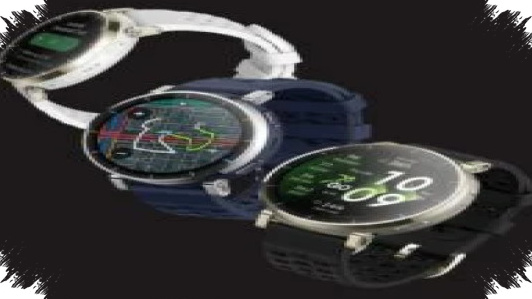
Amazfit has expanded its smartwatch lineup in India with two new models aimed at very different users: the Amazfit Active 3 Premium and the Amazfit T-Rex Ultra 2. The launch matters because both watches push beyond standard fitness tracking and bring brighter displays, stronger materials, and more AI-driven controls.
The Active 3 Premium targets users who want a stylish daily wearable with clear outdoor visibility and long battery life. The T-Rex Ultra 2, meanwhile, is built for tougher environments, with premium-grade titanium, a sapphire-protected display, and deeper outdoor and diving-focused features.
What Amazfit is positioning with these two models
Amazfit designed the Active 3 Premium as a more refined smartwatch for everyday use. It uses a 45mm stainless-steel case and a 1.32-inch AMOLED display that looks sharp at 466 × 466 pixels.
The headline number is brightness. The screen can reach up to 3,000 nits, which should help users read notifications and health data more easily under strong sunlight. That puts it in the category of premium smartwatches that aim to stay visible in harsh outdoor conditions.
The T-Rex Ultra 2 takes a different direction. It is meant for users who need stronger construction and more advanced outdoor capabilities. Amazfit uses Grade 5 titanium for the bezel and back cover, while the 1.5-inch AMOLED screen is protected by sapphire glass and 2.5D tempered glass.
That combination suggests a watch designed to withstand more demanding use, including travel, hiking, and water-based activities. Amazfit also highlights professional diving certification for the model, which places it above standard rugged smartwatches in terms of specialization.
Key specs at a glance
Amazfit Active 3 Premium
- 45mm stainless-steel case
- 1.32-inch AMOLED display
- 466 × 466 pixel resolution
- Up to 3,000 nits brightness
- Up to 12 days of typical battery life
- Amazfit T-Rex Ultra 2
- Grade 5 titanium bezel and back cover
- 1.5-inch AMOLED display
- Sapphire glass protection
- 2.5D tempered glass
- 64GB internal storage
- Up to 30 days of battery life
- 870mAh battery
The two models clearly serve different buyers, but both share a premium product strategy. Amazfit is not only selling health and sports tracking here, but also design, durability, and smarter software integration.
Zepp OS 5 and AI become the main software story
Both smartwatches run Zepp OS 5, the latest version of Amazfit’s operating system. That software layer is important because it connects the watches’ hardware upgrades with smoother daily use and better feature integration.
A key addition is Zepp Flow AI, which gives users voice-based control. That means users can manage certain functions in a faster and more natural way without relying heavily on touch input.
The watches also support Bluetooth calling. Amazfit includes both a microphone and speaker on each model, allowing users to answer calls from their wrist when their phone is nearby.
This is part of a broader trend in wearables, where smartwatch makers are trying to make the device act less like an accessory and more like a personal assistant. The integration of AI features reflects how brands now market smartwatches as productivity tools as well as fitness companions.
Health monitoring stays central
Amazfit continues to place health tracking at the center of the user experience. Both watches use the BioTracker 6.0 PPG sensor, which tracks heart rate, blood oxygen levels, and stress monitoring around the clock.
That sensor suite is now standard for premium rival smartwatches, but Amazfit’s implementation matters because it combines health data with the company’s broader software ecosystem. Users can expect continuous tracking rather than occasional snapshots, which is more useful for long-term well-being insights.
The T-Rex Ultra 2 also stands out for its 64GB of internal memory. That storage supports offline full-color global maps, a useful feature for users who explore remote areas or train outdoors without carrying their phone.
For athletes and travelers, that kind of offline mapping can be more practical than many typical smartwatch features. It also reinforces the T-Rex line’s identity as a rugged watch built for real-world navigation, not just workout summaries.
Battery life remains one of Amazfit’s strongest selling points
Battery performance often decides whether a smartwatch feels useful or frustrating. In this area, Amazfit is making a strong claim with both watches.
The Active 3 Premium is rated for up to 12 days of typical use. That is competitive for a premium smartwatch with an AMOLED screen and advanced health tracking.
The T-Rex Ultra 2 goes far beyond that with its 870mAh battery and claimed endurance of up to 30 days. That number depends on usage, of course, but it still signals a major advantage for users who hate frequent charging.
This long battery life is especially relevant for outdoor users. Hikers, divers, and travelers often need devices that can last through long trips without looking for a charger every night. Amazfit appears to understand that need and is using battery as one of its main differentiators.
Why these launches matter in the smartwatch market
The smartwatch market has become crowded, but Amazfit keeps finding room by focusing on value, battery life, and ruggedness. The Active 3 Premium and T-Rex Ultra 2 continue that approach, while adding more polished design and smarter software.
The Active 3 Premium appears aimed at buyers who want a fashionable watch that still feels practical. The T-Rex Ultra 2, by contrast, targets users who care more about strength, navigation, and long endurance.
Both watches also show how wearable brands are responding to consumer demand for AI features. Voice control, health insights, and faster interaction now matter as much as step counts and workout modes.
From a product strategy perspective, the launch gives Amazfit two clear stories to tell. One is lifestyle and elegance, and the other is endurance and outdoor performance.
Market detail and pricing context
Amazfit has launched the devices in India, where competition in smartwatches remains intense across multiple price tiers. The Active 3 Premium is listed at around $190 USD based on the reported price of Rs. 15,999, placing it in the upper mid-range segment.
That pricing puts pressure on rivals that offer similar battery life or AMOLED displays but lack premium materials or AI-driven features. It also helps Amazfit attract users who want a balanced mix of design, smartwatch functions, and dependable health tracking without moving into flagship-price territory.
There is no reported conversion for the T-Rex Ultra 2 in the source data, but its hardware suggests it will sit above the Active 3 Premium in both capability and cost. The titanium build, sapphire protection, offline maps, and larger battery make it the more specialized of the two.
For buyers comparing options, the choice is now more straightforward. The Active 3 Premium suits users who prioritize daily wear comfort, bright display quality, and a premium look, while the T-Rex Ultra 2 is built for those who need a tougher companion with deeper outdoor credentials and longer autonomy.