


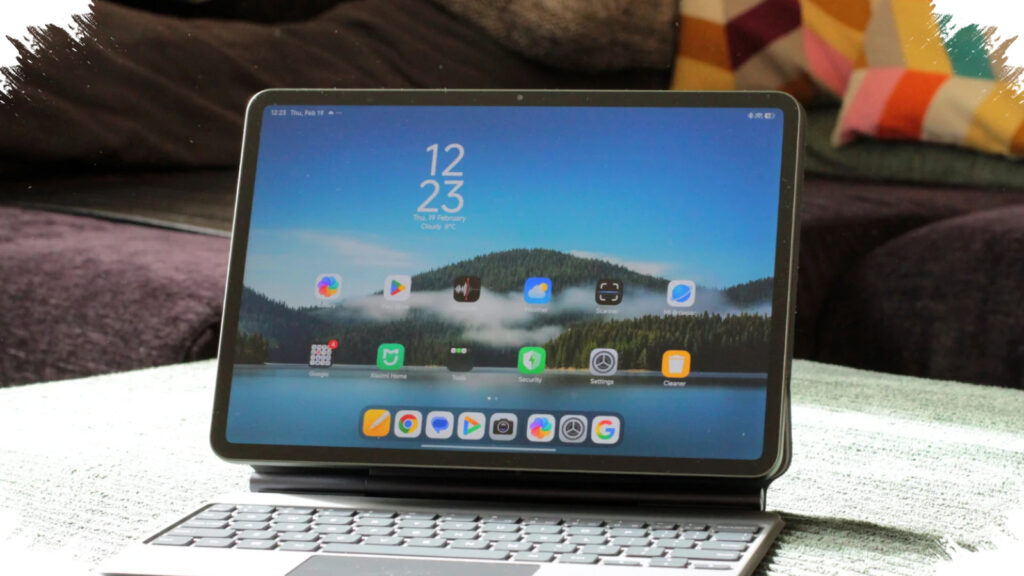
In 2026, the tablet market is moving closer to a real laptop alternative, especially for people who want one device for work, study, and entertainment. Xiaomi Pad 8 enters that space with a slim body, strong hardware, and a price that stays around the mid-range level, making it one of the most attention-grabbing tablets in the $350 class.
The appeal is simple: users want a tablet that feels fast, lasts long, and can handle multitasking without forcing them to carry a laptop everywhere. Xiaomi aims to solve that problem with Snapdragon 8s Gen 4, a 3.2K display, a large battery, and software features built around productivity and AI.
Why Xiaomi Pad 8 stands out in the mid-range tablet segment
Xiaomi Pad 8 does not try to be just a media tablet. It is designed to handle daily work tasks, classroom use, casual creative work, and long streaming sessions in one package.
The company positions it as a tablet with “PC-level productivity,” and that idea is visible in its software tools. Workstation Mode, split screen support, and cross-device features give it a more laptop-like feel than many Android tablets in the same price tier.
One of the most interesting features is its ability to act as a secondary display for a MacBook. That kind of interoperability is still uncommon in Android tablets, and it adds practical value for users who already work inside a mixed-device setup.
Core specifications that shape the experience
Xiaomi Pad 8 uses the Snapdragon 8s Gen 4 chipset built on a 4nm process. According to Xiaomi’s own claims, the new chip brings up to 32% better CPU performance and 67% better GPU performance compared with the previous generation.
That matters because tablet buyers often notice lag first during real use, not on spec sheets. A faster chip helps with switching apps, light editing, note-taking, browser tabs, and gaming stability.
The display is an 11.2-inch panel with 3.2K resolution, or 3200 x 2136 pixels. It also supports a 144Hz refresh rate and Dolby Vision, which should make scrolling smoother and visuals more vivid for streaming and gaming.
The battery is another major selling point. Xiaomi includes a 9200mAh battery with 45W fast charging, which should help users get through a full day of productivity and entertainment without constant charging breaks.
Audio also gets attention through quad speakers with Dolby Atmos. For users who watch movies, join video calls, or play games without headphones, this is a meaningful upgrade.
Key specifications at a glance
| Feature | Xiaomi Pad 8 |
|---|---|
| Chipset | Snapdragon 8s Gen 4 |
| Display | 11.2-inch, 3.2K (3200 x 2136) |
| Refresh rate | 144Hz |
| Battery | 9200mAh |
| Charging | 45W fast charging |
| Speakers | Quad speakers with Dolby Atmos |
| OS | HyperOS 3 based on Android 16 |
| Rear camera | 13MP |
| Front camera | 8MP |
| Connectivity | WiFi only |
Who Xiaomi Pad 8 is best for
Xiaomi Pad 8 targets users who need flexibility more than extreme power. It fits students who want a large screen for reading, annotating, and switching between apps.
It also suits remote workers who spend time on documents, spreadsheets, video meetings, and presentation files. Light creators can use it for basic photo editing or simple video trimming, while entertainment users will benefit from the sharp display and immersive sound.
Here is a simple breakdown of the most suitable user groups:
- Students who take notes and multitask across apps
- Remote workers who need Zoom, documents, and presentations
- Light creators who edit photos or short videos
- Entertainment users who stream video or play casual games
For these groups, the tablet can replace a lightweight laptop for many daily tasks. But for heavy video editing, professional design work, or advanced multitasking workflows, a full laptop still makes more sense.
Software and AI features matter more than many buyers think
Xiaomi Pad 8 runs HyperOS 3 based on Android 16, and the software layer is part of the product story. Xiaomi is clearly trying to build a smoother experience across devices, not just sell better hardware.
That approach matters because many tablets offer strong chips but weak software optimization. A tablet can have a fast processor and still feel limited if app switching, window handling, or file management is clumsy.
AI features also play a growing role in 2026 tablet use. Xiaomi has built this device with efficiency and AI in mind, which should help with tasks like content assistance, workflow shortcuts, and better system responsiveness over time.
What buyers should know before choosing it
The Xiaomi Pad 8 offers strong value, but it is not perfect for every buyer. It uses WiFi only connectivity, so there is no SIM card support for users who want always-on mobile data.
Accessory support is part of the appeal, but keyboard and stylus add-ons are sold separately. That means the real cost can rise if you plan to use it like a compact laptop replacement.
Another limitation is performance scope. While Xiaomi Pad 8 is powerful for its class, it is still a tablet first. It can handle work and study tasks well, but it is not built to fully replace a laptop for demanding professional workloads.
Why the price makes it competitive
The global estimated price is around $350, which places Xiaomi Pad 8 in a highly attractive segment for buyers who want premium-like features without paying premium-tablet money.
At that price, the combination of Snapdragon 8s Gen 4, 3.2K display, 144Hz refresh rate, large battery, and Dolby Atmos speakers creates a strong value proposition. In the Android tablet market, that balance is often more important than one standout feature.
Many buyers compare tablets not only by hardware, but by whether they can genuinely support everyday life. Xiaomi Pad 8 scores well because it covers both sides of the equation: work on weekdays and entertainment at night.
Practical buying points to consider
- Choose Xiaomi Pad 8 if you want strong value for work and entertainment.
- Consider accessories if you plan to type often or sketch regularly.
- Look at WiFi-only support if you need mobile data on the go.
- Compare it with laptops if your workload involves heavy editing or pro-level software.
The tablet’s strongest argument is balance. It combines a fast chip, a sharp display, a large battery, and productivity-focused software in a body that stays slim and easy to carry.
For users in the mid-range market, that balance can matter more than raw benchmark numbers. Xiaomi Pad 8 looks built for people who want one device that can move from class notes to video calls to streaming without feeling underpowered.