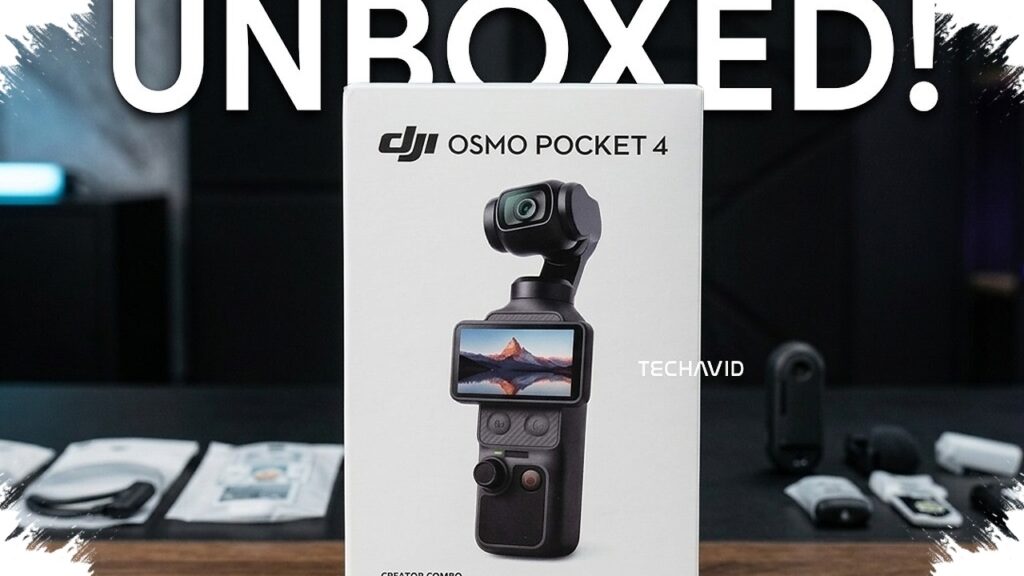
DJI has officially set the launch of the Osmo Pocket 4 for April 16 at 12 PM GMT, and the announcement has quickly drawn attention from vloggers, mobile filmmakers, and compact camera fans. The new model is expected to refine the formula that made the Pocket series popular: a tiny body, stabilized footage, and tools that make solo content creation easier.
The biggest upgrade tied to the upcoming model is a 1-inch sensor, which should give the camera a stronger edge in low light and a more cinematic look. DJI also appears to be targeting creators who want more control in post-production, with the teaser and leaks pointing to improved dynamic range and workflow-friendly features.
What DJI has confirmed so far
DJI has now officially teased the product and locked in the release date, but it has not published the full spec sheet yet. Even so, the message is clear: the Osmo Pocket 4 is being positioned as a serious upgrade for creators who want professional-looking footage from a pocket-sized device.
The teaser language hints that image quality will be the main selling point this time. That fits the broader market trend, where compact cameras are no longer judged only by portability, but also by how well they can handle challenging light, skin tones, and fast-moving scenes.
Key rumored specifications
Based on the current leaks and reference data, the standard Osmo Pocket 4 is expected to keep the familiar compact design that made earlier Pocket models easy to carry and fast to use. It should still feature the small rotating screen and the ergonomic grip that help users shoot quickly without external accessories.
The most important rumored changes are centered on the camera hardware and video pipeline. Here are the details currently circulating:
- 1-inch image sensor for better light capture
- Up to 14 stops of dynamic range
- 10-bit D-Log support for color grading
- 107GB of internal storage
- Transfer speeds up to 800MB/s
- New customizable button near the hinge area
These upgrades would make the device more appealing to creators who need flexibility, especially when they edit footage on the go. A larger sensor usually means better detail, cleaner shadows, and stronger performance in indoor or night scenes.
Why the 1-inch sensor matters
A 1-inch sensor is a meaningful step for a pocket camera because it can collect more light than smaller sensors used in many compact devices. In practical use, that should translate into less noise, richer detail, and better highlight control when the scene becomes difficult.
The reported 14 stops of dynamic range also matter because they help preserve both bright and dark areas in the same frame. For creators filming landscapes, city scenes, or mixed indoor lighting, that extra latitude can reduce the need for heavy correction in editing.
Built for creators who edit their footage
The leak about 10-bit D-Log support suggests DJI wants the Osmo Pocket 4 to appeal beyond casual users. D-Log gives editors a flatter color profile that holds more image information, which is useful for creators who want more precise control over contrast and color.
That kind of feature has become more important as mobile workflows improve. Many creators now shoot, transfer, and publish quickly from the field, so a camera that records flexible footage can save time later in post-production.
Storage and transfer could be a major advantage
One of the more practical rumored upgrades is the 107GB internal storage. That amount of built-in space would help users record longer sessions without depending immediately on memory cards or external storage.
The claimed 800MB/s transfer speed is also notable, because it can reduce the time needed to move large video files to a computer or editing device. For creators who shoot in high bitrate or high-resolution formats, faster transfer can be just as valuable as a better sensor.
Possible DJI Osmo Pocket 4 Pro model
The most intriguing rumor around the launch is the possibility of a Pro version. According to the leaks, this model could use a dual-camera setup, which would be a first for the Pocket line.
If true, the dual-camera approach could give users more focal length options and greater flexibility in framing shots. That would make the Pro model especially attractive for travel creators, interview shooters, and anyone who wants a more versatile all-in-one camera without carrying multiple devices.
What the rumored lineup could look like
| Model | Expected Focus | Notable Rumored Feature |
|---|---|---|
| Osmo Pocket 4 | Mainstream creator use | 1-inch sensor, 14 stops dynamic range |
| Osmo Pocket 4 Pro | Advanced creator use | Dual-camera configuration |
| Both models | Fast mobile workflow | Internal storage and high-speed transfer |
This split would let DJI target both casual buyers and more demanding users. It also mirrors the company’s broader strategy of offering compact gear that scales from basic recording to more serious production needs.
Why this launch matters for the market
The Osmo Pocket line has always occupied a special corner of the market because it combines gimbal stabilization with a camera that fits in a pocket. That formula mattered when action cameras and smartphones still struggled to deliver smooth, controlled footage in a small package.
Today, the competition is tougher, but the category still has room for devices that offer better image quality than a phone and more convenience than a traditional camera. If the Osmo Pocket 4 really brings a 1-inch sensor, stronger dynamic range, and faster workflow tools, DJI could strengthen its position in the premium compact creator segment.
What buyers will likely watch next
The main unknowns are price, regional availability, and whether the Pro version will launch alongside the standard model. DJI has not yet clarified those details, so potential buyers will need to wait for the official unveiling to see how aggressive the company wants to be with the new lineup.
If the leaked features prove accurate, the Osmo Pocket 4 could become one of the most talked-about compact creator cameras of the year, especially for users who want professional-looking footage without moving up to a larger camera system.