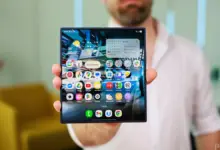
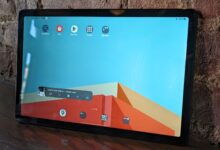
Xiaomi has officially brought the Pad 8 series to Indonesia, and the tablet is positioned as a serious option for users who want both productivity and gaming in one device. Priced at around $530, the Xiaomi Pad 8 enters the premium tablet segment with a package that already includes key accessories and a feature set aimed at daily work, entertainment, and creative tasks.
The launch matters because Xiaomi is not framing this device as a simple media tablet. It is being sold as a flagship-class Android slate that can handle multitasking, document editing, cloud-connected workflows, and demanding games without losing its lightweight tablet feel.
Flagship-level performance in a thin tablet body
Xiaomi Pad 8 uses the Snapdragon 8s Gen 3 chipset as its main engine. That choice puts it in a performance class that should be comfortable for heavy multitasking, light-to-medium content creation, and gaming workloads.
In benchmark stress testing mentioned by the source, the tablet recorded 87% stability in Wild Life. That figure suggests the device can hold performance during longer sessions, which matters more than peak speed for users who keep apps open for work or play.
Gaming results also look strong for this price range. Genshin Impact is reported to stay stable at 60 FPS, while Mobile Legends and Delta Force can reach 120 FPS.
Why the 3:2 display ratio matters
Xiaomi still uses an IPS panel on the Pad 8, so the screen does not move to OLED or AMOLED. Even so, the 3:2 aspect ratio is one of the most practical choices for a tablet that wants to serve productivity users.
The format gives more vertical space than the wider displays often found on tablets. That makes reading, writing, checking spreadsheets, and editing presentations feel more natural on a screen this size.
For users comparing tablets for mixed use, the display priorities are easy to map:
- Better vertical space for documents and web pages.
- More comfortable split-screen multitasking.
- A layout that favors work tasks over pure video consumption.
- IPS technology that still keeps the panel simple and efficient.
- A design choice that fits Xiaomi’s productivity-first message.
WPS Office PC-Level changes the value equation
One of the most important additions is WPS Office PC-Level. Xiaomi is clearly trying to close the gap between a tablet and a laptop by offering an office interface that feels closer to desktop software than a basic mobile app.
That matters for people who work on spreadsheets, prepare slides, or edit long documents directly from a tablet. In practice, a desktop-style office experience can be more valuable than raw benchmark scores, especially for buyers who need a device that travels well but still supports real work.
Focus Pen Pro and bundled accessories add real utility
Xiaomi also introduced the Focus Pen Pro as a companion tool for the Pad 8. The stylus includes a rotating pen mechanism that is said to resemble the idea behind Apple Pencil Pro, along with wireless haptic feedback.
For note-taking, drawing, and annotating files, a premium stylus can make a tablet feel far more complete. Xiaomi also ships the tablet with a Pogo Pin keyboard case and the stylus in the package, which strengthens the value proposition because buyers do not need to start from scratch.
There is one limitation worth noting. The official floating keyboard is not included in the Indonesia bundle, so users still rely on the keyboard case provided in the box.
HyperOS pushes the ecosystem angle further
Xiaomi uses HyperOS to make the tablet feel more connected to the rest of its device ecosystem. This is where the Pad 8 becomes more than just another Android tablet with a large screen.
The most notable ecosystem features include:
| Feature | Function |
|---|---|
| Home Screen Plus | Mirrors the screen of a Xiaomi phone to the tablet with very low latency |
| Xiaomi IoT Control | Controls smart home devices directly from the notification panel |
| Extra Camera | Uses a Xiaomi smartphone camera as an extra webcam during video calls |
These tools make the Pad 8 feel designed for users who already own Xiaomi phones or smart devices. Instead of working as a standalone gadget, the tablet becomes a central screen for mobile productivity and connected living.
A direct challenge to premium tablets in the market
At around $530, Xiaomi Pad 8 lands in a segment where buyers expect strong performance, good accessories, and software features that justify the price. Xiaomi is clearly targeting users who want one device to cover streaming, gaming, office work, and light creative tasks.
That positioning makes the Pad 8 a real challenger in a market usually dominated by larger premium brands. With Snapdragon 8s Gen 3 power, WPS Office PC-Level, Focus Pen Pro support, and deep HyperOS integration, Xiaomi is offering a tablet that aims to behave more like a compact productivity machine than a basic entertainment screen.