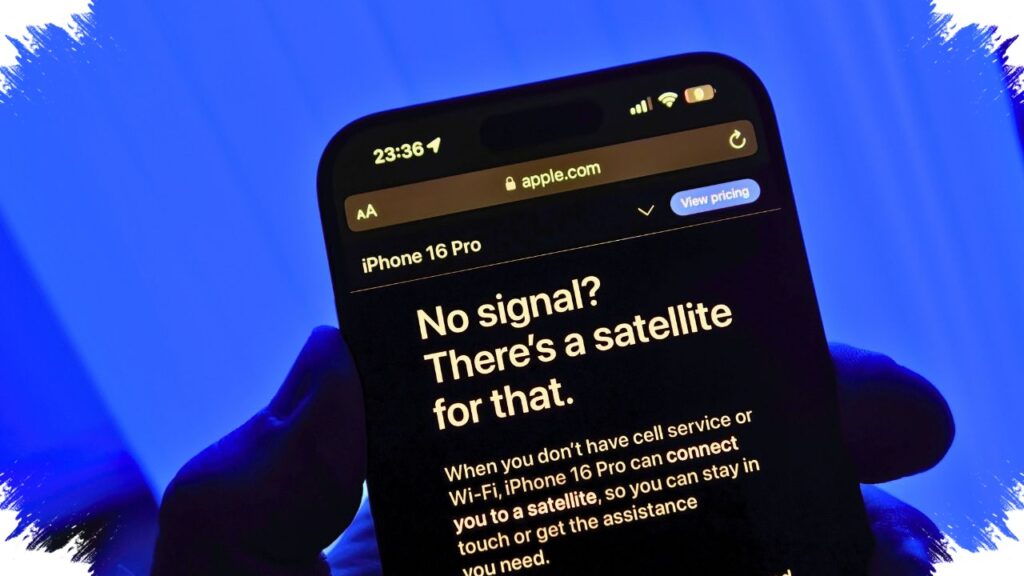
Amazon’s acquisition of Globalstar has quickly become one of the most important telecom stories for Apple users, because Globalstar has long powered satellite connectivity on selected iPhone and Apple Watch models. The move signals that satellite access on consumer devices is moving from a niche emergency feature toward a broader communications platform.
For iPhone owners, the immediate takeaway is simple: satellite service is not expected to disappear. Amazon said it signed an agreement with Apple to continue the services that Globalstar provided, which means emergency messaging and other satellite-based capabilities should remain available while Amazon expands its own low-Earth-orbit ambitions.
Why Globalstar mattered so much to Apple
Globalstar has played a central role in Apple’s satellite features since Apple introduced satellite connectivity on iPhone. The service helps users send messages when they are outside cellular and Wi‑Fi coverage, especially in emergencies or remote areas.
That dependence made Globalstar more than just a supplier. It became a critical infrastructure partner for Apple’s safety and connectivity strategy, with much of its capacity tied to Apple’s satellite needs.
Amazon’s decision to acquire that partner matters because it changes who controls a key layer of the network. At the same time, the agreement with Apple suggests continuity rather than disruption, which is the main reason the market has reacted with caution rather than alarm.
What Amazon is really building
Amazon is not buying Globalstar only to support Apple’s existing service. The company wants to strengthen Amazon Leo, its low-Earth-orbit satellite project aimed at direct-to-device connectivity.
That approach is becoming one of the most competitive areas in telecom, since it allows phones to connect directly to satellites without needing tower-based infrastructure. It could help deliver voice, text, and data in places where terrestrial networks do not reach.
Amazon has described the system as a way to help mobile operators extend service into remote regions, disaster zones, shipping routes, and other coverage gaps. The strategy puts Amazon in the middle of a fast-growing market that overlaps with telecom, emergency response, and consumer device connectivity.
What this means for iPhone connectivity
Apple users are watching this deal closely because the company has built a reputation for turning satellite access into a practical consumer feature. The service is especially valuable in areas where no cellular signal exists, such as hiking trails, rural highways, and disaster-hit locations.
The most important point is that Amazon has indicated continuity for Apple’s satellite service through the new arrangement. That lowers the risk of service interruption and keeps the door open for future improvements if Amazon’s wider satellite network expands as planned.
Possible effects for iPhone users include:
- More stable satellite coverage in edge-case locations.
- Better capacity if network demand rises.
- Wider regional service as more satellites come online.
- Possible expansion beyond emergency use over time.
Those benefits are not guaranteed immediately, because they depend on technical integration and future business decisions. Still, a larger network could improve reliability and coverage, which would matter most in situations where satellite access is a backup lifeline.
Why the deal matters beyond Apple
The acquisition also shows how satellite connectivity is becoming more strategic across the tech industry. Companies no longer see it only as a premium feature for select devices.
Instead, satellite networks are turning into an extra layer above traditional mobile infrastructure. That shift matters because coverage gaps remain common in many countries, and users increasingly expect basic connectivity everywhere they go.
A simple comparison highlights the broader impact:
| Stakeholder | Likely impact |
|---|---|
| Amazon | Gains satellite assets and speeds up its direct-to-device plans |
| Apple | Keeps satellite service continuity through a new agreement |
| Mobile operators | Get a potential new way to extend voice, text, and data coverage |
| Users | May benefit from broader and more stable satellite access |
That broader pattern explains why the transaction is being viewed as more than a corporate acquisition. It is part of a wider race to control the next layer of mobile connectivity.
The competitive stakes are rising
The satellite market is now drawing serious attention from major technology and telecom players. Low-Earth-orbit systems are attractive because they can support lower-latency services and broader geographic reach than traditional geostationary models.
For Amazon, acquiring Globalstar provides a faster route into direct-to-device services. For Apple, the agreement preserves a network partner that already supports a feature users may rely on in emergencies. For the industry, the deal confirms that satellite connectivity is becoming a mainstream infrastructure play rather than a futuristic experiment.
As Amazon integrates Globalstar into Amazon Leo, the key question is how far the company can scale the network without weakening the services Apple users already depend on. The answer will shape not only the future of iPhone satellite connectivity, but also how quickly direct-to-device communications become a normal part of mobile service.