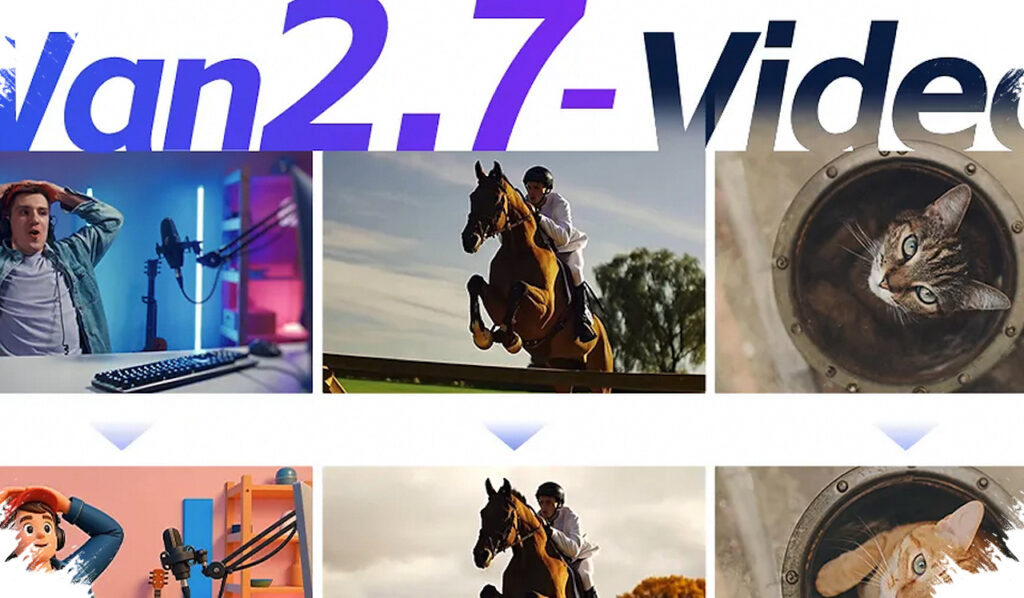
Alibaba has officially introduced Wan2.7, a new AI multimedia series that combines Wan2.7 Image and Wan2.7-Video. The launch marks a major step in Alibaba’s push to build more realistic, controllable, and efficient tools for creating visual content.
The new models are already available through Alibaba Cloud Model Studio and the Qwen app. For creators, that means a single ecosystem now covers image generation, video production, and editing with stronger consistency than many standard AI tools.
What Wan2.7 changes for creators
Wan2.7 Image is built to move beyond the generic outputs often seen in AI-generated visuals. Alibaba says the model focuses on deeper personalization, allowing users to create high-quality images from detailed text prompts while also handling bulk image processing for faster workflows.
The model also gives users precise control over color palettes, including the ability to adjust proportions by code. That level of control matters for brands, designers, and studios that need visual consistency across campaigns, product materials, or character designs.
Another key feature is improved facial detail editing, which helps generated characters look more distinctive and lifelike. In practice, this kind of control can reduce the flat, repetitive look that often limits the use of AI imagery in professional settings.
Why Wan2.7 Image matters for professional work
Alibaba says Wan2.7 Image can render text of up to 3,000 tokens in multiple languages. That makes it useful for technical visuals, charts, tables, and even academic-style layouts that require text accuracy.
The model also supports up to nine reference images at once. That feature expands creative flexibility, since users can combine multiple visual inputs to guide the final output more precisely.
For users who need higher output quality, Wan2.7 Image Pro can generate images up to 4K resolution. Alibaba also says the Pro version offers more stable composition and stronger prompt understanding, along with pixel-level editing for fine adjustments.
Wan2.7-Video pushes realism further
Wan2.7-Video extends the same idea into motion content. Alibaba describes it as a more professional video tool that covers multiple stages of production, from text-to-video generation to editing existing footage.
The model is designed to keep narrative continuity and character identity consistent, even when a scene includes up to five different subjects. That capability is important for storytelling, advertising, and short-form video, where continuity can easily break in AI-generated content.
Alibaba also says the system supports thousands of style combinations and a broad range of emotional expressions. Users can control cinematic elements such as camera movement and lighting through natural language prompts, which lowers the barrier for non-technical creators.
Key capabilities at a glance
- Wan2.7 Image: text-to-image generation with strong personalization
- Color palette control: adjustable color proportions by code
- Text rendering: supports up to 3,000 tokens in multiple languages
- Reference inputs: uses up to nine images for one output
- Wan2.7 Image Pro: up to 4K resolution and pixel-level editing
- Wan2.7-Video: text-to-video, image-to-video, editing, and video extension
- Video consistency: maintains characters and storytelling across multiple subjects
Alibaba’s bigger strategy in AI media
The release of Wan2.7 shows Alibaba’s broader intention to build a connected creative stack rather than separate tools for each format. By linking image creation and video generation in one system, the company is targeting professionals who need speed, control, and consistent output.
Alibaba said the Wan series has been evolving since its start in 2023, and Wan2.7 reflects that development into a more polished multimedia platform. That timeline suggests the company is not treating this as a one-off launch, but as part of a longer-term effort to compete in AI content creation.
The move also fits a wider industry trend, where AI platforms are shifting from simple generation toward production-ready workflows. Creators now expect stronger control over style, composition, motion, and editing, especially as brands and studios start using AI in real campaigns.
Why Wan2.7 could stand out in the market
Wan2.7 is notable because it does not focus only on raw generation quality. It also emphasizes control, consistency, and editing depth, which are the features that often separate experimental AI from tools that can support real production needs.
That approach could make the series more attractive to design teams, content studios, and marketers looking for visual assets that need to stay on brand. If Alibaba continues improving the system, Wan2.7 may become one of its most important AI media products in the months ahead.