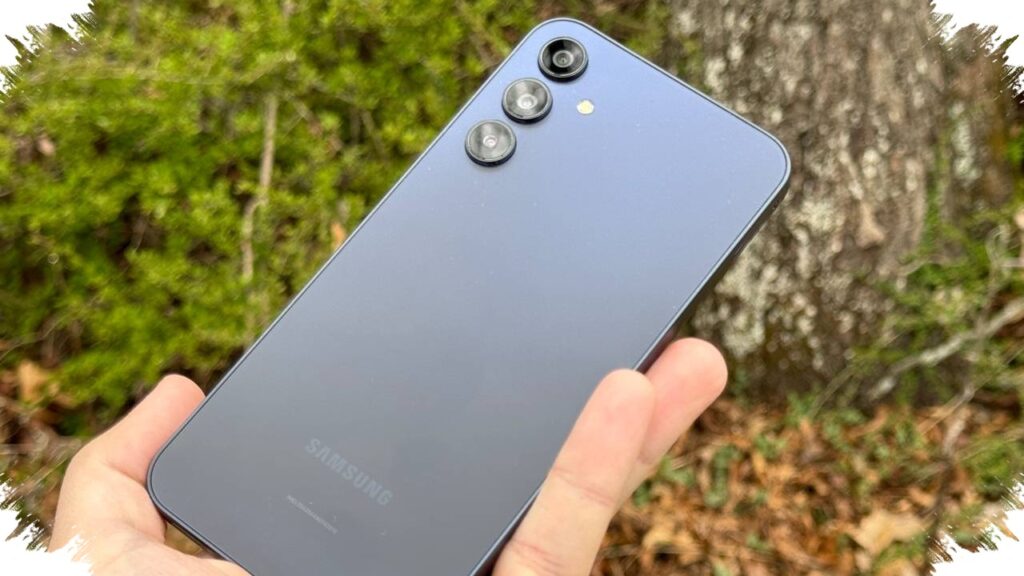
The entry-level smartphone market in mid-April 2026 looks far more competitive than before, especially for buyers who want more than just basic functions. Several models now bring faster displays, large batteries, and even features that were once reserved for higher price tiers.
Among them, Samsung Galaxy A07 stands out for one reason that is hard to beat at this level: six years of OS updates. That long software support makes it an unusually safe choice for users who want to keep a phone for a long time without rushing into a replacement.
Long software support becomes the main differentiator
In the sub-Rp2 million range, software policy is now part of the buying decision. Samsung Galaxy A07 is the clearest example because its update promise gives it a durability advantage beyond hardware alone.
For many buyers, that matters as much as specifications on paper. A phone that stays supported for years can feel more dependable, especially for those who do not want to switch devices often.
Samsung Galaxy A07 also brings balanced daily use specs
The software advantage is backed by hardware that is still relevant for everyday use. Samsung pairs the Galaxy A07 with a Helio G99 chipset and a 6.7-inch display with a 90 Hz refresh rate.
That combination is enough for common activities such as social media, streaming, and other light tasks. In practical use, the smoother refresh rate helps the phone feel more responsive than many low-cost models.
Battery endurance remains a major buying factor
Not every buyer prioritizes software support first. For users who spend a lot of time outside the home, battery life still carries significant weight, and that is where Motorola G06 Power draws attention.
The model is equipped with a 7,000 mAh battery and is claimed to last more than two days. Another contender, Nubia V80 Max, takes a similar route with a 6,000 mAh battery.
Nubia also adds a 6.9-inch display with a 120 Hz refresh rate, which makes it appealing not only for endurance but also for smoother content viewing and navigation.
Displays at this price point are getting more interesting
The one-million-rupiah class is no longer limited to simple LCD panels. Tecno Spark 30 Pro is one of the more eye-catching options thanks to its AMOLED 120 Hz screen and 108 MP main camera.
Itel S25 also stands out by using a Full HD Plus Super AMOLED panel. For users who often watch videos or read long-form content, these display types can make a real difference in sharpness and contrast.
Performance and practical features still shape the contest
The competition is not only about batteries and screens. Advan X1 shows that local brands still have room in this segment with its Helio G100, Full HD Plus 120 Hz display, and UFS 2.2 storage, which is faster than standard eMMC.
Poco C85 also remains relevant with a 6,000 mAh battery and 33-watt fast charging support. Infinix Smart 20 brings a more attractive design and a 120 Hz display that helps daily navigation feel smoother.
Some models target very specific needs
A few phones in this range serve narrower use cases. Itel City 200 NFC is positioned as the cheapest option for buyers who need NFC support for practical balance checks on electronic cards.
Inoi A75 Elegance has also become more noticeable after its price dropped from Rp2.2 million to Rp1.5 million. That shift makes it a more appealing candidate for budget-conscious buyers looking for added value.
With so many options competing on different strengths, the best choice depends on the main priority. Samsung Galaxy A07 leads on long-term software support, while Motorola G06 Power becomes the stronger name for battery-focused users in the Rp1 million class.