


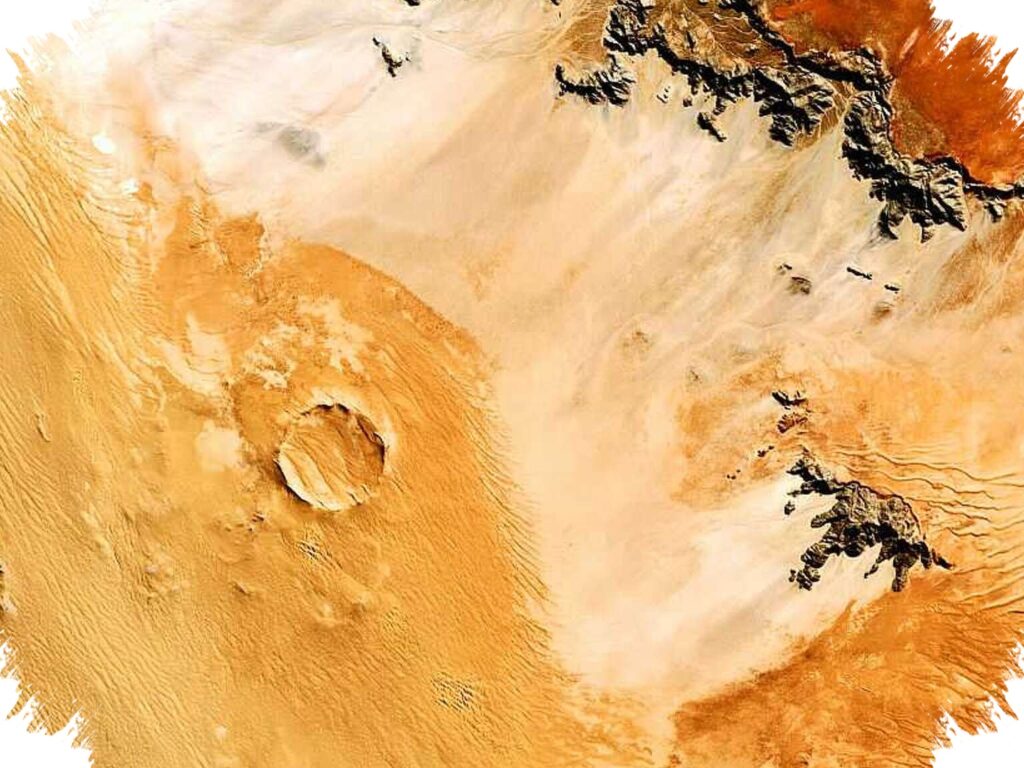
NASA’s interactive feature, Your Name in Landsat, is drawing attention because it turns a person’s name into a visual built from real satellite imagery of Earth. The result is not a standard text rendering, but a name assembled from landscapes such as rivers, mountains, and deserts.
The experience is simple to access and easy to share, which is one reason it has spread quickly. NASA describes it as part of the Earth Day celebration and it also serves as a way to make Earth observation data feel more accessible to the public.
How the feature works
Your Name in Landsat uses imagery from NASA’s Landsat archive to form alphabet letters. The program relies on the Landsat mission, a collaboration between NASA and USGS that has been running since 1972.
For this feature, NASA uses images from Landsat 8 and Landsat 9 to build letter shapes that match the user’s name. Each letter comes from real Earth imagery, so the final display looks more like a satellite-based artwork than a simple name card.
This approach gives the feature an educational value as well. It connects a personal input, such as a first name or nickname, with scientific data collected through Earth observation.
Official link to try it
The feature can be opened directly in a browser on a phone or laptop. The official NASA address is https://science.nasa.gov/specials/your-name-in-landsat/.
Once the page loads, users only need to type the name they want to display. The system then arranges the letters automatically using the satellite-based alphabet, and the result appears quickly without any complicated steps.
Simple steps to generate the image
The process is straightforward and does not require registration. Users can follow these steps:
- Open the official Your Name in Landsat page.
- Enter the name to be displayed.
- Wait for the system to compose the name using satellite imagery.
- Download or share the result.
Because the process is short and direct, the feature is easy for casual users to try. The final image can be viewed immediately after the name is entered, making it a low-friction interactive tool.
Why it is attracting attention
The appeal of Your Name in Landsat comes from the combination of science and personalization. A user’s name is transformed into a visual made from real Earth imagery, which makes the result feel unique and memorable.
Its credibility also comes from the source of the images. The feature is built on Landsat data, a long-running Earth observation program with a strong scientific foundation.
The sharing function adds to its popularity. Users can save the image or post it directly to social media, which helps the feature circulate widely while still carrying a clear scientific message.
NASA appears to be using this format to make Earth observation data easier to understand outside scientific circles. By presenting satellite imagery in a personal and visually engaging way, the feature brings a technical archive closer to everyday users while keeping its connection to real data intact.
Source: www.merahputih.com