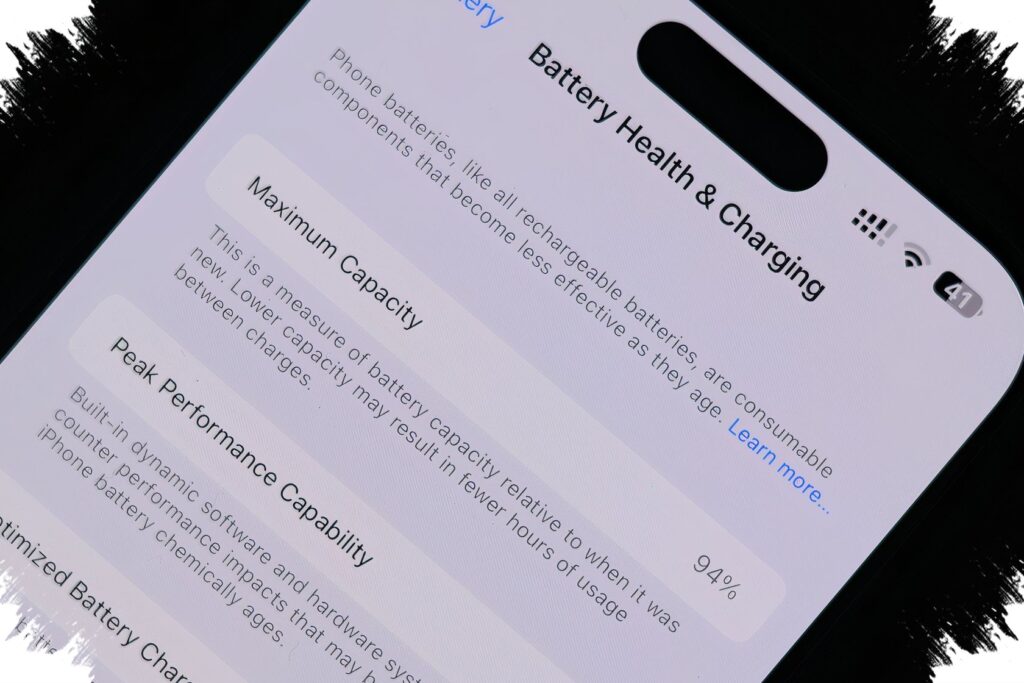
An iPhone battery can show a sharp decline in battery health long before the device has been used for a full year. In many cases, the problem is not simply the natural aging of a lithium-ion battery, but the way the phone is used every day.
That drop matters because battery health affects how long the phone lasts between charges and how stable it feels during normal use. When the number falls too far, the iPhone may drain faster than expected and can even shut down suddenly while still in use.
What battery health actually means
Battery health shows how well an iPhone battery can hold power and support daily usage before it needs to be recharged. A higher percentage generally means better performance, while a lower one means shorter usage time.
As the capacity drops, the device becomes less durable in routine tasks. The change may not always be dramatic at first, but users often notice that the battery empties more quickly and feels less reliable during everyday activity.
Heat is the main trigger
Apple says the iPhone is designed to perform best in temperatures between 16 and 22 degrees Celsius. The device can still operate outside that range, but exposure above 35 degrees Celsius can speed up battery wear.
That is why heat is often the biggest reason battery health declines faster than expected. The source of the heat is not always the weather, because daily habits can also push the phone temperature up.
Everyday habits that make the problem worse
Leaving an iPhone in direct sunlight for too long can expose it to excessive heat. A similar risk appears when the phone is left inside a parked car, where cabin temperatures can rise sharply during the day.
Using a case while charging also deserves attention. The case can trap heat from the charging process, making the device warmer than it would be without that extra layer.
Another habit that can speed up battery wear is using the iPhone while it is plugged in. Playing games, scrolling social media, or editing photos during charging makes the phone work harder and creates more heat at the same time.
When these habits happen repeatedly, the battery receives double pressure from charging and demanding activity. Over time, that combination can accelerate battery aging.
Charging patterns also play a role
Battery health can decline when the iPhone is charged for too long during intensive use. Recording long videos or taking photos for extended periods already raises the device temperature, and charging at the same time adds more heat.
On iPhone devices with iOS 13 and later, there is a feature that can automatically stop charging at 80 percent when the phone detects intensive activity that causes the temperature to rise. The feature is meant to help keep the device temperature more stable.
Battery condition can also worsen if the iPhone is often left empty for too long. A battery that stays discharged for an extended period may lose its ability to charge and store power properly.
Why non-original chargers are a risk
Using a non-original charger is another factor that can affect battery quality. The electrical output from unofficial chargers does not always match what the iPhone battery needs, which can increase the risk of faster degradation.
For that reason, battery health is shaped not only by age, but also by charging behavior and overall usage habits. Phones that often face excessive heat and less-than-ideal charging patterns are more likely to show faster battery decline than devices that are handled more carefully.
Keeping the temperature under control, avoiding heavy use while charging, and preventing the battery from staying empty for too long are practical ways to help preserve iPhone battery health for a longer period.