


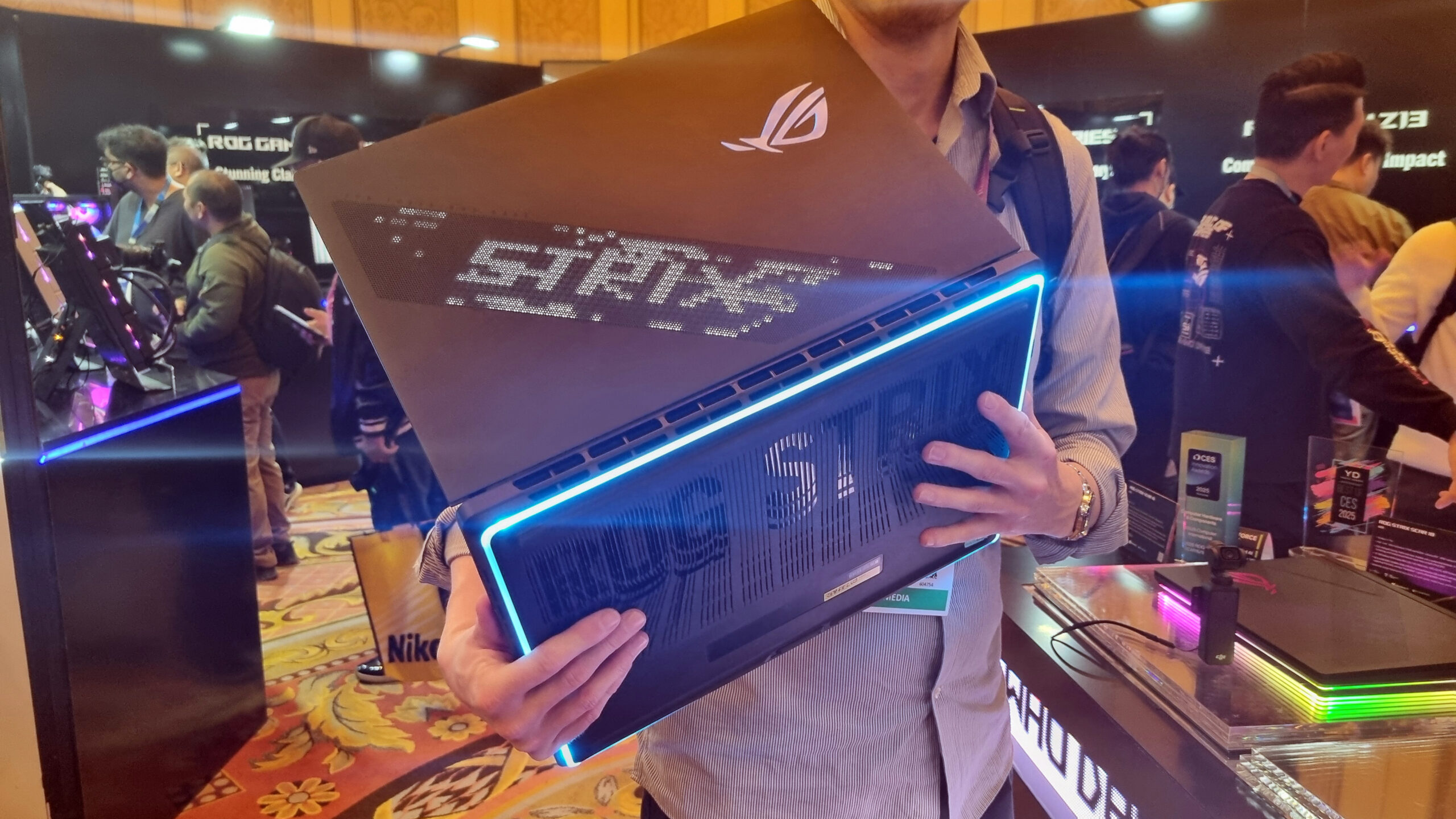
ASUS has pushed the ROG Strix Scar 18 into even more extreme territory, and the headline change is not just raw graphics power. The 2026 model is built around a much larger total system power budget of 320W, signaling that this 18-inch machine is designed to distribute workload more aggressively between its CPU and GPU.
That shift matters because the laptop is not simply trying to feed an RTX 5090 with more power. ASUS is also changing how the processor is used, making the CPU carry a heavier share of the computational load so the whole system can handle demanding gaming sessions more smoothly.
A CPU built to do more of the heavy lifting
At the center of the machine sits Intel Core Ultra 9 290HX Plus. The chip brings 24 cores, 32 threads, boost speeds of up to 5.5GHz, and an integrated 15 TOPS NPU for AI-related tasks.
ASUS gives the processor a notably high power range as well. In Turbo mode, the CPU runs at 95W, while Manual mode can push it as high as 145W, which reflects the platform’s willingness to let the processor take on more work during demanding use.
That design choice is meant to shift some of the calculation burden away from the GPU. In heavy AAA gaming, the goal is to keep performance delivery smoother by balancing tasks more dynamically inside the system.
RTX 5090 remains the graphics center
Even with the CPU taking on more responsibility, the graphics side stays at the top of the stack. The ROG Strix Scar 18 2026 uses NVIDIA GeForce RTX 5090 Laptop GPU with a 175W TGP.
The pairing of a high-power CPU and a flagship GPU is what drives the system’s 320W total power budget. ASUS is positioning the notebook as more than a small update, with performance expectations clearly aimed at the highest tier of gaming laptops.
A display aimed at extreme visuals
The screen is another major highlight. ASUS equips the laptop with an 18-inch ROG Nebula HDR panel that combines 4K 3840×2400 resolution, 240Hz refresh rate, and Mini LED technology.
ASUS says this is the first display in the world to bring those three elements together. It also includes more than 2,000 local dimming zones, a peak HDR brightness of 1,600 nits, VESA True Black 1000 certification, and 100% DCI-P3 color coverage.
For fast motion, ASUS adds ROG Nebula ELMB, which it claims can sharpen moving objects up to 16 times without reducing brightness. The panel also uses an AGLR anti-glare layer that is said to reduce light reflections by up to 55%.
Built for upgrades and long-term use
Despite the emphasis on performance, the ROG Strix Scar 18 2026 still keeps the upgrade-friendly approach expected from a desktop replacement class machine. It includes two SO-DIMM slots and supports up to 128GB of DDR5-6400 memory.
Storage expansion is equally generous. The laptop supports up to 8TB across two PCIe 5.0 NVMe SSD slots, and both slots can run in RAID 0 for higher speed.
Cooling and power delivery scale up too
Supporting this level of hardware requires a more serious thermal setup, and ASUS has reworked the cooling system accordingly. The laptop uses a new fan design and a new vapor chamber, while still relying on Liquid Metal as its premium thermal interface material.
Power delivery is equally aggressive. The machine ships with an external 450W power brick, which underlines how far ASUS has pushed the system’s performance envelope.
Inside, the laptop carries a 90Wh battery, but the design clearly favors sustained high output over everyday portability. ASUS has not announced global pricing for the model, although the 2025 version was priced at $6,299, setting expectations for a similarly premium level for the 2026 edition.