


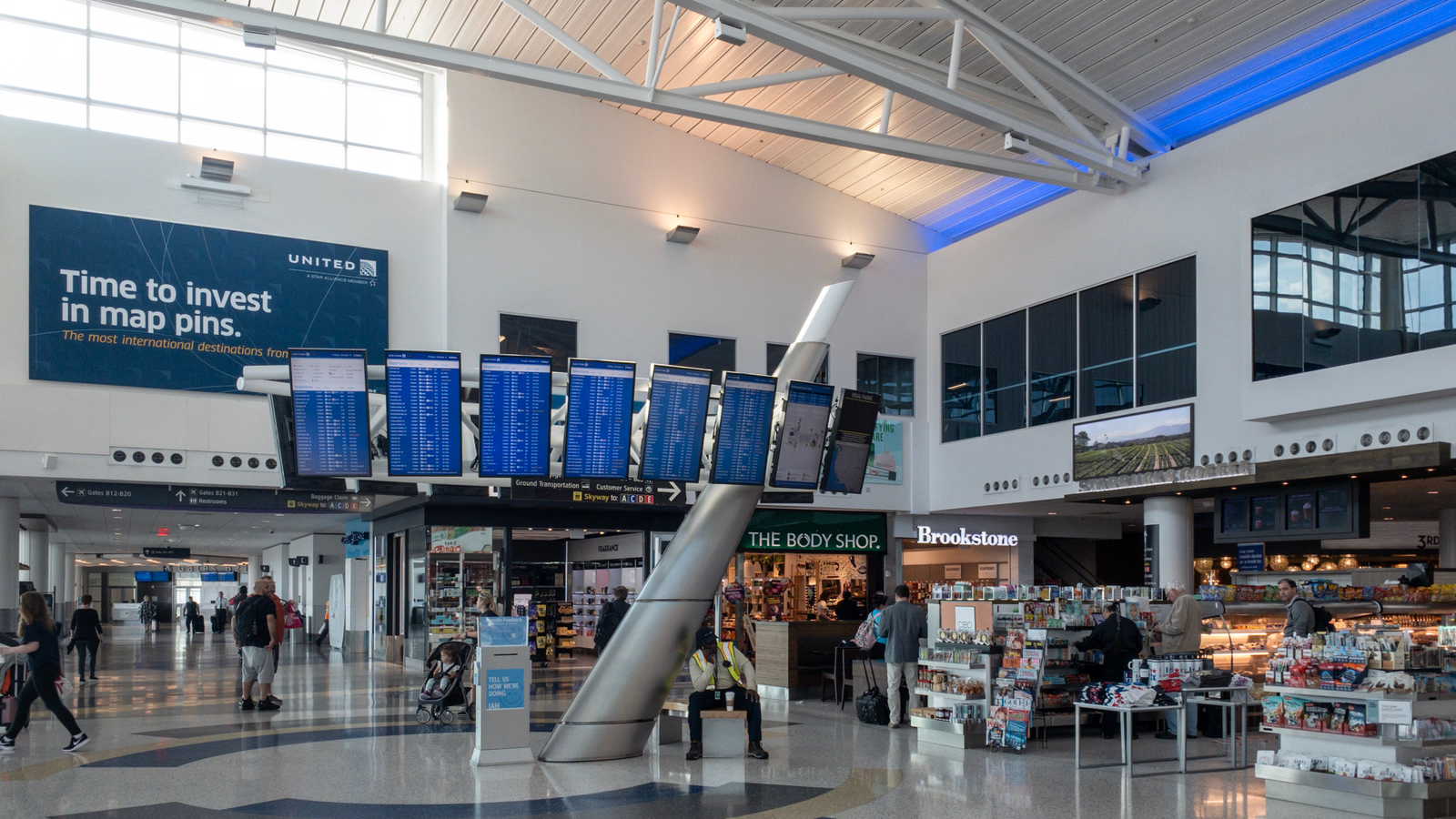
United Airlines faced a sharp rise in delays and cancellations after the FAA issued a ground stop at Houston’s Bush Intercontinental Airport, one of the carrier’s largest hubs. The airline then contacted affected travelers with flexible rebooking options as weather-related disruptions spread through its network.
The problems did not stay limited to Houston. United also saw added delays at Chicago O’Hare and other major hubs, while U.S. airlines broadly dealt with a difficult stretch of operational disruption.
Houston storm system triggered the ground stop
The FAA lifted the ground stop at Bush Airport after it remained in effect until 5:45 P.M. Heavy rain and the risk of flooding in the Houston area caused the interruption, which quickly fed into a wave of flight delays.
FlightAware data showed that IAH delayed more than 61% of its departing flights on Saturday, out of 388 total departures. Arriving flights were also hit hard, with 318 flights delayed at the airport.
That volume made United the airline most exposed to the weather impact at Houston. The carrier logged 834 delays on May 23, the second-highest total worldwide, and only American Airlines recorded more.
United also had 27 cancellations, the highest total among U.S. airlines. Delta Air Lines followed with 15 cancellations, while SkyWest had 11, Alaska Airlines had 7, and Endeavor Air had 6.
Flexible rebooking was offered to affected passengers
United updated its travel alerts page with a section tied to “Houston Thunderstorms” and gave eligible travelers a path to reschedule. The airline said passengers could change their trip without paying change fees or fare differences if the new flight met the stated rules.
“Your new flight must be a United flight departing between May 21, 2026 and May 26, 2026,” United said in the notice. The airline also said the new booking must be in the same cabin and between the same cities as the original itinerary.
United added that tickets had to be purchased on or before May 21, 2026, to qualify for the rebooking offer. The travel alert was meant to help customers manage the disruption without absorbing extra cost during the weather event.
Delays continued even after the Houston stop ended
Although conditions improved at Bush Airport on Sunday, United still had to deal with more problems elsewhere in its network. Chicago O’Hare became another major source of disruption, adding to the carrier’s delay total.
At ORD, the airport recorded 768 departure delays, which represented more than half of its overall departure volume. It also had 680 arrival delays, both figures ranking among the highest worldwide.
United was again heavily affected, with 834 delays on Sunday. That placed the airline just behind Southwest Airlines and American Airlines, though United’s cancellation total was lower than American’s.
United reported 16 canceled flights on Sunday, while American Airlines had 233 amid its own problems at DFW. For travelers moving through major hubs, the combination of weather, congestion, and tight connections made the weekend especially difficult.
Travelers felt the impact at major hubs
Passenger frustration showed up quickly, especially among those connecting through O’Hare. Some travelers described ORD as a recurring trouble spot for delays and missed connections, pointing to ongoing congestion around the airport.
The FAA and major airlines, including United, have agreed to reduce flight volume this summer to help improve on-time performance. Even with those efforts, high-demand travel days can still produce delays and cancellations when weather and hub congestion hit at the same time.