


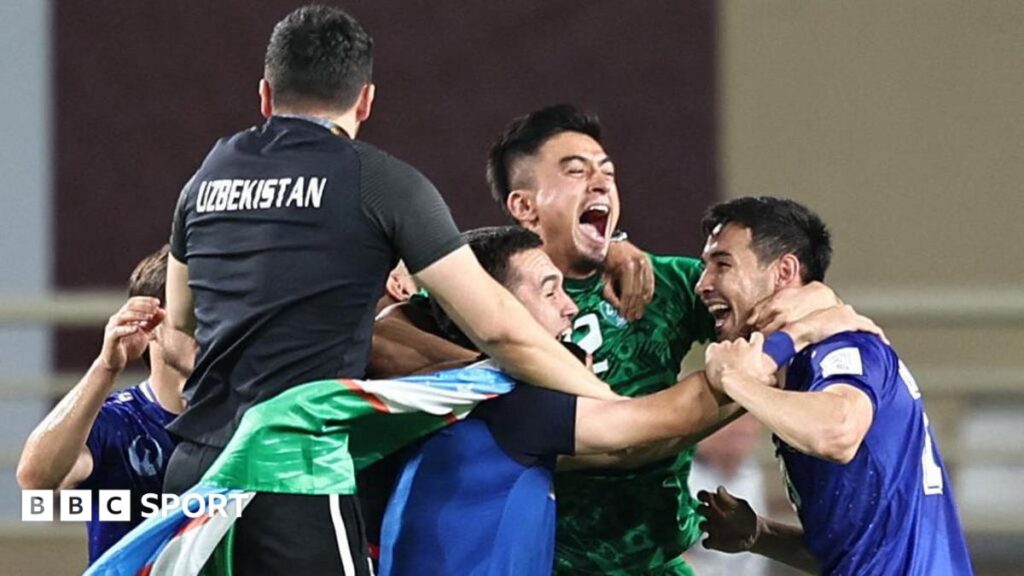
Uzbekistan has finally broken through to the World Cup, and the timing has turned Abdukodir Khusanov into something bigger than a promising defender. At just 21, the Manchester City centre-back is already being treated as the face of Uzbek football.
His move from Lens to City in January 2025 for a fee worth £34m pushed him into one of the most visible stages in the sport. In Uzbekistan, that visibility matters as much as the transfer itself.
A new symbol for Uzbek football
Khusanov arrived in England as a relatively unknown 20-year-old, but his rise in the Premier League has made him the player most associated with the national team. The scale of his profile is being compared by Bowers to the impact David Beckham had in England in the early 2000s.
“Uzbekistan has had players play for big historical European clubs like Roma and Dynamo Kyiv, but Khusanov’s move in the age of social media and the reach of English football globally has seen Khusanov become similar to how David Beckham was back in the early 2000s, being who kids want to be and the face of the national team,” Bowers said.
He added that the effect is still hard to measure, but likely to grow the longer Khusanov stays at a club like City. Bowers also said the influence may already be visible through players getting trials or moving toward clubs in Belgium and Portugal.
From Djeparov to Khusanov
Before Khusanov, the most celebrated modern Uzbek name in football was Server Djeparov, the only Uzbek to be named Asian footballer of the year twice. Known for his mullet, Djeparov also had trials at Chelsea and was part of the Uzbekistan side that missed out on the World Cup three times.
The contrast shows how far Uzbek football has come. Djeparov’s generation carried the national team through near misses, while Khusanov now represents a country stepping onto the world stage with a player already established in the Premier League.
Respect at home, pressure abroad
Uzbekistan forward Jaloliddin Masharipov told BBC World Service that Khusanov is now the first Premier League player in Uzbekistan, and the reaction at home has been immediate. He said fans recognise national-team players everywhere, and that people often come up for pictures in restaurants.
“You go to a restaurant, you don’t pay. Respect, like this here,” Masharipov said.
That kind of attention helps explain why Khusanov’s arrival in English football has mattered beyond the pitch. For Uzbekistan, he is now both a major export and a sign that the country’s long pursuit of global recognition in football is starting to pay off.