


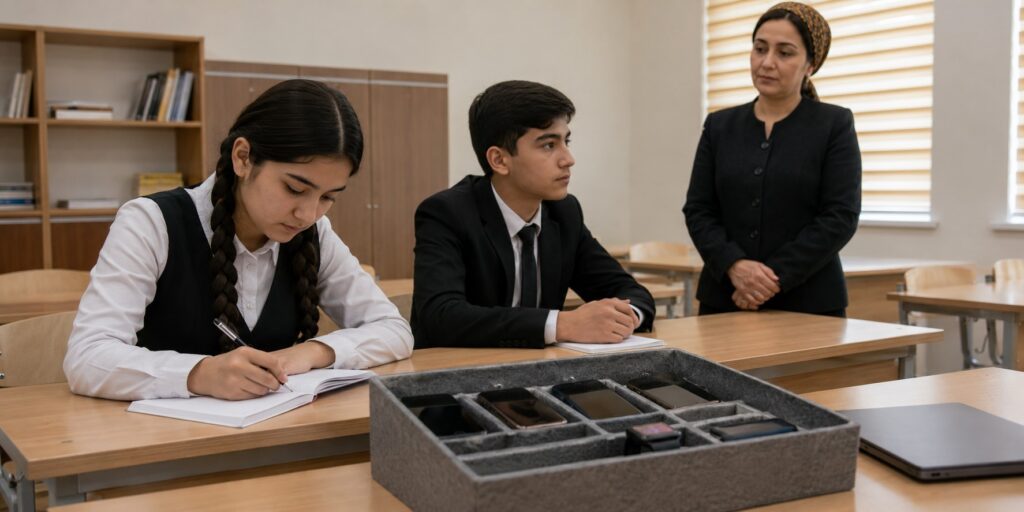
Turkmenistan is changing how personal devices can be used in schools, moving away from a simple ban and toward rules that allow them as learning tools. The new approach tries to balance classroom use with strict limits on distraction, privacy, and health concerns.
The Ministry of Education has ordered schools to recognize the educational value of mobile devices, including access to multimedia learning resources and electronic textbooks, courses, and other files. It also says the devices can help improve educational management, especially in settings without internet access.
What the new rules emphasize
The order applies to smartphones, tablets, laptops, smartwatches, and other personal electronic devices. Schools are also warned about the possible strain of small-screen devices, storage needs for mobile gadgets, and reduced wireless bandwidth when many users connect at once.
At the same time, the rules require ethical behavior in classrooms. Devices should be switched to silent or flight mode, and students and teaching staff cannot be recorded in video, photo, or audio form without permission.
Part of a wider shift in school policy
Turkmenistan banned mobile phones during classes in 2020, so the new order marks a notable shift in policy rather than a complete reversal. The Ministry of Education issued the order on May 19, and the Ministry of Justice registered it in early June.
UNESCO has said the global debate around phones in schools is moving in different directions. In March, the agency reported that 114 education systems had a national ban on mobile phones in schools, equal to 58% of countries worldwide.
That was up from 40% in 2025 and 24% in 2023, according to UNESCO. The agency said the trend reflects concerns about classroom attention, cyberbullying, and the broader influence of digital environments on children.
UNESCO also noted that many countries are not choosing full bans, but are instead building policies that regulate how devices can be used in schools. Turkmenistan’s new rules fit that more controlled model as the country continues wider school digitalization efforts under tight internet controls.