


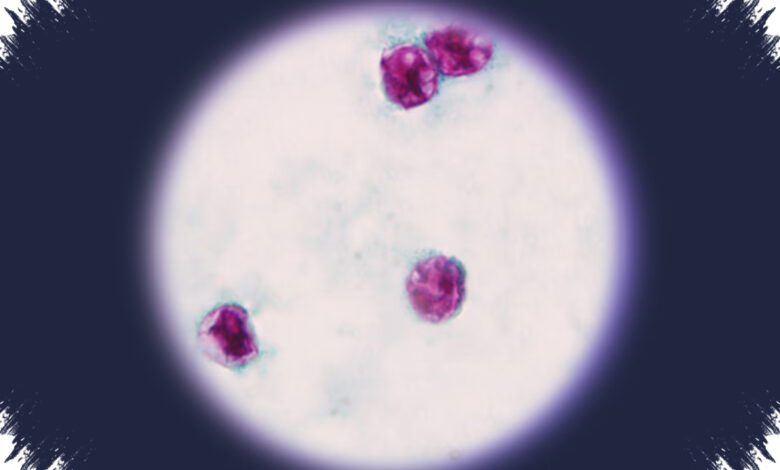
There is no evidence that Donald Trump directly caused the multistate cyclosporiasis outbreak. But the outbreak has renewed scrutiny of whether cuts, disruption, and slower reporting have weakened the systems meant to detect and contain foodborne illness.
Cyclospora cayetanensis has spread across 34 states and counting, with leafy greens among the suspected foods. The investigation has also drawn attention to Taco Bell, while raspberries and cilantro are other foods previously associated with the parasite.
Why Cyclospora Is So Difficult to Trace
Cyclospora is a microscopic parasite spread when food or water is contaminated by infectious material originating from human feces. Contaminated water used to irrigate a field is considered one likely route by which the parasite can reach produce.
| Issue | What Makes It Difficult |
|---|---|
| Symptoms | People may not feel ill for weeks after ingesting the parasite. |
| Food contamination | The parasite cannot be seen and may be difficult, if not impossible, to wash away. |
| Outbreak tracing | It cannot be genetically fingerprinted and grown in the lab as readily as many other pathogens. |
| Testing | Doctors do not typically test for it unless they know an outbreak is underway. |
The illness can cause severe, recurring diarrhea that lasts for weeks. It is treatable with antibiotics and is not considered fatal, but symptoms can return in waves before treatment.
Public-health investigators often connect foodborne cases by comparing a pathogen’s genetic fingerprint in food or stool samples. That approach is far less useful with Cyclospora because the organism is difficult to grow in a laboratory and may be present in limited amounts in stool.
Scientists once considered the parasite largely endemic to tropical regions. Cases acquired within the United States have since emerged, though the reason for that shift remains unclear.
The Debate Over Public Health Capacity
Concerns about the outbreak extend beyond produce and restaurant chains. Critics have pointed to the scaling back of programs such as the Foodborne Diseases Active Surveillance Network, known as FoodNet, which had monitored Cyclospora alongside other pathogens.
FoodNet is used to build intelligence about foodborne diseases rather than serve as the main active tracking system during an outbreak. Even so, reducing surveillance of a poorly understood parasite could limit the knowledge available to public-health officials over time.
According to slate.com, the larger concern is the pressure on the Centers for Disease Control and Prevention and the Food and Drug Administration after significant turmoil and the loss of experienced leadership. The outbreak has also highlighted the strain placed on state agencies and public-health laboratories when testing demand rises quickly.
Reporting delays became especially noticeable when the CDC listed about 200 cases while Michigan, described as the outbreak’s epicenter, was reporting thousands. CDC officials later said they would provide more frequent updates as the reported figures rose.
Testing and the Limits of Consumer Advice
The CDC issued an alert telling doctors about the outbreak and which test to run. That notice matters because Cyclospora is not a routine test for many patients with gastrointestinal symptoms.
Officials have urged people to wash vegetables, but washing may not eliminate Cyclospora contamination. The parasite’s ability to persist on food leaves consumers with limited practical ways to judge whether an item is safe while investigators search for a common source.
The unanswered question is not whether one political decision alone caused the outbreak. It is whether a food-safety network already working with limited resources can respond quickly enough when a difficult-to-track parasite spreads across dozens of states.