


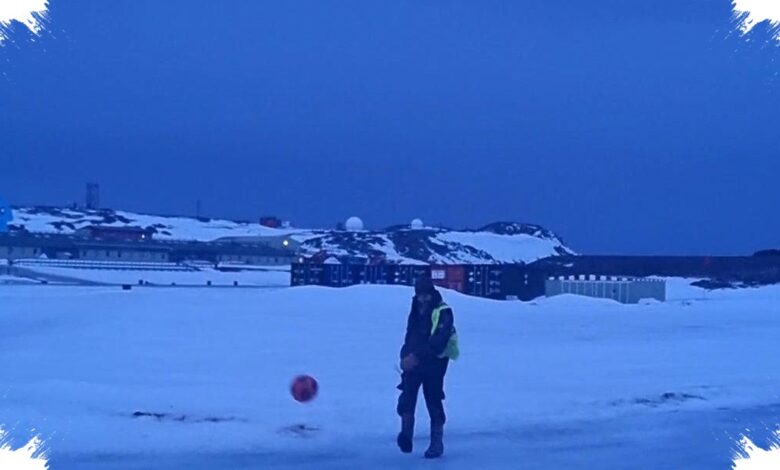
The FIFA World Cup final between Spain and Argentina in New Jersey will draw huge crowds in famous football cities, but some of its most memorable screenings will happen far from stadiums, airports and reliable transport links. From an Antarctic research base to tiny Pacific atolls, isolated communities are finding ways to share football’s biggest night.
For many of these viewers, the tournament is more than a match on a screen. It offers a rare communal ritual in places where severe weather, distance and limited connectivity can make everyday social life difficult.
| Location | Setting | How Fans Watch |
|---|---|---|
| Rothera, Antarctica | British Antarctic research station | Projector, TV and communal gatherings |
| Ascension Island | Remote South Atlantic volcanic island | Bars and the NAAFI Complex |
| Tristan da Cunha | World’s most remote inhabited archipelago | Homes and a possible Albatross Bar gathering |
| Svalbard | Norwegian Arctic archipelago | Public screening at Tio Monchos |
| Kiribati | Central Pacific island nation | Phones, Starlink and a big screen in Tarawa |
1. Rothera Research Station, Antarctica
Rothera Research Station is among the most isolated places on the list, with fewer than 1,000 people spread across 5.48 million square miles of Antarctica. Just 26 people winter at the British base, where darkness can last for months and harsh weather can confine residents to their accommodation buildings.
The World Cup has created a regular reason for people to meet around a projector and television, with stronger turnouts for England and Scotland matches. Martin Kibble of the British Antarctic Survey told ESPN that football has become “the guaranteed backbone of daily life” at the station.
Residents also use an aircraft hangar for five-a-side football, while snow has not stopped occasional outdoor kick-arounds after major matches. For the final, the base plans bunting, traditional British pub food and a 3D-printed model of the World Cup trophy.
2. Ascension Island, South Atlantic Ocean
Ascension Island sits midway between Africa and South America, nearly 1,000 miles from Liberia and even farther from Brazil. Its barren red volcanic terrain has earned it the nickname “The Mars of the Mid-Atlantic.”
The island has a population of roughly 800 to 1,000 people and is home to a British Royal Air Force base. Football supporters there can receive BBC and ITV broadcasts, while some residents gather at bars or the NAAFI Complex.
Arsenal supporter Tristan Hudson said England, Portugal and Brazil have attracted notable support on the island. The NAAFI Complex is expected to screen the final more than 5,000 miles from the match itself.
3. Tristan da Cunha, South Atlantic Ocean
Tristan da Cunha lies about 2,300 miles south of Ascension Island and is considered the world’s most remote inhabited archipelago. There is no airstrip, leaving the island dependent on boats that make a weeklong, 1,750-mile journey from Cape Town roughly once a month.
Its population of just over 200 has largely watched the tournament at home because the Albatross Bar closes at 9 p.m., before many matches begin. Although the only settlement is called Edinburgh of the Seven Seas, England is the leading team among local supporters.
Islander Leon Glass told ESPN that Scotland, Brazil and the Netherlands also have fans, while Italy would have had backing if it had qualified. A final gathering at the Albatross Bar is hoped for, but storm damage and unreliable British Forces Broadcasting Service streams could complicate the plan.
4. Svalbard, Norway
Longyearbyen in Svalbard is one of the world’s northernmost settlements, where polar bears are common enough that travelers are legally required to carry a rifle when moving around the island. The archipelago is also home to the Global Seed Vault, which preserves crop seeds for a potential global emergency.
At the Longyearbyen restaurant Tio Monchos, World Cup screenings grew as Norway advanced to the quarterfinals. Around 400 people watched Norway’s defeat to England, bringing together a community with residents from around the world.
Owner Andreas Styrsell said the gatherings feel like watching football with friends because “everyone knows everyone here.” Tio Monchos will show the final on what Styrsell described as the biggest screen in Svalbard, potentially hosting the northernmost public final watch party.
5. Kiribati, Central Pacific Ocean
Kiribati is made up of 21 permanently inhabited islands or atolls in the Central Pacific and ranks among the least visited nations on Earth. Rising sea levels and extreme tides also make it one of the places most vulnerable to climate change.
Though Kiribati is not a FIFA member and cannot enter World Cup qualifying, football has a strong local following through the Te Runga Games. The four-year multi-sport event brings football teams from every atoll together to compete.
Kiribati Islands Football Federation president Eriati Reebo said the arrival of Starlink in 2025 has made it possible for people on remote atolls to watch matches on their phones. From the quarterfinals onward, the federation and Ministry of Sport arranged big-screen viewings at Betio Sport Complex in Tarawa, close to the president’s office.