


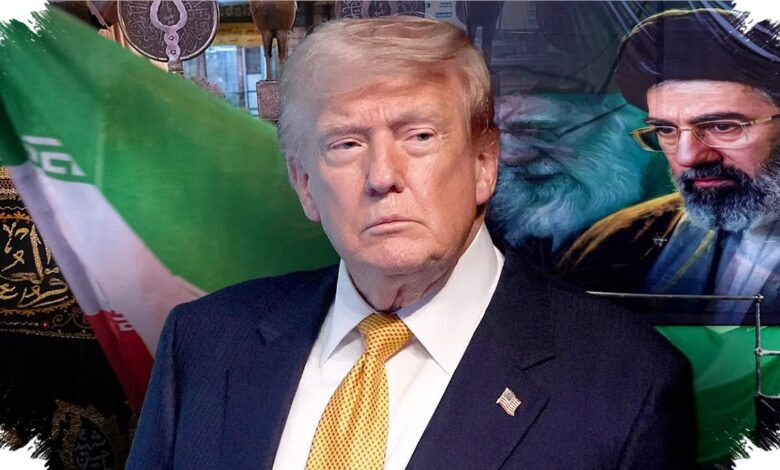
U.S. military operations against Iran have shifted sharply toward reopening the Strait of Hormuz after two American service members were killed in Jordan. The campaign is focused on reducing threats to commercial shipping, U.S. forces and Gulf allies as the conflict expands across the region.
U.S. Central Command completed an eighth consecutive day of strikes on Iranian coastal military targets and Islamic Revolutionary Guard Corps installations. The strikes followed Iran’s attacks and were described as retaliation for the deaths of the two U.S. soldiers.
Shipping route becomes the central objective
Rep. Michael McCaul, R-Texas, said the immediate goal should be to destroy Iranian capabilities used to threaten tankers and reopen the waterway. He said U.S. forces must target launch sites, Shahed drone capabilities and missiles inside Iran.
“We’ve got to knock out these targets inside of Iran to open up the Strait of Hormuz,” McCaul said on “Fox News Sunday.” He called reopening the passage “the fundamental objective” of the military effort.
| Development | Reported action | Stated purpose or outcome |
|---|---|---|
| U.S. operations in Iran | Strikes on coastal military targets and IRGC installations | Reduce threats to shipping, U.S. bases and Gulf allies |
| Iranian missile launches toward Jordan | Three missiles intercepted, according to Jordan’s armed forces | No casualties or material damage were reported |
| Jordan’s diplomatic response | Iran’s ambassador was summoned | Amman said its security and sovereignty are a “red line” |
Missile fire raises pressure on Jordan
Jordan’s armed forces said it intercepted three Iranian missiles targeting the kingdom as sirens sounded across the country. One missile fell inside Jordan, but the state news agency reported no casualties or material damage, citing a military official.
Israel’s military said it detected Iranian missiles heading toward the southern Jordanian city of Aqaba and warned of possible spillover into nearby Israeli territory. The Israel Defense Forces said interceptor fragments were found in an open area near Eilat, with no reported injuries or damage.
Jordan later summoned Iran’s ambassador in protest over attacks threatening its territory, Reuters reported. The government said it would not tolerate further strikes or violations of Jordanian sovereignty.
Competing views in Washington
Retired Gen. Jack Keane said combat operations against Iran were likely to expand after the deaths of the U.S. service members. He said diplomacy had failed and that the United States was seeking to secure the Strait of Hormuz while limiting Iran’s ability to threaten American bases and regional partners.
Keane said regime change was not a stated U.S. objective, though he argued that military pressure, sanctions and a naval blockade could weaken Tehran. CENTCOM also released video showing Marine Corps F-35B stealth jets preparing for takeoff from the USS Boxer in the Arabian Sea.
Some lawmakers urged a different course. Sen. Mark Warner, D-Va., called the five-month war a “disaster” and said President Donald Trump should “declare victory” and end the conflict.
Warner said the administration had not achieved its stated aims of securing Iran’s enriched uranium or eliminating its missile and drone capabilities. He also called for congressional authorization before the war continues or receives additional funding.
The reported strikes and missile interceptions underline how the contest over the Strait of Hormuz is now intertwined with security risks far beyond Iran’s coast. With Jordan confronting spillover from Iranian launches, the conflict’s military and diplomatic consequences continue to widen.