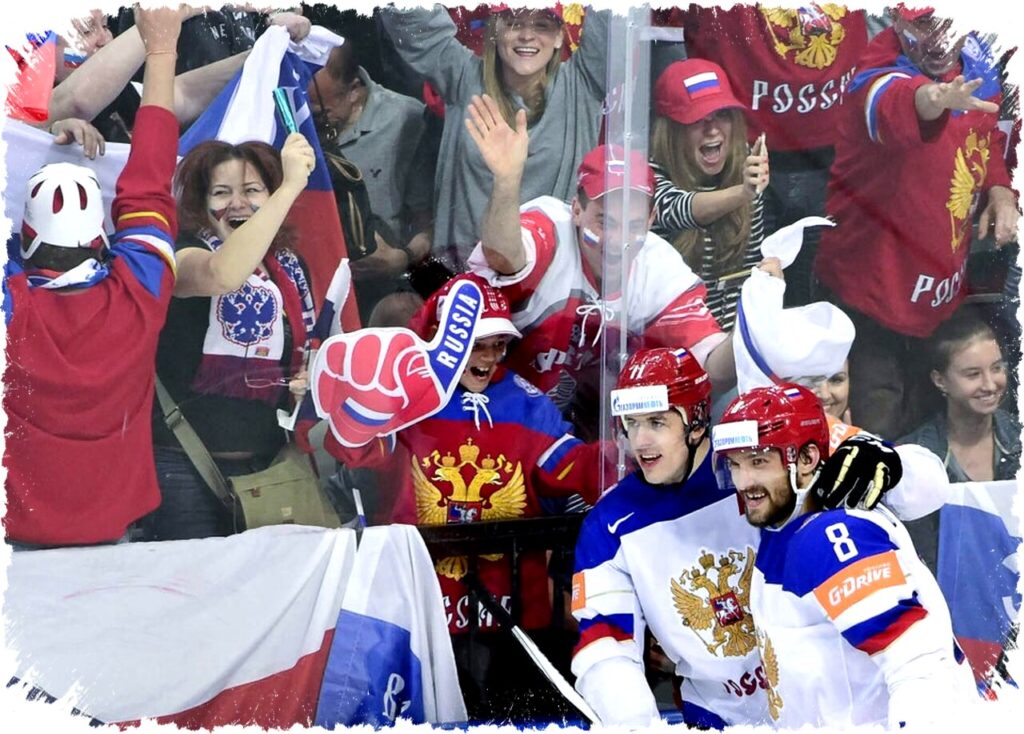
The NHL’s return to the Winter Olympics marks a significant moment in international hockey, but one key player remains absent: Russia. Due to their suspension from international competition following the 2022 invasion of Ukraine, Russia’s hockey team will miss the 2026 Games in Milan. This absence raises important questions about the makeup of the Russian squad and its impact on the tournament’s dynamics.
Hockey Hall of Famer Igor Larionov, a renowned expert in Russian hockey and current KHL coach, was consulted to create a hypothetical Russian Olympic roster. Larionov emphasized that this exercise was speculative, but the lineup he proposed reflects about 85 percent of what he would choose as a coach. Notably, his selections excluded any KHL players, highlighting his assessment that current NHL stars exhibit a superior level of skill and decision-making.
Goalkeeping Strength
Larionov selected three elite NHL goalies: Sergei Bobrovsky, Andrei Vasilevskiy, and Igor Shesterkin. Each goalie brings a winning pedigree, having secured multiple Stanley Cups and Vezina Trophies. Bobrovsky won back-to-back Cups, Vasilevskiy earned two with Tampa Bay, and Shesterkin is regarded among the best in recent years. Larionov highlighted their experience and mental toughness as crucial factors for Olympic success.
Solid but Skilled Defense
For his defensive corps, Larionov combined brains, skill, size, and experience. He chose players with strong hockey intelligence capable of supporting the team’s offensive style while maintaining sound defensive positioning. Nikita Zadorov embodies the ideal blend of physicality and smarts. Larionov stressed that Russian hockey philosophy prioritizes puck control and unpredictability, requiring defensemen not only to stop attacks but to initiate accurate passes at the right moments.
Offensive Firepower and Versatility
The forward group was marked by Larionov’s desire to blend seasoned veterans and young talent. He envisioned Ivan Demidov, a promising rookie with tremendous work ethic, skating alongside Alex Ovechkin, the NHL’s all-time goal-scoring leader. At center, Larionov chose Artemi Panarin for his exceptional hockey IQ despite being a natural winger, showcasing adaptability. The inclusion of 22-year-old Fedor Svechkov and hardworking players like Ilya Mikheyev reflected a balanced approach to youth and reliability.
Larionov believes this hypothetical Russian team would be a strong bronze medal contender, narrowly ahead of Sweden. Their combination of dynamic offense and world-class goaltending would pose a significant upset threat to the North American powerhouses. Statistically, Russia would have about a 44.7 percent chance of medaling and a 12.2 percent chance at gold.
Impact on Tournament Structure and Outcomes
Russia’s absence reshapes the Olympic tournament landscape dramatically. Their inclusion would have displaced France and created three intriguing preliminary groups:
- Group A: Canada, Sweden, Switzerland, Italy
- Group B: Finland, Germany, Czech Republic, Denmark
- Group C: Russia, USA, Slovakia, Latvia
With Russia in the mix, competition within groups A and C would intensify, lowering Canada’s and the USA’s probabilities of winning their respective groups from 73% and 84% to 66% and 64%. This heightens the uncertainty surrounding semifinal matchups. Canada and the USA would each face about a 23% chance of early elimination, up from around 16–18%.
The odds of a quarterfinal meeting between Canada and the USA nearly double from 4.5% to 8.3% in this scenario. Consequently, the likelihood of these two top teams clashing for gold decreases by 6.6 percentage points, while the chances of them not meeting at all increase by 5.3 points.
Medal chances across the board would decrease with Russia’s participation. Canada and the USA would see their medal odds drop by roughly four percentage points. Sweden would face the largest setback with a 13 percentage point reduction.
Without Russia’s challenge, the NHL’s Olympic return presents a comparatively smoother path for the elite teams. The absence of one of the sport’s traditional powerhouses reduces competitive tension and potentially limits the unpredictability often associated with Olympic hockey tournaments.
Overall, Russia’s exclusion significantly alters the competitive balance and narrative of Olympic hockey. Larionov’s roster highlights the high caliber of players lost to the Games, emphasizing the depth and skill that Russian hockey traditionally contributes. The tournament’s structure, team dynamics, and medal probabilities all reflect this void, underscoring Russia’s enduring influence on global hockey even when off the ice.
Read more at: www.nytimes.com