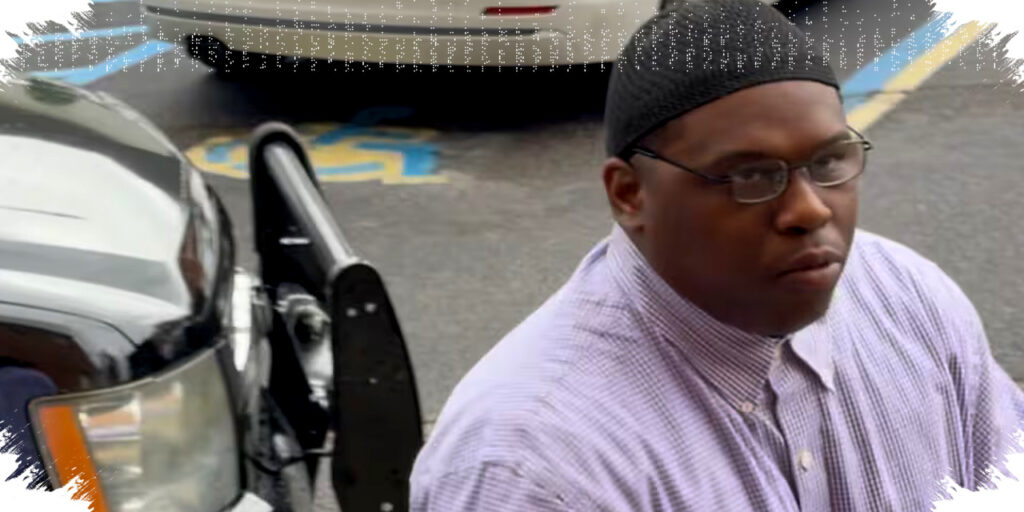
The trial of Ibraheem Yazeed, accused in the killing of Aniah Blanchard, has reached a critical phase with both the state and defense resting their cases. After six days of testimony, the jury is set to begin deliberating on the evidence presented in court.
Over the course of the trial, the prosecution called approximately 40 witnesses, while the defense presented none. The defense’s motion to dismiss the case for lack of sufficient proof was denied by the judge, enabling the trial to proceed to closing arguments.
Forensic Evidence Presented
A forensic anthropologist called by the state detailed the recovery and examination of Aniah Blanchard’s remains, which were found about a month after she went missing. The expert described how the remains were scattered and damaged due to animal scavenging. A large courtroom map displayed the precise locations where various pieces of evidence were discovered.
The anthropologist noted the area in soil color where decomposition likely began and the proximity of a projectile found nearby. However, the expert could not conclusively confirm if a gunshot was fired at that site. Additionally, some bones were still missing near the recovery site along County Road 2.
Dr. Edward Reedy, Chief Medical Officer for the Alabama Department of Forensic Sciences, also testified after being present during recovery. He identified the body using dental records and ruled the cause of death a homicide by gunshot wound to the head. Dr. Reedy confirmed that the projectile found was consistent with a bullet passing through the head while the victim was on the ground. However, he could not ascertain the bullet’s trajectory through the torso due to insufficient skeletal material.
Cell Phone Tracking Evidence
An FBI special agent testified regarding the analysis of cell phone data linked to Blanchard, Yazeed, and a third individual, Antwon “Squirmy” Fisher. The agent illustrated how Aniah’s phone was tracked from 11:14 p.m. until 11:47 p.m. on the night she disappeared, with the final transmission occurring near I-85 just north of a Chevron station.
Yazeed’s phone activity ended around 11:04 p.m., after which multiple incoming calls went to voicemail. His phone remained in Auburn throughout the night, consistent with investigative findings. Fisher’s device showed movement typical for his work location until shortly before 5 a.m., after which it traveled near key locations tied to the case, including the area where Aniah’s vehicle was recovered.
While the agent confirmed they could identify contacts on calls, it was unclear who was actively using the phones during the relevant periods. Signal tracking indicated proximity to the scene where Aniah’s body was found during the early morning hours.
Next Steps in the Trial
Attorneys are scheduled to confer before delivering closing arguments at noon. The jury will then begin deliberations, which may last from several hours to multiple days. If convicted, Ibraheem Yazeed faces the possibility of life imprisonment or the death penalty. This final phase will determine the outcome of a case that has drawn significant public attention due to its tragic nature and complex evidence.
Read more at: www.wsfa.com