


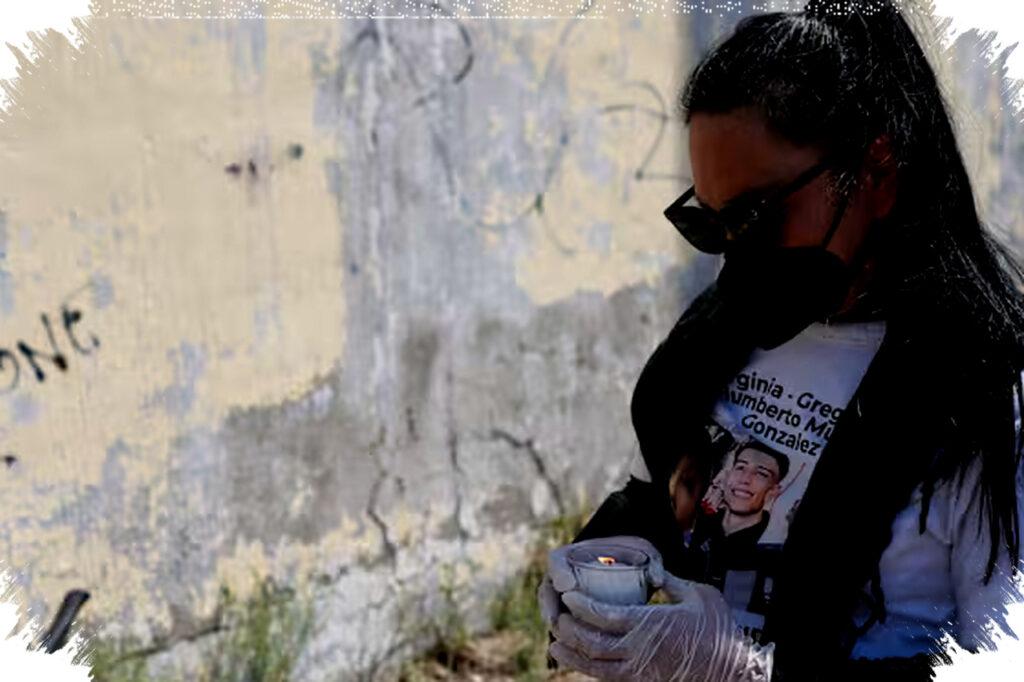
Mexico’s federal authorities say nearly one-third of the country’s 130,000 missing people could still be alive, a claim that has deepened frustration among families who have spent years searching for loved ones. The statement has renewed criticism of the official response to one of Latin America’s most severe disappearance crises.
The estimate has also intensified doubts about whether search systems, prosecutors, and forensic institutions are moving fast enough to locate the missing or identify the dead. For many relatives, the figure is not a sign of progress but another reminder of how little verified information remains available.
Families say the numbers do not match reality
Relatives of missing people say the living estimate cannot be accepted without transparent evidence. They argue that many cases remain unresolved because investigations are slow, records are incomplete, and state agencies often fail to coordinate.
The criticism has grown as search collectives continue to uncover remains in hidden graves on the outskirts of cities. In one recent case in Tlajomulco de Zúñiga, near Guadalajara, members of the Guerreros Buscadores group found skeletal remains buried in the area, a discovery that again showed how families have become central to the search effort.
A crisis built on years of violence and weak institutions
Mexico’s missing persons crisis has been shaped by organized crime, corruption, and limited forensic capacity. Human rights groups have long said many disappearances are linked to armed groups, local impunity, and cases in which authorities did not respond quickly enough when people first vanished.
The scale of the problem is large enough to strain every level of government. According to official counts, the country has about 130,000 people registered as missing, while families groups say the real number may be even higher because some disappearances are never reported.
What the government says and why it is disputed
Government officials have suggested that a substantial share of the missing may no longer be dead and could still be alive. That position, however, has angered families who say officials should focus on evidence-based searches rather than broad estimates that may weaken pressure for action.
Supporters of the government position argue that some cases involve people who leave voluntarily, escape violence, or are not immediately identified in official databases. Family groups counter that without verified findings, such claims risk minimizing the urgency of disappearances and the pain of relatives who still lack answers.
Key facts behind the missing persons debate
- Mexico has around 130,000 officially registered missing people.
- Authorities say about one-third may still be alive.
- Families and search collectives reject broad assumptions without proof.
- Volunteer search groups continue to find graves and human remains.
- Forensic backlogs and weak investigations remain major obstacles.
Search collectives keep pressing for answers
Groups like Guerreros Buscadores have become essential in many cases because they search fields, abandoned lots, and grave sites when authorities cannot or do not act quickly enough. Their work often leads to discoveries that bring both relief and renewed grief, since every new finding can help identify one victim while confirming fears for many others.
The latest discoveries near Guadalajara underscore the emotional and political cost of the crisis. For families, every recovered shoe, bone, or piece of clothing can become a clue, but it also shows how much of the work has shifted from the state to civilians searching for their own missing relatives.
Pressure for clearer data and faster identification
Rights advocates continue to call for stronger forensic databases, improved coordination between states, and faster comparison of missing-person reports with unidentified remains. They also want authorities to separate verified cases from assumptions so families can trust the numbers being used in public debate.
The dispute over whether a third of the missing may still be alive has exposed a broader problem in Mexico’s disappearance system: without reliable investigations and consistent records, families are left with uncertainty while search groups continue turning over soil in places where the state failed to look first.