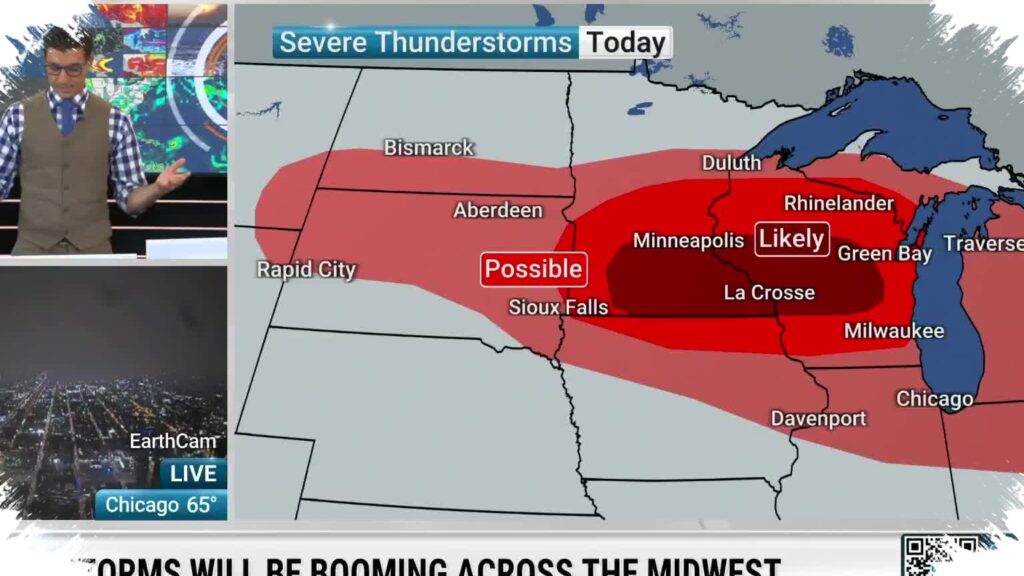
Severe thunderstorms are expected to develop across the Upper Midwest today as a new round of spring severe weather targets the region. Forecasters say the setup could support damaging wind, large hail, and at least a few tornadoes, especially in areas that sit along the main storm corridor.
The threat comes as warm, moist air pushes north while a stronger system moves in from the west. That combination can create the instability and wind shear needed for rotating storms, which is why weather teams are warning that conditions may become dangerous quickly during the afternoon and evening.
What the setup means
A storm system like this often builds along a sharp boundary between warmer air to the south and cooler air to the north. When that boundary tightens, thunderstorms can intensify fast, and the most powerful cells may produce hail large enough to damage vehicles, roofs, and crops.
The Weather Channel’s severe weather coverage has pointed to a classic spring pattern this week, with the Upper Midwest among the areas most at risk. In this kind of event, forecasters pay close attention to how much energy is available in the atmosphere and whether storms can organize into lines or isolated supercells.
Main hazards expected today
- Damaging straight-line wind gusts that can down trees and power lines.
- Large hail that can break windows and dent vehicles.
- Brief tornadoes, especially where storms stay isolated and remain discrete.
- Heavy rain that could reduce visibility and cause localized flooding in low-lying areas.
Storm modes may change as the day progresses, which makes the forecast more difficult in some neighborhoods than others. A storm that starts as a single severe cell can later merge into a larger line and expand the wind threat over a wider area.
Where the risk is highest
The greatest concern will focus on parts of the Upper Midwest that are closest to the strongest instability and the approaching trough. Areas farther south may still see storms, but the most organized severe risk should favor locations that sit within the warm sector and near the advancing front.
Local impact will depend on the exact track of the system, but communities in Minnesota, Wisconsin, Iowa, and nearby areas should stay alert for rapidly changing conditions. Small shifts in the front or in cloud cover can change the severity of the storm threat from one county to the next.
Why spring storms can turn severe so fast
Spring is one of the busiest times for severe weather because warm air can return quickly while upper-level systems still remain strong. That clash often creates a volatile atmosphere, and storms can go from ordinary showers to severe thunderstorms in a short time.
Meteorologists also watch for strong wind shear, which helps storms rotate and stay organized. When that happens, the risk of tornadoes rises, even if the tornadoes are short-lived and narrow.
What residents should do now
- Check the latest forecast and warnings from the National Weather Service.
- Charge phones and keep a weather radio nearby in case power goes out.
- Move cars under cover if large hail becomes likely.
- Secure outdoor furniture, trash bins, and other loose items.
- Know the safest shelter spot in a sturdy building before storms arrive.
People traveling across the region should also plan for sudden changes in road conditions. Heavy rain, hail, and strong crosswinds can make driving dangerous, especially on highways with open stretches and limited shelter.
Timing to watch
The most active window is expected during the afternoon into the evening, when daytime heating can help storms strengthen. That means some locations may stay quiet for much of the day before conditions deteriorate quickly later on.
Because severe weather can develop and move fast, officials typically advise treating every warning seriously. Even a storm that lasts only a few minutes can bring enough wind or hail to cause real damage, and radar updates may change the threat area several times as the system evolves.
The Upper Midwest should remain weather-aware throughout the day as forecasters monitor whether storms stay isolated or grow into a larger severe line. If the atmosphere destabilizes as expected, some communities could face strong to severe thunderstorms before conditions begin to improve later tonight.
Read more at: weather.com