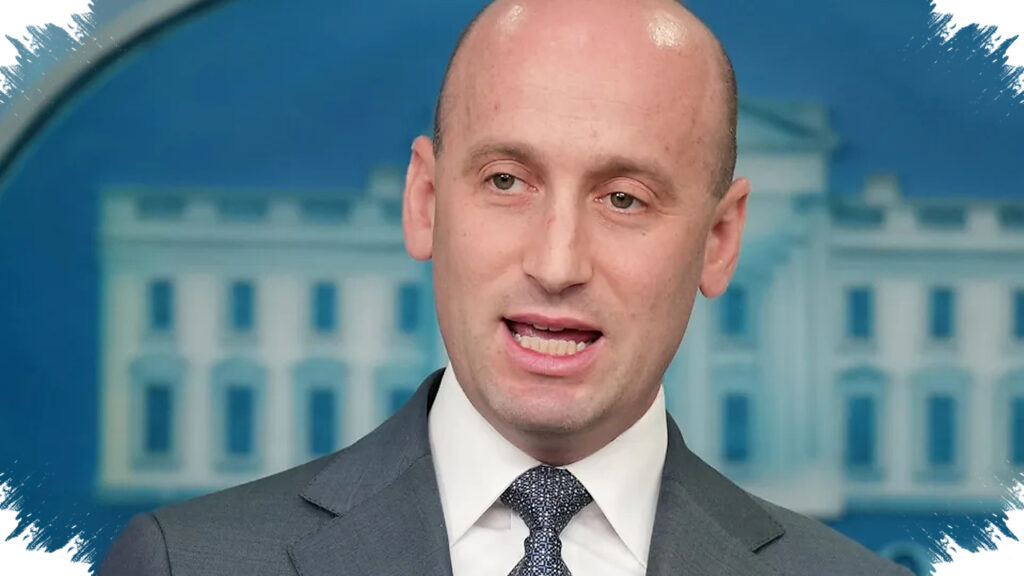
Stephen Miller has signaled that the Iran conflict could drag on for a very long time, saying the United States can keep pressure on Tehran “indefinitely” if Iranian leaders do not move toward a deal. The comment, made during an appearance on Fox News, underscored how far the war has escalated and how little certainty exists about when it could end.
The warning comes as the Trump administration keeps insisting that the campaign is meant to force Iran into a permanent agreement and block any path to nuclear weapons. At the same time, the conflict has already produced heavy losses, deepened regional instability, and fueled growing political blowback inside the United States.
Miller frames the conflict as open-ended
Miller, the White House deputy chief of staff, told Sean Hannity that President Donald Trump wants Iran to “choose the right path” and strike a deal. He then described the administration’s pressure campaign in terms that suggested no fixed deadline for easing up.
“The United States has the capacity to continue this indefinitely, if Iran chooses the wrong path,” Miller said. He also argued that the goal is to see the mission through “to completion,” while Trump seeks what he called a “final, safe, secure outcome for the people of the world.”
The rhetoric suggests that Washington is prepared for a prolonged standoff rather than a quick diplomatic breakthrough. That matters because any open-ended military and economic campaign can widen the risk of escalation across the Middle East.
How the U.S. is squeezing Tehran
The reference to an “embargo” does not describe a formal total blockade, but U.S. policy has still created severe pressure on Iran’s economy. Washington has restricted Iranian shipping, targeted ports and trade routes, and warned banks and foreign governments against handling Iranian funds or buying its oil.
Those measures have cut Iran off from large parts of the global financial system and sharply limited access to sea trade. In practice, that gives the Trump administration another tool to keep the conflict alive without immediately sending in more direct force.
- Restricted access to shipping lanes and ports
- Sanctions on foreign banks and companies dealing with Iranian oil
- Financial isolation from the global banking system
- Continued military pressure alongside Israel
That combination keeps pressure on Tehran while also making it harder for diplomacy to gain traction.
Trump’s message and the nuclear argument
Trump told Fox Business host Maria Bartiromo that the conflict could end “soon” if Iranian leaders are smart, but he has also cast the war as necessary to stop Iran from getting nuclear weapons. He claimed Iran could “take out the Middle East,” repeating a hard-line view that has become central to his public case for the campaign.
The administration’s justification remains tied to Iran’s nuclear program, especially its enriched uranium stockpile. International reporting has noted that Iran has accumulated more than 400 kilograms of uranium enriched to 60 percent, but there is still no conclusive public evidence of an active weaponization program.
That gap between the stated threat and the available proof has become one of the most contested parts of the conflict. Officials in Washington present the war as preventive, while critics argue the case for escalation is broader than the public evidence supports.
The political cost is rising at home
Public support for the war appears to be weak, despite the White House’s effort to frame it as necessary. A recent poll found that only 24 percent of Americans said the conflict was worth the cost, a figure that signals broad skepticism about the mission.
The numbers also clash with the expectations of many Trump voters, especially those who backed him because he promised to end “forever wars.” Polling by Economist/YouGov before the conflict showed 53 percent of Trump voters opposed U.S. involvement in Iran, highlighting the tension between campaign promises and wartime policy.
That backlash matters politically because the administration’s messaging has leaned heavily on peace language. Miller himself once attacked Kamala Harris as the “WWIII” candidate and described Trump as the candidate of peace, a contrast that is now under strain as the war deepens.
The regional conflict keeps widening
The Iran campaign is unfolding alongside broader fighting involving Israel, Hezbollah, and other regional actors. The war was launched with Israeli support, and clashes with Hezbollah in Lebanon have continued even as U.S. officials insist that separate channels are also being used to push for broader stability.
Israeli strikes hit Hezbollah positions, while the group responded with attacks on northern Israel. Israeli ground operations in southern Lebanon have also continued, showing that the conflict is not confined to one front.
What the current timeline suggests
The most important political takeaway is that Miller’s remarks point to a conflict with no clear end date. The administration is signaling that economic pressure and military force can continue until Iran accepts terms Washington considers acceptable.
That approach leaves several possible paths in play, each with different risks and consequences.
| Possible path | Likely effect |
|---|---|
| Iran accepts a deal | Conflict could cool quickly |
| Iran refuses and resists | U.S. pressure campaign continues indefinitely |
| Regional allies are drawn in | Fighting may spread beyond Iran |
| Talks fail completely | Military escalation could intensify |
Trump has also moved to open additional diplomatic channels in the region, including direct talks involving Israeli and Lebanese envoys in Washington. He later said leaders of Israel and Lebanon would meet for the first time in more than three decades, suggesting the White House is trying to manage several crises at once while keeping pressure on Iran.
Even so, Miller’s comments left little doubt that the administration is prepared to keep the campaign going for as long as it takes, with the war’s next phase depending largely on whether Tehran chooses confrontation or negotiation.
Read more at: www.yahoo.com