


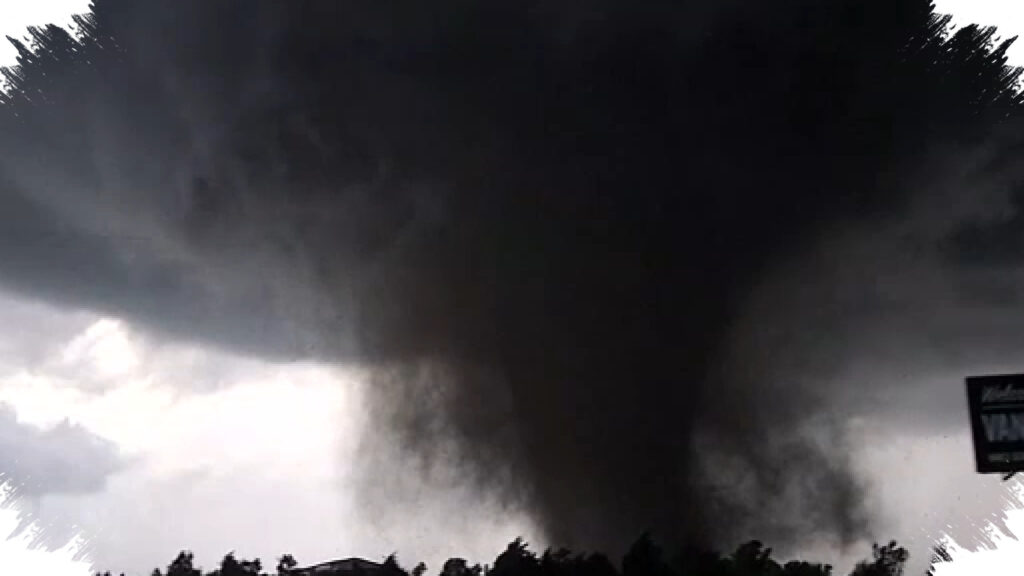
A dangerous severe weather outbreak is expected to keep threatening parts of the Plains and Midwest through Monday, with tornadoes, large hail and damaging winds all in play. The main risk expands as thunderstorms organize into supercells, and some storms could turn intense quickly as warm, humid air and strong wind shear combine.
The threat is not limited to one day or one state. Forecast guidance points to a multi-day setup that could bring severe storms from the Central and Southern Plains into the Mississippi Valley and lower Ohio Valley, while additional rain may also worsen flooding concerns in some areas.
Storms already underway
Thunderstorms are expected to continue across the Plains into the overnight hours, and the earliest round of storms has already shown how active the pattern can be. Very large hail, a few tornadoes, damaging wind gusts and some flooding are possible from the Central Plains into the Arklatex region as storms move southeast.
Several tornadoes have already been spotted by chasers in southern Oklahoma and western North Texas. In severe weather coverage, tornado watches are shown as red polygons, while severe thunderstorm watches appear as yellow polygons.
Sunday carries a strong supercell risk
The severe threat remains high on Sunday across the Central and Southern Plains, especially in parts of Kansas, Nebraska and Missouri. Supercell thunderstorms can form in that environment, and those storms may produce strong tornadoes along with very large hail and damaging winds.
Cities including Kansas City and Oklahoma City should pay close attention to the evolving forecast. Farther south, Dallas, San Antonio and Austin may see a lower severe storm threat, but large hail and damaging winds remain possible there.
Monday could bring the most widespread risk
By Monday, the higher severe threat could shift into the Mississippi Valley and lower Ohio Valley. Another round of supercells may produce strong tornadoes in parts of Iowa, Missouri and Illinois, and a few long-track, particularly dangerous tornadoes are possible.
Major population centers including St. Louis, Kansas City, Little Rock, Nashville, Indianapolis, Chicago and Des Moines should stay alert. The setup suggests that the same broad region could face repeated severe weather impacts over several days.
Rain may add to the hazards
The storm pattern will also bring more rounds of rain to parts of the western Great Lakes, where flooding has already been an issue or where soils remain saturated. More than an inch of additional rain is a good bet in much of the Midwest through Monday, which could trigger isolated flash flooding and slow the fall of rivers still in flood.
Locally flooding rain is also possible from parts of Missouri and Kansas into Arkansas and the mid-South, even in places that remain in extreme drought. Flooded roads can be hard to spot at night, and drivers are urged not to cross water-covered roads.
Tuesday keeps some risk in place
The severe threat may linger into Tuesday as a frontal boundary holds together across parts of the Gulf Coast states. The greatest concern stretches from northeastern Texas to northwestern Alabama, with Memphis, Little Rock, Shreveport and Huntsville among the cities that need to watch the weather carefully.
That broader pattern means the severe weather focus does not end after the weekend. Instead, the atmosphere is expected to keep supporting storms across a wide corridor, with the greatest attention on tornado potential, large hail and damaging winds.
Recent storms show the scale of the outbreak
The current setup follows a very active stretch last week that included more than 1,300 severe weather reports across the U.S. from last Monday through last Friday. Those reports included 154 tornado reports, 532 hail reports and 642 reports of thunderstorm wind damage or high wind gusts.
Thursday alone produced more than 20 tornado reports from Oklahoma to Iowa, along with over 160 combined damaging wind and hail reports. A rare tornado emergency was issued for the storm that hit Enid, Oklahoma and nearby Vance Air Force Base, where the tornado was later rated EF4 with winds of 170-175 mph.
That tornado was the first EF4 in Garfield County, Oklahoma, since April 26, 1991, and it caused 10 injuries. The National Weather Service office in Norman also reported five other tornadoes that day, and it said the tornado emergency was only the ninth it has ever issued.
Wind and hail were also severe enough to stand out, including a gust of 107 mph at Vance Air Force Base and a hail report measuring 4 inches in diameter in Marion, Kansas. Friday was less intense, but it still brought one tornado report in Kiowa, Oklahoma and more than 75 damaging wind and hail reports combined.
What stands out now
The ongoing threat matters because some of the same areas facing severe weather now were also hit hard last week. That overlap raises the stakes for communities across the Plains and Midwest, especially where storms may return before cleanup and recovery are complete.
Multiple ways to receive weather alerts remain important as the outbreak continues. The combination of tornado potential, hail, damaging winds and flooding means the danger can change quickly from one part of the region to another, especially as storms shift southeast and then expand eastward through Monday.
Read more at: weather.com