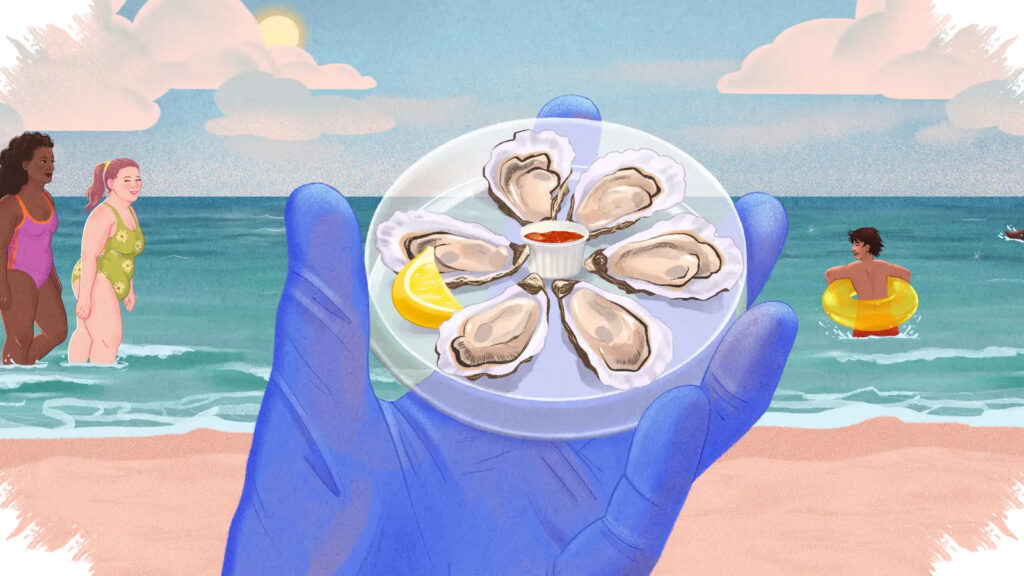
A dangerous marine bacterium is moving farther up the U.S. East Coast as coastal waters warm, and that shift has raised a real public health concern. The bacterium, Vibrio vulnificus, can cause severe wound infections and, in some cases, death within a day if treatment is delayed.
The risk is still limited for most beachgoers and seafood consumers, but officials and researchers say it is growing in places that were once too cool for the bacteria to spread easily. Monitoring efforts now focus on when and where the organism appears, because rising water temperatures and changing salinity are making coastal conditions more favorable for it.
What Vibrio is and why it matters
Vibrio is a group of marine bacteria that naturally live in warm, brackish water. Researchers say there are more than 70 Vibrio species in the environment today, and only a small number can make people seriously ill.
Most Vibrio-related illness in the U.S. comes from Vibrio parahaemolyticus, which usually causes food poisoning. The far more alarming species is V. vulnificus, sometimes called “wound-making” because it can enter through even a small cut and spread quickly.
How serious is the infection
The CDC estimates that about 80,000 cases of vibriosis occur in the U.S. each year and lead to about 100 deaths. The infection rate for the most severe form remains low overall, with the CDC reporting between 150 and 200 vulnificus cases a year.
The danger comes from how fast the infection can progress and how severe it can become. In the worst cases, the bacteria can cause bruising, swelling, tissue decay, septic shock, and death unless powerful antibiotics arrive quickly.
Who faces the highest risk
Health experts say anyone can get infected, but some groups face much higher risk. That includes people with liver disease, diabetes, weakened immune systems, and older adults.
Exposure can happen in two main ways: swimming in brackish water with an open wound or eating contaminated raw shellfish. For foodborne infections, the danger is especially serious because the bacteria can be present in raw oysters and other shellfish without any taste or smell warning.
Why climate change is increasing concern
Scientists say warming oceans are helping Vibrio spread. That matters because the world’s oceans have absorbed more than 90 percent of the excess heat trapped by greenhouse gas emissions.
Research shows that temperature and salinity are the strongest predictors of where Vibrio appears. The bacteria become active in water above 60 degrees Fahrenheit and multiply rapidly as coastal waters warm through summer.
How far north it is moving
In recent years, researchers have documented Vibrio reaching places that were once too cold for it to thrive, including parts of the U.S. East Coast as far north as Maine. A 2023 study found that the northern boundary of V. vulnificus infections has moved north by about 30 miles per year since 1998.
That same study warned that infections could extend into major population centers around New York and that annual case numbers may rise as temperatures increase and the population ages.
Weather events are making spikes more visible
The bacteria do not spread evenly. Instead, outbreaks often surge after extreme weather, especially hurricanes and marine heatwaves that push warm, brackish water into new areas.
Florida reported 17 deaths in 2022 and 19 deaths in 2024 linked to vulnificus exposure through open wounds, after major hurricanes pushed favorable water conditions inland. North Carolina, New York, and Connecticut also saw clusters of cases during a record-breaking heatwave in the summer of 2023.
Why scientists are building warning systems
Researchers at the University of Florida and the University of Maryland are working on an early warning system that could flag elevated risk in coastal counties about a month ahead of time. Their model combines CDC illness data from 1997 to 2019 with satellite data on water temperature and salinity.
The tool is not perfect, but it has shown useful predictive power. In a test using Florida public health data from 2020 to 2024, 72 percent of total cases occurred in counties the model had already flagged as high-risk, and it performed especially well before Hurricanes Helene and Milton.
What to know about seafood safety
Shellfish safety rules already reduce risk. States use “Vibrio control plans” that require harvested shellfish to be cooled quickly on boats and refrigerated within a set time after landing.
Those measures work when they are enforced. In warm, unrefrigerated oysters, Vibrio can reproduce every 20 minutes, which is why fast cooling remains important for preventing illness.
How worried should the public be
Experts say the bacteria are dangerous but still relatively rare compared with many other infections. That is why the main concern is not panic, but awareness, especially during warm months and after storms.
Public health officials continue to emphasize practical steps: avoid exposing open wounds to brackish water, handle raw shellfish carefully, and seek immediate medical care if severe symptoms appear after exposure. As East Coast waters keep warming, Vibrio is likely to remain a closely watched marker of both coastal health and climate-driven change.