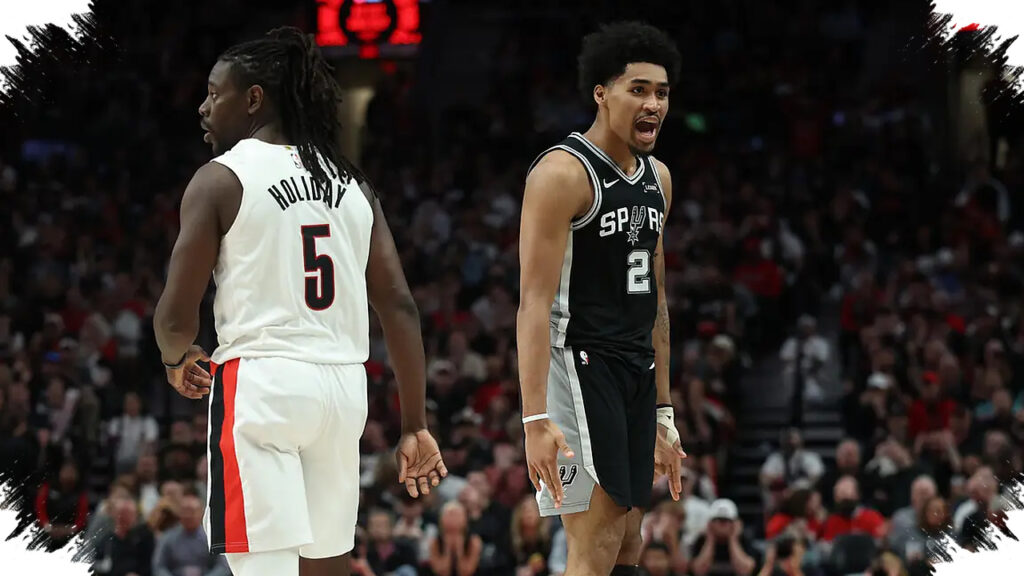
Dylan Harper has not looked like a rookie trying to survive his first playoff run. He has looked like one of the San Antonio Spurs’ most reliable players, and that has been a problem for opponents who expected youth to wobble under pressure.
Through seven playoff games, Harper has posted the team’s best plus/minus at +10.7, edging Victor Wembanyama’s +10.3. That number is not just a Spurs highlight, because it also ranks seventh among all playoff players who have logged at least 25 minutes a night and appeared in five games or more.
Harper’s impact has gone beyond scoring
Harper has done his damage in a steady, efficient role rather than by forcing highlight-chasing possessions. He has averaged 26 minutes per game and has given San Antonio a lift in lineups that already rank among the strongest in the postseason.
That matters because his production has come inside a team structure that does not need him to overextend. The Spurs have benefited from a player who understands when to attack and when to stay within the game plan.
The Spurs have turned youth into an advantage
The usual postseason narrative says young teams crack when the stakes rise. San Antonio has pushed back against that idea by using speed, athleticism, and energy as strengths instead of liabilities.
Wembanyama summed up that attitude after the team’s Game 2 statement win, saying, “It says that we don’t care.” Harper fits that mindset well, because his play has matched the team’s refusal to be defined by age.
A calm response when the series threatened to swing
The series did not stay smooth for San Antonio, especially after Wembanyama hit the floor at Frost Bank Center and was later ruled out for concussion protocol. The Spurs then dropped the game and entered the next matchup in Portland at 1-1, which could have created real momentum problems.
Instead, Harper helped steady things when the Trail Blazers built a big second-half lead in Game 3. The former Rutgers standout delivered his best scoring game of the playoffs with 27 points, and 22 of those came after halftime.
Why his role matters so much
Harper could chase a bigger offensive role most nights, but the Spurs do not need that from him. His value comes from knowing his place in a deep, dangerous group and refusing to do too much.
That kind of restraint is rare for young players with his background, especially one who arrived with major hype from high school and college. His skill still shows nightly, but his willingness to play within the system may be even more important than the scoring bursts that draw attention.