


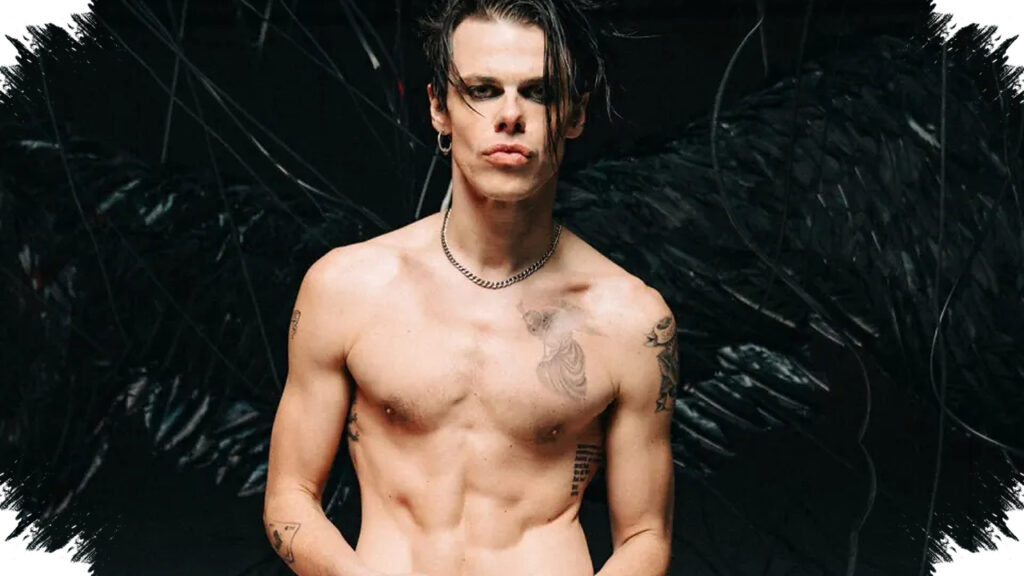
Yungblud says his rapid rise has changed the scale of everything around him, from the size of the crowds to the kind of attention he gets after a show. Speaking from his tour bus in Chicago, he describes the atmosphere in the US as more intense than in the UK, where he says fans are less likely to follow him everywhere.
Born Dominic Richard Harrison in 1997, the Doncaster-born artist spent years moving between different creative paths before his breakthrough. His breakthrough came with Idols, an album built around modern goth rock, alienation, and teenage angst, which turned him into a cross-generational rock figure rather than a niche cult act.
From child performer to Yungblud
Harrison decided early that he wanted a life onstage, and at 13 he asked his parents to send him to stage school. His father’s record shop also helped shape his early education, and that path led him to the Arts Educational School in Chiswick, followed by roles in Emmerdale, a Disney TV project, and a stage production of Bugsy Malone.
He later formed a band and created the Yungblud persona as a way to channel the frustration he says had been building for years. The character became the platform for a sound and image that mixed rock theatrics, emotional intensity, and a deliberately strong public identity.
A larger audience, and a wider crowd
Yungblud says the audience around him has grown beyond the angry teenage crowd that first connected with him. He now sees larger, louder rooms with a broader age range, and he compares the scale of the response to major legacy acts such as Ozzy Osbourne, Queen, Aerosmith, and INXS.
That expansion has also changed how he moves in public, since he can no longer meet hundreds of fans after a show without dealing with tighter security and more logistics. Even so, he says the interaction with fans remains part of what he works for, although he admits the pace can be exhausting.
Critics, image, and the idea of authenticity
The artist has also spoken openly about frustration with British critics, whom he считает slower to embrace new acts. He argues that he is often misunderstood because his image suggests darkness, while his real life is more straightforward, including fitness, no drug use, a girlfriend, and a strong connection to his fanbase.
He has also rejected the idea that he needs outside approval to justify his success. Referring to a review that criticized his songwriting despite a large Liverpool crowd, he pointed to the scale of the audience as proof that some critics may be missing the point of his appeal.
The American breakthrough
His profile in the US rose sharply after several major developments landed at once. Those included a Billboard Top 10 placement with the collaboration EP One More Time with Aerosmith, three Grammy nominations, including Best Rock Album for Idols, and a sold-out North American tour.
That momentum has brought backing from established rock figures as well. Billy Corgan has praised Harrison’s voice in unusually strong terms, while Dave Grohl has used him as proof that “rock ’n’ roll is not dead.”
What comes next
His ambitions now point beyond arenas and festivals. He says he wants to step onto stadium stages and sees that as the next major step, while also rejecting the label of rock’s future because he does not want others speaking for him.
He also describes himself plainly as “a middle-class kid” and “an English kid who loves his country,” pushing back against the more dramatic narratives built around him. After the current tour, he plans to head to Los Angeles to finish a new album with Andrew Watt, before returning to the UK with a profile that has grown far beyond the one he had when he first left.
Read more at: inews.co.uk