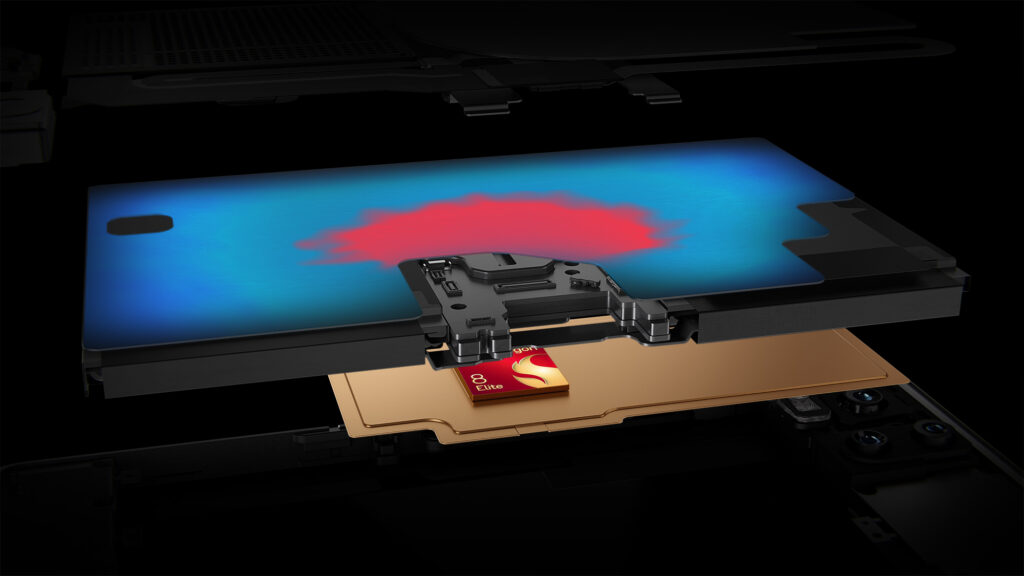
Gaming phones are no longer judged only by fast chipsets or high refresh rate displays. A more decisive factor is now taking center stage: whether a device can hold its performance steady when temperatures rise during long play sessions.
That is where Cooling AI becomes important. The AI-based cooling approach is designed to address overheating, a problem that often causes phones to slow down when demanding games run for extended periods.
How Cooling AI works
Cooling AI operates adaptively by adjusting processor performance, power settings, and cooling mechanisms according to the device’s workload. This means the system does not stay fixed, but responds more precisely when the phone is pushed by heavier tasks.
Its main purpose is not simply to make the device feel cooler. The system is built to keep temperatures stable so performance does not drop easily as work pressure increases.
In everyday use, performance loss caused by excess heat can be felt directly in game smoothness. That is why AI-based cooling is increasingly seen as an essential part of modern gaming phones.
Why stability matters in long sessions
Overheating has long been one of the main limits in mobile gaming. When temperatures keep climbing, devices usually reduce performance to protect internal components, and gameplay can start to feel less smooth.
Cooling AI is meant to reduce that problem through smarter workload management. The system helps balance performance needs and heat levels so the phone stays stable during long gaming sessions.
For competitive players, that kind of stability matters a great deal. Genres such as MOBA and battle royale require fast, consistent response from start to finish.
Built to support gaming hardware
Cooling AI also works alongside other gaming-oriented hardware improvements. Devices in this class generally come with powerful chipsets, high refresh rate screens, and more optimized graphics systems.
When heat and performance remain under control, the benefits of a fast display and stronger graphics can be used more consistently. In that sense, Cooling AI is not a standalone feature, but part of a more complete performance package.
For users, the result is fewer interruptions. The risk of lag caused by thermal throttling can be reduced, which helps keep gameplay more stable over longer periods.
Power efficiency plays a role too
The adaptive approach behind Cooling AI is also linked to power efficiency. By automatically adjusting workload behavior, the system is considered helpful in making battery consumption more economical, even when the device is under heavy use.
That matters because long gaming sessions usually drain power quickly. More efficient power management can extend usage time without sacrificing comfort too much.
This efficiency comes from the system’s ability to read the device’s needs dynamically. When the load increases, settings can be adjusted to maintain a balance between performance, temperature, and energy use.
The direction is clear: gaming phones are becoming more mature. The focus is no longer only on peak performance, but also on the ability to sustain that performance in a stable and comfortable way.
With better temperature control, steadier performance, and improved power efficiency, smartphone gaming is moving closer to the kind of consistent experience once associated more closely with consoles and PCs.