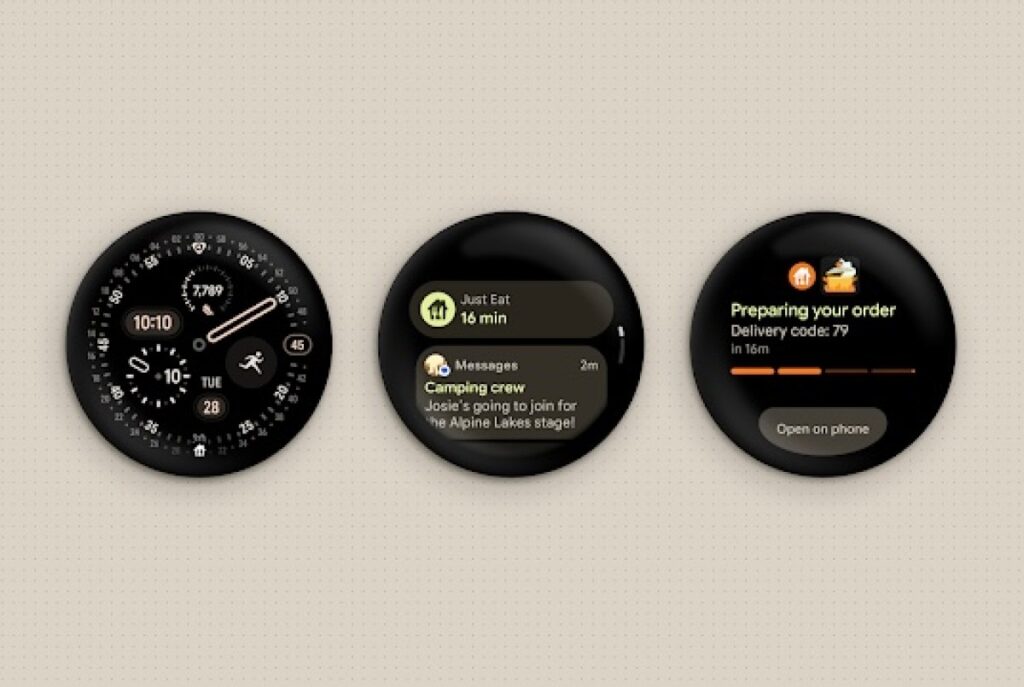
Wear OS 7 is shaping up to be one of Google’s most meaningful updates for Android smartwatches because it finally gives the wrist a more native role in handling information. Rather than acting mostly as a place for alerts, the platform is moving toward a model where quick access to relevant data and actions feels more immediate.
The biggest shift is the arrival of proper widgets built for the Android wearable ecosystem. Google is introducing the official Wear Widgets feature, and it is designed to make key information easier to view at a glance without forcing users into full app sessions.
A more familiar widget experience
Wear Widgets comes in small and large layouts, with a presentation that is aligned with 2×1 and 2×2 widget sizes on Android phones. That approach helps the experience feel familiar when users move between devices.
It also marks a clear change in how Google positions the smartwatch. The watch is no longer treated only as a compact notification screen, but as a place where frequently needed information can live in a more usable form.
Live information replaces an older framework
Wear OS 7 also introduces Live Updates, which follows a model similar to the one used on Android. This feature replaces the older Ongoing Activities framework and is meant to show real-time information in a quick, glanceable format.
Examples include a newly booked taxi or the progress of a food delivery order. On a small screen like a smartwatch, that kind of update is more practical than repeatedly opening apps just to check status changes.
The move from Ongoing Activities to Live Updates also points to a simpler and more unified platform design. Google appears to be aligning the way real-time information is presented across Android and Wear OS.
Gemini becomes part of the watch experience
Wear OS 7 is not only about display improvements. Google is also preparing an agentic experience on the watch, allowing apps to connect with agents and assistants such as Gemini.
That integration matters because it reduces the need for manual navigation on a tiny screen. Instead of tapping through menus, users can rely on voice input to complete tasks more efficiently.
Google’s example uses Samsung Health. A user can ask Gemini to start tracking a run, and the app will handle that action.
The company also says Gemini’s agentic capabilities will extend to more complex wrist-based tasks. One example is ordering DoorDash, where the system can manage the relevant steps after receiving a voice command.
Why the update matters for Android watches
Taken together, widgets, Live Updates, and Gemini create a more functional direction for Wear OS 7. Widgets help with ongoing monitoring, Live Updates keep information fresh, and voice-driven assistance makes direct action easier.
If developers adopt these tools widely, the everyday value of an Android smartwatch could change significantly. The watch would be useful not only for time, notifications, or fitness data, but also as a faster entry point to information and actions.
Google has already opened Wear OS 7 for developer testing. A broader launch is expected later this year, making this a notable step for a platform that has long needed a stronger answer to one of its most visible gaps.
Source: www.androidpolice.com