A portable device does not need to follow the smartphone formula to be useful, and T-Deck Max makes that point clearly. LilyGo has positioned the device as a flexible communication tool for users who like to experiment, with connectivity options that extend beyond ordinary cellular dependence.
Its most notable strength is the ability to exchange small amounts of data without relying on a mobile network. T-Deck Max supports LoRa for independent transmission, while GNSS and a GPS module help with location information when needed.
That approach gives the device a place in scenarios where a standard phone may not fit well. One example is use in large factory areas as a personal emergency signal tool, with LoRa repeaters extending the range further.
A 4G connection is still available as an additional option. Even so, LilyGo appears to treat LoRa as the main attraction because it enables messaging and light data transfer without a carrier network.
Built around low-power display hardware
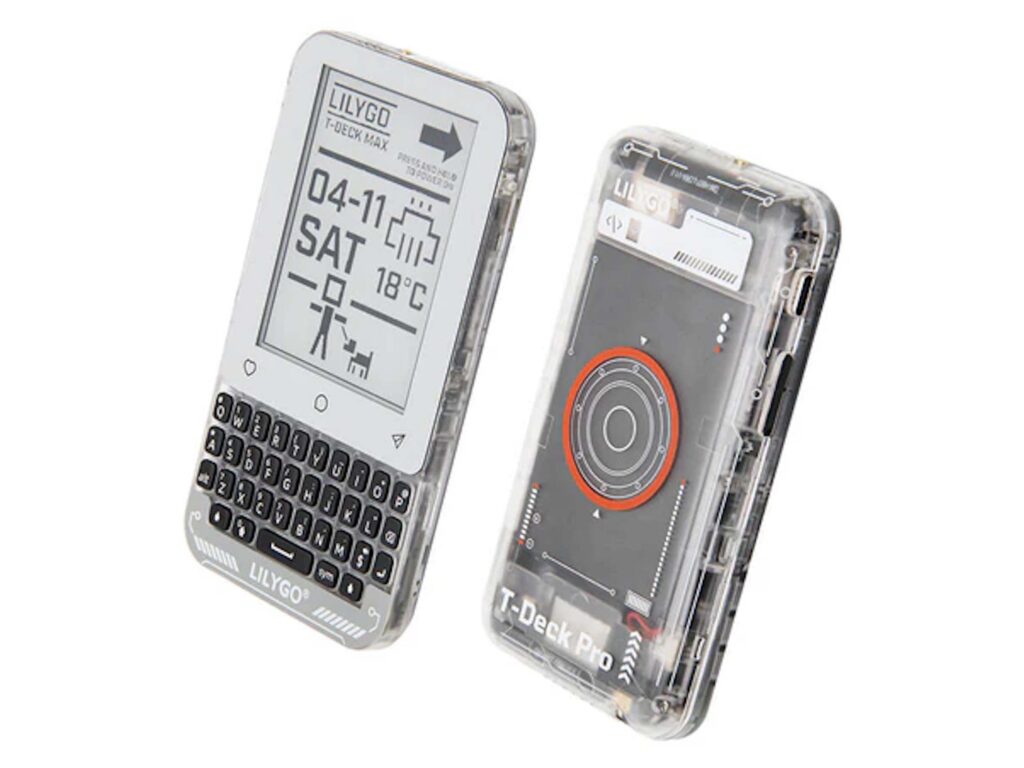
T-Deck Max uses a 3.1-inch e-ink display with a 320 x 240 pixel resolution. The panel is designed to save power, which suits a device meant for long use rather than flashy visual presentation.
The screen choice also reinforces the product’s practical character. It is better aligned with simple information display than with the demands of a conventional modern smartphone.
Core hardware aimed at utility
At the center of the device is an ESP32-S3 board. That limits raw performance, but it still fits the intended tasks of messaging, data exchange, and other basic functions tied to the device’s concept.
LilyGo adds several practical components around that core. The device includes a microphone, speaker, microSD slot, keyboard, and support for additional sensors and actuators.
A better fit for builders than casual users
The presence of a built-in keyboard makes text input more convenient without extra accessories. Support for programming through Arduino or PlatformIO IDE also makes T-Deck Max more appealing to developers, tinkerers, and users who want to adapt the device to their own needs.
That flexibility is a large part of its identity. T-Deck Max is not just a communication device, but also a platform that can be expanded around different technical projects.
Positioned as a niche mobile device
LilyGo lists T-Deck Max at around $110. The model is still not presented as a fully universal, ready-for-everyone mobile product, and its design remains aimed at users who value experimentation and alternative connectivity.
With LoRa, GNSS, an e-ink display, and optional 4G in one package, the device stands out in a crowded category. Its value lies less in replacing a smartphone and more in offering a compact tool for lightweight communication and technical exploration.
Source: www.notebookcheck.net