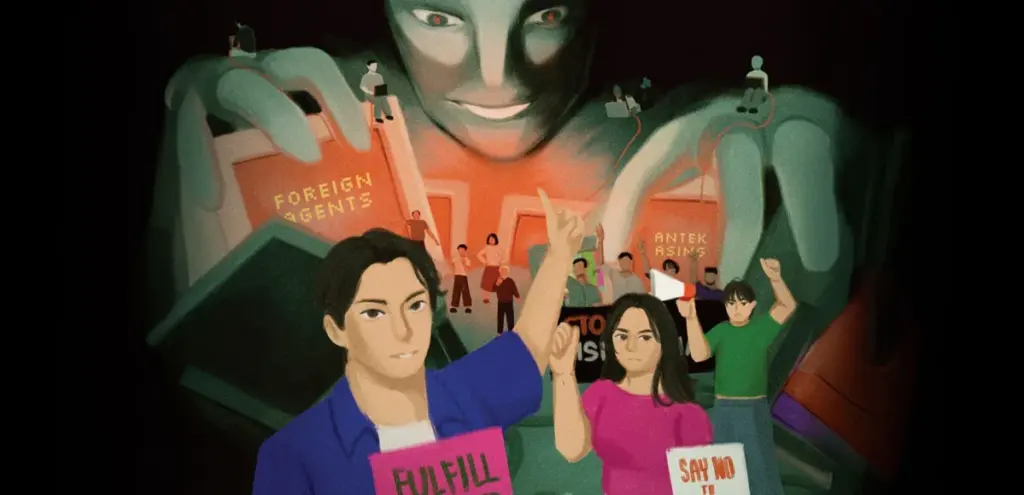
A wave of online disinformation in Indonesia is increasingly targeting people who criticize power, with activists, journalists, academics, and demonstrators framed as “foreign agents.” Amnesty International says the pattern is not random noise on social media, but a coordinated effort that narrows public space for dissent.
In its report Building Up Imaginary Enemies, Amnesty argues that the label is being used as a political weapon to discredit critics of the government. The group says the result is more than reputational damage, because it also helps justify repression and weakens healthy public debate.
Coordinated pressure across platforms
Amnesty says the campaigns it documented relied on hundreds of social media accounts posting the same videos, graphics, and messages at roughly the same time. The organization said some of those accounts appeared linked to military elements and government supporters, and the content spread across multiple digital platforms.
The group also noted that many of the posts remained online for months, while some stayed active for more than a year. That longevity, according to Amnesty, points to weak control over disinformation in digital spaces.
The organization said the spread was amplified by platform algorithms that tend to elevate content with high engagement. That dynamic, Amnesty warned, allows provocative and manipulative material to travel quickly and repeatedly.
Targets of the campaign
One of the clearest examples in the report involves Andrie Yunus, the deputy coordinator of KontraS. Amnesty said he became a target after leading a peaceful protest against revisions to the TNI Law.
According to the organization, dozens of accounts posing as military units, along with hundreds of anonymous accounts, accused him of being a “foreign agent” funded by outside interests. The narrative then moved into wider public circulation and intensified pressure on him.
Andrie later survived a violent attack in Jakarta in March 2026, when he was doused with acid and suffered severe chemical burns. Authorities arrested four military members in the investigation, but Amnesty said the disinformation campaign continued afterward.
The attacks did not stop at the assault itself. Amnesty said later posts even claimed Andrie staged the attack in order to attract foreign support.
Media, environmental activism, and intimidation
The report also highlights pressure on Tempo after the investigative outlet published critical coverage of government policy. Amnesty said digital campaigns portrayed the newsroom as being controlled by foreign donors.
That online harassment was followed by physical intimidation, including the delivery of a pig’s head and severed rat carcasses to the outlet’s newsroom. Amnesty said a new narrative then emerged, claiming the intimidation was staged to gain international sympathy.
Greenpeace Indonesia activist Iqbal Damanik was another target identified in the report. After he led opposition to mining activity in Raja Ampat, West Papua, he reportedly received many death threats through direct messages after accusations linking him to Papuan separatist groups spread online.
A wider climate of fear
Amnesty Secretary General Agnès Callamard said authoritarian practices in Indonesia have intensified over the past 18 months under the Prabowo administration. The organization said similar narratives tend to surge whenever protests emerge over corruption, budget policy, environmental issues, or the expansion of military roles.
In those moments, critics are portrayed as being controlled by foreign interests, Amnesty said. The organization described that pattern as a systematic effort to make people hesitate before speaking out.
Amnesty also criticized Meta, TikTok, X, and YouTube for failing to stop the spread of disinformation. Of the platforms contacted, only TikTok responded formally and said it would increase monitoring.
The broader concern, Amnesty said, is that the campaign creates an atmosphere of fear that reaches beyond the original targets. People may begin to avoid criticism, public demonstrations, or cooperation with civil society groups because they fear being branded as “foreign agents.”