Structured workflow is starting to replace chat-first AI coding, and Routa is one of the clearest examples of that shift. Instead of leaving important decisions buried in long conversation threads, the framework turns coding work into a trackable pipeline with defined stages, clearer accountability, and more visible quality control.
That approach matters because chat-based AI tools can become hard to manage once a project grows in complexity. Technical details get scattered across long exchanges, which makes them difficult to review, audit, or trace when problems appear later.
A workflow built like software delivery
Routa is positioned as an AI-assisted coding framework with a local-first design. Better Stack highlights that it is not centered on extended back-and-forth chat, but on a workflow closer to professional software delivery.
The framework breaks work into smaller tasks and assigns them to AI agents at each stage. That structure is inspired by Continuous Integration and Continuous Delivery, or CI/CD, so the status of each task can be monitored more clearly from start to finish.
This gives developers a more orderly view of what is happening. Important steps are less likely to be skipped, and the work does not remain just a chain of prompts and responses.
Visibility is part of the design
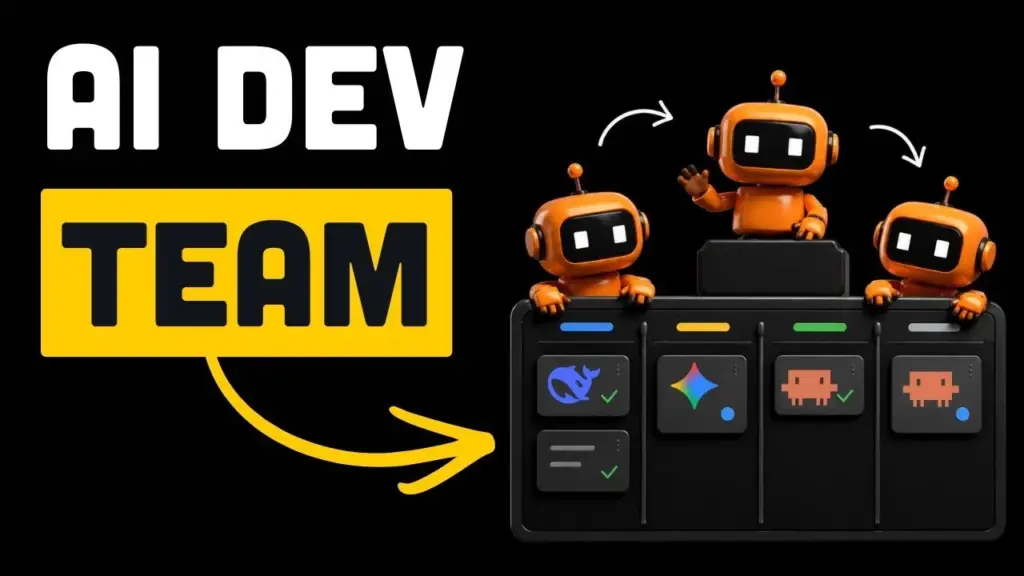
One of the main tools in Routa is a Kanban board used to visualize progress. The board helps teams see where each task stands and keeps the process organized across the workflow.
Routa also takes a local-first approach, which means it can be used independently of cloud services. Self-hosting support through Docker gives users more control over their data and reduces dependence on external platforms.
On the integration side, Routa can connect with AI agents such as Claude through an API. It also supports agent protocols like MCP and ACP, which are meant to improve communication and coordination between AI agents.
Tracking decisions and enforcing quality
A notable part of the framework is evidence tracking. This feature stores records of AI-generated decisions, making debugging and change review easier to manage.
Routa also includes automatic quality gates. Checks such as testing, code review, and acceptance criteria are built into the workflow so quality control does not depend only on a final manual review.
That is one reason the framework is being discussed as more than another AI coding interface. Its focus is on process visibility, traceability, and accountability rather than only on generating code quickly.
Why chat-first tools can fall short
The issue with many AI coding tools is not only what they can produce, but how they organize the work. When a project involves many steps, multiple decisions, and several AI agents, the process can become messy very quickly.
Routa is designed to reduce that problem by giving each task a clear status and a traceable path. That makes it easier to avoid missed steps, miscommunication, or undocumented AI decisions.
Traceability is another major concern in conventional AI coding tools. Without a clear record, it becomes difficult to understand why a change was made or where a bug originated.
Where it sits in the AI coding landscape
Routa sits between two common approaches in AI coding. Chat-first tools such as Cursor and Claude are strong for conversation, but they are less focused on workflow structure and traceability.
On the other side are agent frameworks such as Crew AI and LangGraph, which offer more flexibility. Those systems often require more customization before they can function as a ready-to-use workflow.
Routa tries to bridge that gap. It combines AI integration with a more disciplined work structure, which makes it more suitable for projects that need precision and process oversight.
Not built for every team
Even with those advantages, Routa is not the simplest option for everyone. It has a steeper learning curve than chat-based tools and requires more effort during initial setup.
It also offers fewer ready-made AI agents than some commercial platforms. Users may need to integrate their own solutions to adapt the framework to a team or project.
For quick questions, short experiments, or highly ad hoc tasks, a chat-based tool may still feel more convenient. But for development that depends on traceability, quality standards, and data control, Routa shows how AI coding can move beyond chat alone.
Source: www.geeky-gadgets.com