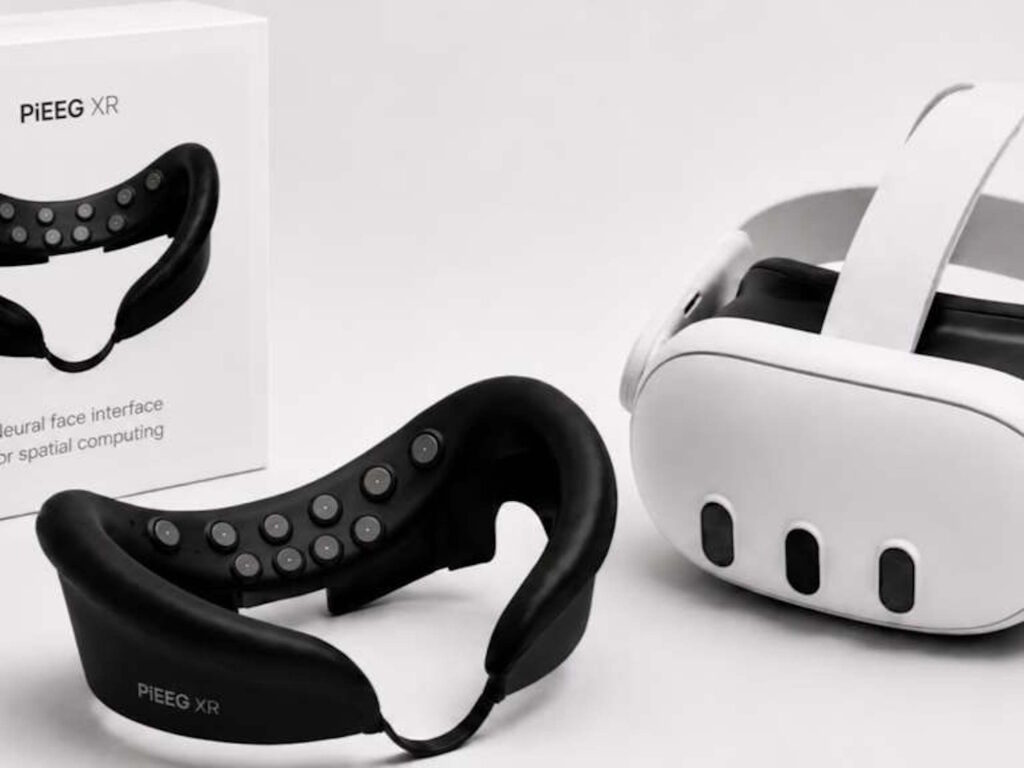
PiEEG XR is positioning itself as a more expressive way to interact with virtual environments by reading brain activity in real time. Instead of treating EEG as a separate research tool, the device brings it into the VR interface itself so emotions and reactions can be captured more directly.
That approach makes the project stand out among XR concepts aimed at spatial computing. PiEEG XR is not being framed as a typical consumer headset accessory, but as an interface for makers and researchers who want to experiment with neural input inside VR.
EEG brought into the headset
At the core of PiEEG XR is electroencephalography, or EEG, a method long used to measure brain activity. The difference here is how the technology is integrated, with electrodes placed in the headset’s face cushion so they touch the user directly during use.
This design turns brain measurement into part of the headset experience rather than a separate add-on. In VR scenarios, that could make interaction feel more natural because the system is intended to capture signals as users move through virtual spaces.
Fast signal processing and wireless use
PiEEG XR relies on ironbci for processing incoming data, with the ability to record 250 data points per second. That level of speed is aimed at delivering high temporal resolution so changes in the brain signal can be detected more quickly.
The device also uses Bluetooth for connectivity. That choice fits the direction of modern VR hardware, especially fully wireless headsets such as Pico 4 Ultra, and it avoids adding cables to an experience meant to feel immersive.
Built for developers and research work
The project is also being prepared with an API and SDK, which should make it easier for developers to adapt the system for different use cases. Rather than locking the device into one narrow role, the software support opens the door to broader experimentation.
PiEEG XR is expected to arrive through a Kickstarter campaign, which places it closer to a development project than a mass-market product. That positioning matters because the current focus appears to be on research and prototyping rather than a finished consumer rollout.
Versions and ecosystem support
Several variants are planned for the PiEEG XR line. These include PiEEG XR Mask, a research kit with ironbci, and an all-in-one consumer version.
Native VRChat compatibility is also claimed. That is notable because VRChat remains one of the most active social spaces in VR, where users rely heavily on expression, identity, and interaction.
The project also has backing from Ildar Rakhmatulin, who is described as someone with previous efforts to bring another project to market. His involvement adds weight to PiEEG XR’s ambition to move beyond a concept and into a wider ecosystem.
Taken together, the headset-based electrodes, the 250 Hz data capture, and Bluetooth connectivity show a clear attempt to merge medical EEG principles with modern XR needs. PiEEG XR is trying to make brain activity part of the virtual interaction layer, not just something measured in the background.
Source: www.notebookcheck.net