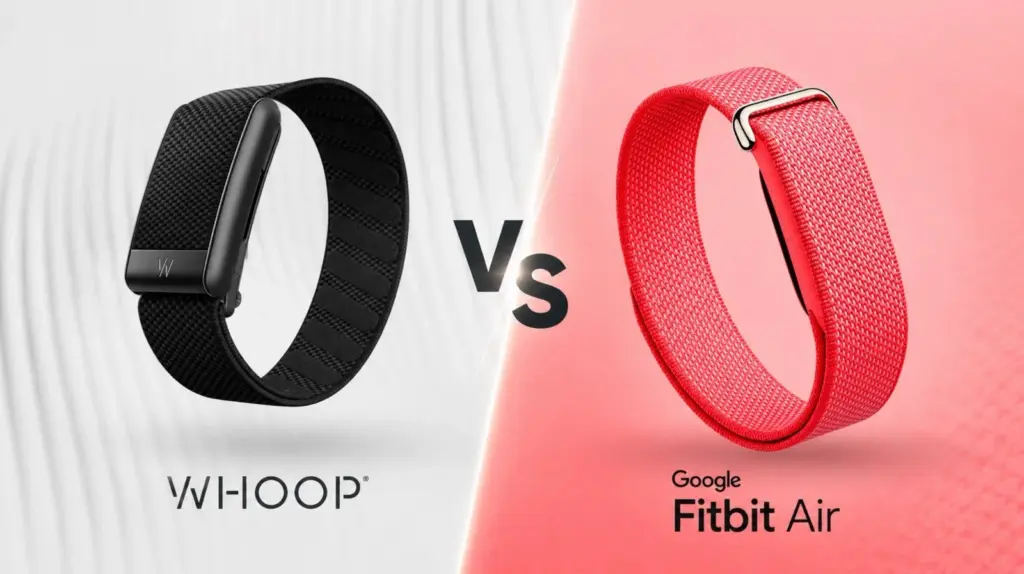
The wearable market is shifting toward a simpler question: which device delivers the most value for the money. That shift puts pressure on Whoop, especially as Google’s Fitbit Air enters the conversation at a $99 price point with no mandatory subscription for basic features.
For a brand long associated with premium, data-heavy fitness tracking, that is not a small challenge. Whoop has built its position around advanced health and performance analysis, but it depends on a $200 annual subscription to unlock much of that value.
A lower entry price changes the comparison
Fitbit Air arrives as a far easier purchase decision for many buyers. It gives users the core health-tracking experience without forcing them into an ongoing payment plan from day one.
That matters because Whoop’s model has increasingly faced scrutiny from consumers who now compare total ownership cost, not just hardware design. A lower upfront price can quickly reshape how people judge whether premium insights are worth the extra expense.
The contrast is especially sharp for users who want serious fitness data but do not want to commit to recurring fees. Fitbit Air directly targets that sensitivity, while Whoop continues to ask buyers to pay more to access its full service.
Similar design, different strategy
Visually, the two devices share a minimalist approach. Neither one relies on a display-heavy design, and both focus on health tracking rather than entertainment or notifications.
The similarities end there. Whoop is aimed more at serious athletes and users who want detailed performance metrics, while Fitbit Air is positioned closer to casual consumers and shoppers who care about affordability.
That split reflects a wider change in the wearable market. Buyers are increasingly looking for products that feel practical, easy to wear, and free from hidden cost pressure.
Premium AI is no longer an unchallenged advantage
Whoop’s strongest selling point has been its AI-driven insights and deep health analysis. Those features helped the company build a strong reputation in the premium segment, especially among users focused on recovery, training load, and readiness.
But that advantage now faces a more crowded field. Google has significant AI expertise, and that raises expectations that Fitbit Air could improve over time and narrow the gap.
At the moment, Fitbit Air may not match Whoop’s algorithmic depth. Even so, the combination of a low price, a minimalist design, and the possibility of stronger AI support later makes it a credible challenger.
Pricing transparency is becoming a bigger issue
Whoop’s pricing has drawn criticism beyond the annual subscription itself. Some users have also pointed to extra charges for hardware upgrades, arguing that the company’s structure feels less flexible and less transparent than it should.
That criticism becomes more important as cheaper alternatives appear. When a device like Fitbit Air offers a simpler path into wearable health tracking, consumers have more reason to question whether Whoop’s recurring cost still makes sense.
The market is also rewarding products that are easier to understand. A straightforward price can be more persuasive than a premium brand promise if the buying decision is made under budget pressure.
The wider market is pushing in the same direction
Whoop is not facing this pressure alone. Garmin and Apple are also expanding their offerings by combining advanced health tracking with more competitive pricing.
That broader trend is changing expectations across the category. Consumers now want useful features, reasonable prices, and service models that do not feel restrictive.
For premium subscription brands, that creates a higher bar. Exclusivity alone is no longer enough if users believe they can get a better deal elsewhere.
The strain is already visible in customer sentiment. Some users have expressed disappointment with Whoop’s value proposition, especially when comparing it with cheaper devices that appear easier to adopt.
Whoop now has to defend its model
This leaves Whoop with a difficult task. It must preserve its premium identity while also responding to demands for lower friction, clearer pricing, and stronger perceived value.
That could mean revisiting its pricing strategy, improving its AI capabilities, and addressing user concerns about transparency. Without those adjustments, the company may find it harder to justify a model built around recurring payments.
Rumors about a possible Amazon acquisition add another layer of uncertainty, even though the broader direction of the industry is already clear. More affordable wearable health devices are gaining traction, and Fitbit Air is becoming a visible symbol of that shift.