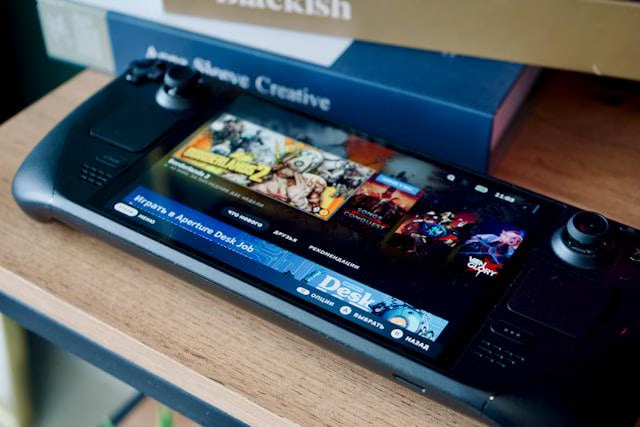
Handheld gaming is entering a more expensive phase, and Steam Deck OLED is one of the clearest examples. Valve has raised the price of the OLED model, pushing a device once seen as relatively accessible into a much pricier category for new buyers.
The sharpest jump hits the larger storage versions. Valve increased the Steam Deck OLED 512 GB from $549 to $789, while the 1 TB model now costs $949 after a $300 increase.
A wider price surge across gaming hardware


Steam Deck is not being singled out here. Major console brands have also adjusted prices upward in recent times, showing that handheld gaming is being pulled into the same cost pressure affecting the broader market.
Microsoft has already raised prices across the Xbox Series S and Xbox Series X lineup. Sony followed with a higher price for the PlayStation 5 Pro, which now reaches $900, while Nintendo lifted the Switch 2 to $500.
That broader pattern matters because it changes how the Steam Deck OLED is perceived. Even with its appeal intact, the device no longer sits in the range many buyers associate with an affordable portable gaming option.
RAM shortages are at the center of the problem
One major reason behind the price movement is the ongoing RAM crisis in the global technology industry. Companies are racing to build AI data centers, and those facilities require huge amounts of memory.
That demand is putting pressure on the supply chain for memory chips. Manufacturers are increasingly drawn to the higher margins of data center business, which leaves less stable supply for consumer products.
The result reaches far beyond one handheld device. Consoles, laptops, and handheld gaming systems are all facing higher production costs as memory becomes harder to secure at steady prices.
Other cost pressures are adding to the strain
Tariff policy has also complicated the pricing environment. Import tariffs introduced by President Donald Trump on several manufacturing countries have added uncertainty for producers, even though the policy has not unfolded exactly as planned.
For companies that build and ship gaming hardware, uncertainty is enough to make pricing harder to manage. It complicates forecasts for production, distribution, and final retail prices.
In Indonesia, the pressure can be even more noticeable because of exchange-rate movements. When the U.S. dollar strengthens against the rupiah, imported hardware naturally becomes more expensive for local buyers.
What the new pricing means for the market
Higher hardware prices can slow down the arrival of new players into gaming ecosystems. Developers and publishers depend on a large user base to recover their investments, so rising device costs can make market growth harder.
Existing console owners also face a tougher decision. Some games are beginning to leave older hardware behind, including Call of Duty: Warzone, which is gradually ending support for older consoles.
That combination leaves many players in a difficult position. Upgrade pressure is rising at the same time that the cost of entry is moving higher, and there is still no clear sign that handheld and console pricing will quickly return to more affordable levels.
Source: www.idntimes.com