Universitas Brawijaya is moving to strengthen its cyber security education pipeline through international partnerships that connect classrooms, curriculum design, and research access. The initiative places the Faculty of Vocational Studies in direct collaboration with major Russian institutions and technology players as demand grows for specialists who can protect data in an increasingly digital environment.
The university is not treating cyber security as an optional subject. It is positioning the field as a future-facing discipline with strong value in the job market, while also preparing a more adaptive learning ecosystem for students who will face increasingly complex hacking threats.
At the center of the effort is a collaboration with Positive Technologies, one of Russia’s major technology companies, alongside RUDN University and the Moscow Institute of Physics and Technology, or MIPT. The partnership is intended to bring industry closer to the classroom and make the curriculum more relevant to practical needs.
UB’s delegation to Russia was led by Mukhammad Kholid Mawardi, Ph.D., Dean of the Faculty of Vocational Studies, together with Prof. Dr. Unti Ludigdo, Vice Rector V, and Dr. Aan Eko Widiarto, Dean of the Faculty of Law. They met Alexander Udalov, Director of International Channels and Education Programs at Positive Technologies, to refine the concept of cyber security education.
One of the main ideas discussed was bringing expert professors from Russia to Indonesia. These specialists would not only teach, but also help develop a cyber security curriculum roadmap within the vocational environment.
The faculty wants the learning model to move beyond theory. Practical involvement from world-class technology practitioners is expected to strengthen student readiness and create a tighter link between academic content and industry expectations.
A 3-in-1 learning model for students
After the meeting with Positive Technologies, the delegation continued its agenda at RUDN University. There, the focus shifted to the development of a collaborative 3-in-1 program, one of Universitas Brawijaya’s key learning models.
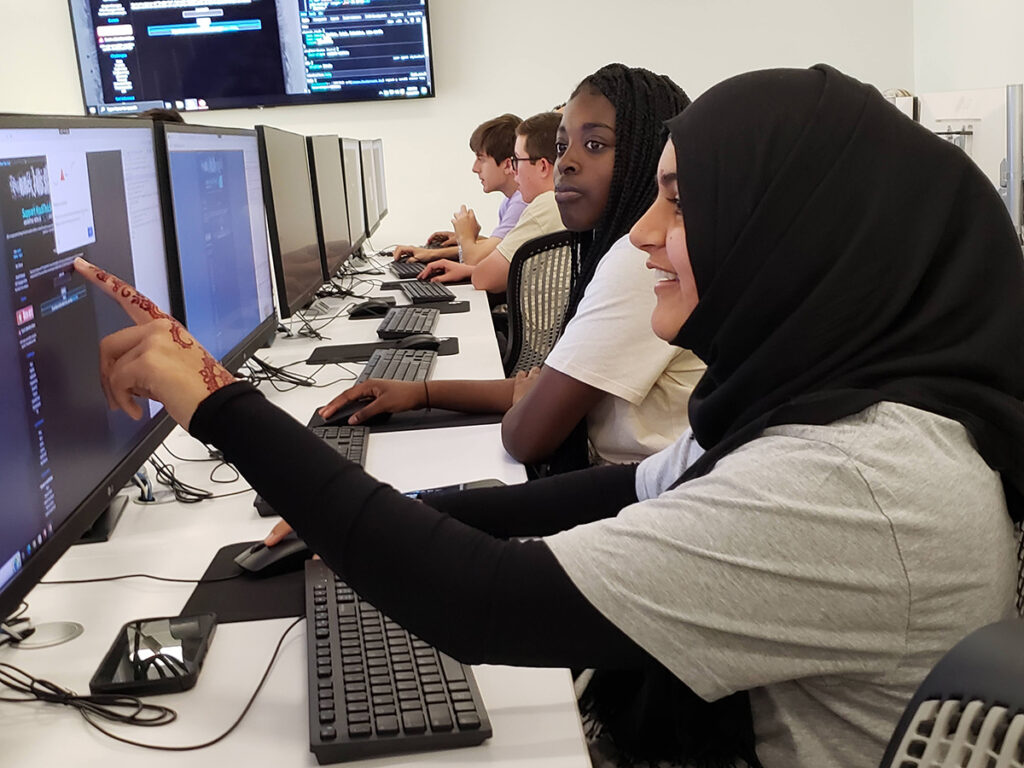
The scheme combines internal lecturers, overseas academics, and industry practitioners in a single teaching process. Students are expected to gain a solid theoretical foundation while also learning how experts deal with real cyber attack cases.
UB sees this model as a way to reduce the distance between academia and industry. It is also expected to improve graduate readiness for work in multinational companies.
Research access and scholarship opportunities
The partnership with MIPT opens a wider channel for lecturer exchange, research collaboration, and student mobility. The institute is led by Dmitry Livanov, Russia’s former Minister of Education and Technology, and is known as an elite campus in science and technology.
MIPT also offered full scholarship schemes for outstanding Indonesian students. The opportunities are available for both undergraduate and master’s degree studies in Russia.
For Indonesian students interested in data encryption and cyber defense, the offer creates a direct path into a stronger technological environment. UB views that kind of access as relevant for building a more competitive pool of future experts.
Diplomatic support adds weight
The delegation also attended the Kazan Forum and met Shevtson Pavel, Deputy Head of Rossotrudnichestvo at the Russian Ministry of Foreign Affairs. Pavel praised UB’s effort to build bridges in education and human resource development across countries.
The Russian foreign ministry sees Indonesia as a strategic partner in Asia. That view adds momentum to efforts to turn the understanding into concrete programs that can strengthen cyber talent in both countries.
For Universitas Brawijaya, the series of meetings in Russia signals a broader effort to position the campus as responsive to global technology trends. The collaboration also opens pathways for students and researchers to enter an international technology ecosystem through education, research, and academic exchange.
Source: id.mashable.com