


Nintendo’s European hardware strategy is under growing pressure from two directions at once. On one side, the company is being pushed to align its consoles with the European Union’s right-to-repair rules, and on the other, the current pricing of Switch 2 leaves little room for a lower-cost alternative.
That combination makes a cheaper Switch 2 Lite look less like a distant idea and more like a practical necessity. If the original Switch is eventually removed from sale in the EU, Nintendo could lose the entry-level model that has long served as the most affordable way into the Switch ecosystem.
The original Switch may not stay on shelves for long
The first-generation Switch, which launched in 2017, still has value because of its lower price and broad game compatibility. Many newer games continue to work across both Switch generations, which helps keep the older system relevant during the transition to Switch 2.
Even so, its position in Europe is becoming less certain. The EU’s battery rules do not affect hardware already in circulation, but Nintendo still has time until February 18, 2027 to prepare enough old-stock hardware for sale.
Nintendo has not clarified whether the same kind of redesign required for Switch 2 will also be applied to the original model. That uncertainty matters because the older console is still sold in several markets, and its continued availability in the EU is no longer easy to assume.
Right-to-repair rules are changing Nintendo’s hardware plans
Nintendo is reportedly adjusting Switch 2 to fit the EU’s right-to-repair requirements. One important part of that shift is making the battery easier for consumers to replace.
That change is tied to a compliance deadline set for February 18, 2027. It also introduces a wider question about how far Nintendo will need to go in revising other consoles that are still on sale.
Technically, products identified with the “BEE” code are expected to move to the “OSM” label after the revision. The “BEE” designation already appears on Switch 2, as well as on games, controllers, and accessories.
Why a cheaper Switch 2 model matters
The risk for Nintendo is that removing the old Switch without a lower-priced replacement would force European buyers straight into a more expensive generation. That concern is amplified by the price position of Switch 2 itself.
The console is said to rise from €469.99 to €499.99 in September 2026. In that setting, a Switch 2 Lite would fill a clear gap for buyers who want the newest Nintendo system without paying full price for the main model.
A more affordable variant would also help Nintendo preserve reach in a market where price sensitivity remains high. If the regular Switch disappears from retail, the company would need another entry point that does not rely on the premium hardware tier.
What a Switch 2 Lite could look like
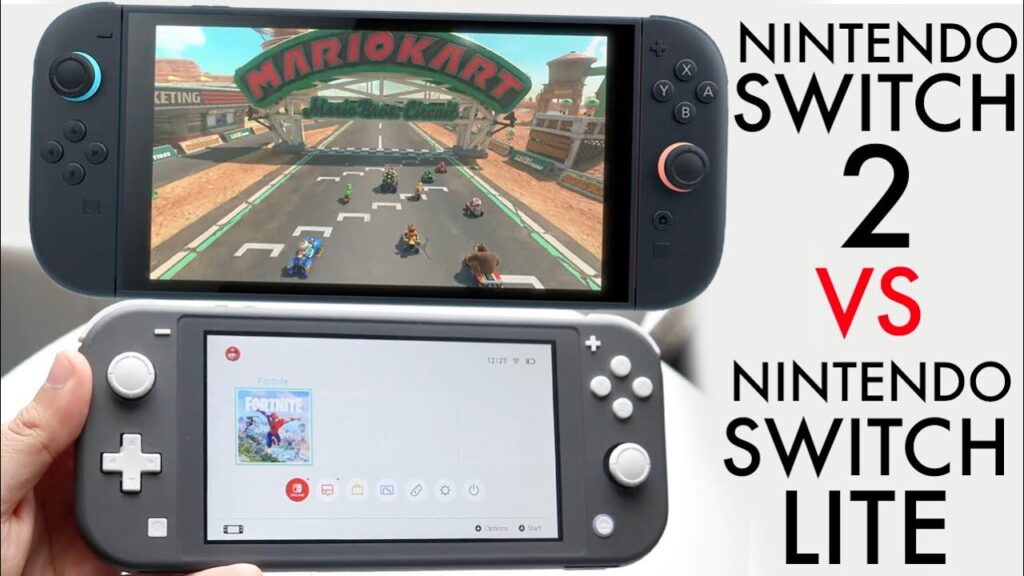
The expected direction for Switch 2 Lite is simplicity. Possible changes include a smaller screen, the removal of detachable Joy-Con controllers, or even eliminating the dock entirely.
Those cuts would reduce manufacturing costs, but they would also mean giving up some of the features that define the standard model. Patents Watch has noted that the cost challenge remains significant, especially because the higher price of Switch 2 may still not fully offset production expenses.
Nintendo has also recently filed four confidential designs with EUIPO. Those designs may be linked to the easier-to-replace battery update, though they could also point to a new console or controller model.
Cost pressure is shaping the broader product line
The business case for a compact, cheaper model is strengthened by Nintendo’s own spending trends. The company has reported a sharp rise in research and development costs in its latest fiscal figures.
That adds another layer to the hardware challenge in Europe, where lower-priced devices usually require compromises in both features and components. A Switch 2 Lite would therefore be more than a simple variant; it would be a response to regulation, pricing pressure, and the need to keep Nintendo’s ecosystem accessible.