


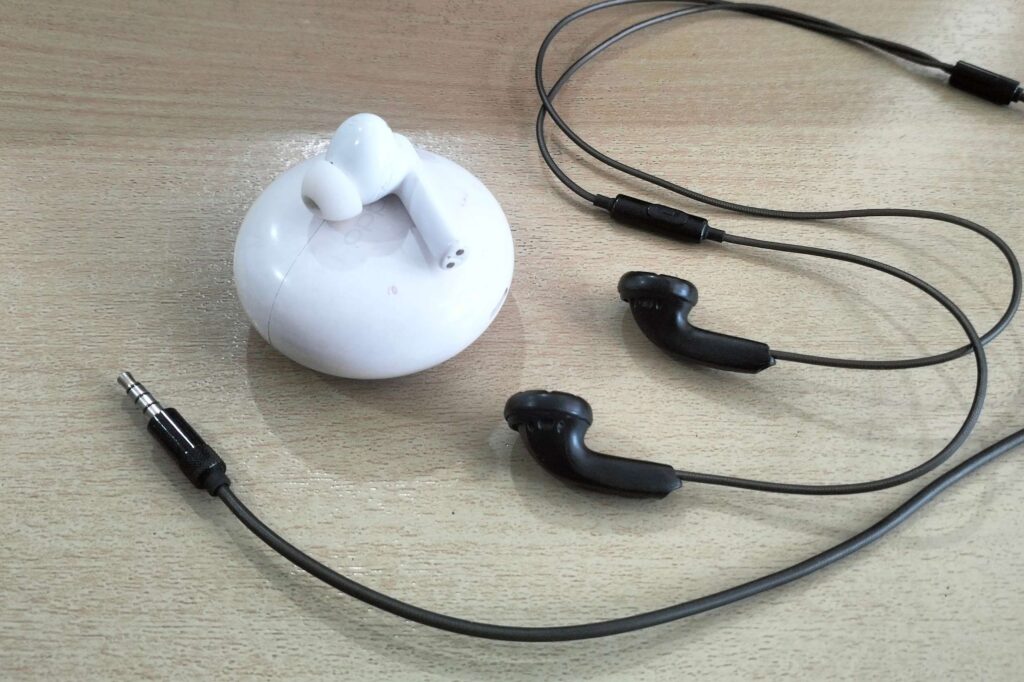
Wired earphones are quietly regaining attention among younger users, including Gen Z, who were once closely associated with TWS devices. The shift is notable because wireless earbuds had long been seen as the cleaner, more modern choice for everyday listening.
That preference is now being challenged by a simpler option. For many users, especially those focused on value and sound quality, wired earphones are being viewed as the more practical purchase.
Why the wired option is drawing interest again
Price is one of the strongest reasons behind the renewed demand. Wired earphones are generally cheaper, making them easier to buy for users who want a functional audio device without paying more for wireless convenience.
Sound quality is another major factor. Because audio does not need to be compressed over a Bluetooth connection, wired earphones are often perceived as delivering a more stable listening experience with less delay.
That lower latency matters in daily use. It can make wired earphones feel more comfortable for music, video playback, and other activities that depend on precise audio timing.
Battery life also gives wired models an advantage that is easy to understand. They do not need to be charged, so they can be used immediately without worrying about power running out during use.
This also makes them more convenient in routine settings. Users do not need to carry a charging case or remember to top up another device before leaving home.
From a technical standpoint, wired earphones are also seen as the simpler option. The absence of a battery reduces the number of additional components that users need to manage.
A generational shift in listening habits
The trend is being read as a change in taste between generations. Gen Z grew up in an era when smartphones and TWS devices were already part of daily life, so not everyone in the group experienced wired earphones as the default choice.
As interest in wired audio grows again, some of that audience appears to be discovering advantages that older users already knew well. For many millennials, the appeal of cables never fully disappeared.
Online comments reflect that view as well. Some users have noted that millennials preferred wired earphones long before the current wave of interest returned.
The resurgence does not mean TWS has lost its place entirely. Wireless earbuds still offer freedom from cables and remain attractive for users who prioritize mobility.
What really matters for safety
Questions about TWS safety also continue to surface, especially around radiation. Because Bluetooth devices sit close to the ear for long periods, the concern often comes up whenever wireless audio is discussed.
Doctors, however, have not found strong evidence that Bluetooth earphones are more dangerous than wired ones. The signal and radiation involved are described as low energy.
That means the bigger risk is not the connection type itself. The real concern is listening behavior, especially when volume is kept too high for too long.
Those habits can affect hearing whether a user chooses TWS or wired earphones. As a result, the decision is increasingly coming down to personal priorities rather than fear of wireless technology.
Some users want maximum mobility, while others want stable sound, a lower price, and a device that is ready the moment it is plugged in. In that trade-off, wired earphones are proving that a basic design can still meet the most important needs.