


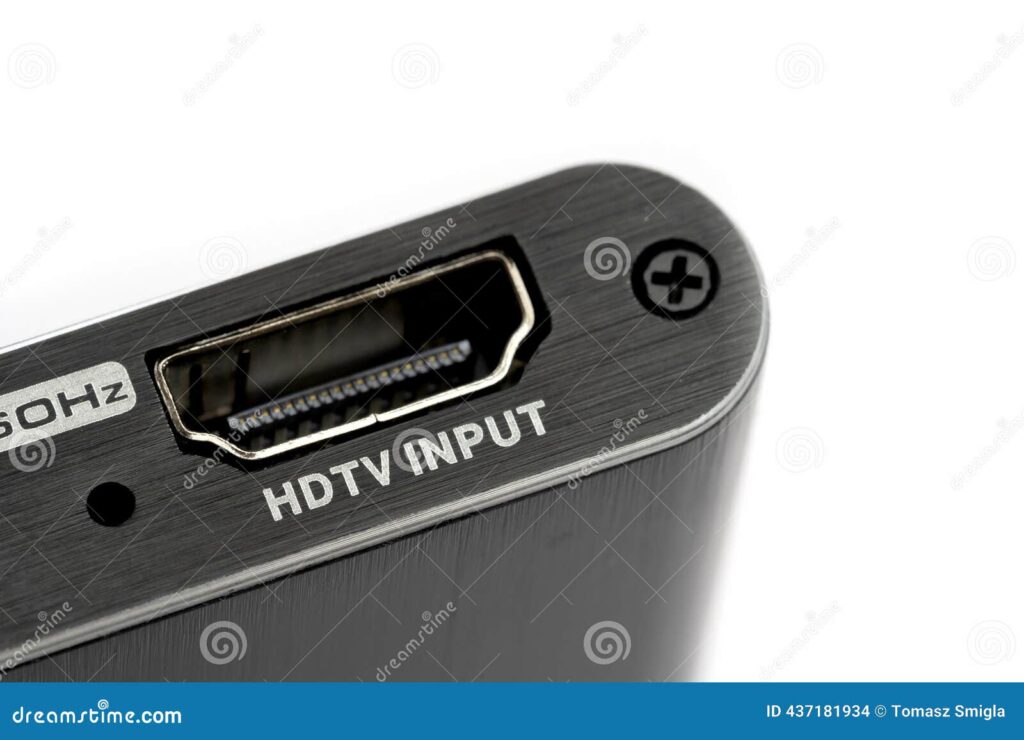
The HDMI 2.2 label is set to appear on TVs, monitors, and gaming devices, but the version number alone will not guarantee top-tier performance. Buyers will need to read the specification sheet closely, because a device carrying the HDMI 2.2 mark does not automatically deliver the full 96Gbps bandwidth.
That distinction matters as the industry prepares for a new HDMI generation that is expected to arrive in products from 2027 onward. On paper, HDMI 2.2 represents a major leap over HDMI 2.1, but the final implementation will still depend on each manufacturer’s choices.
One label, different capabilities
HDMI 2.2 was designed as the successor to HDMI 2.1 with far higher data capacity. Where HDMI 2.1 tops out at 48Gbps, HDMI 2.2 can reach up to 96Gbps, effectively doubling throughput for future TVs, monitors, home theater gear, and gaming setups.
The catch is that full-bandwidth support is optional. Manufacturers may still advertise a product as HDMI 2.2 even if it only uses one of three available bandwidth levels: 64Gbps, 80Gbps, or 96Gbps.
That situation echoes the HDMI 2.1 era, when many premium TVs did not offer full support across every HDMI port. For buyers, the implication is clear: the words “HDMI 2.2” on the box will not tell the whole story.
What matters more is the detail behind each port and its actual capability. The number of ports that support the highest specification, the bandwidth limit on each port, and the display features that are truly active will determine the real value of a TV.
What HDMI 2.2 is designed to do
Technically, HDMI 2.2 opens more room for resolutions and refresh rates that have been difficult to achieve without compromise. The standard supports uncompressed 4K at 240Hz, uncompressed 8K at 60Hz, and 4K at 480Hz with chroma subsampling.
When Display Stream Compression is enabled, the capability rises even further. The specification is said to support scenarios such as 8K at 240Hz and 1440p refresh rates above 1,000Hz.
HDMI Organization has also said that testing for several 4K 240Hz TVs is underway. That suggests HDMI 2.2 is not only about higher resolution, but also about smoother motion and gaming performance.
For home users, the upgrade is not limited to high-end PC or console gamers. Future TVs, premium monitors, and home theater devices can all use the extra bandwidth to combine higher resolution, frame rate, and image quality.
More than just picture quality
HDMI 2.2 also introduces a new feature called LIP, short for Latency Indication Protocol. It is meant to improve audio and video synchronization between TVs, soundbars, and AV receivers.
Audio and picture sync issues remain common in many home theater systems. For that reason, a feature like LIP could matter just as much for film and series viewers as the headline refresh-rate gains.
On the technical side, HDMI 2.2 continues the evolution that began with HDMI 2.1. That earlier standard moved away from the older TMDS signaling method and adopted Fixed Rate Link, or FRL.
HDMI 2.2 adds FRL2 as the next development step. The approach is expected to make adoption smoother and may help reduce compatibility problems that appeared during the early phase of HDMI 2.1.
When the devices are likely to arrive
The HDMI 2.2 standard was first introduced at CES 2025 and released in the same year. According to Rob Tobias, CEO and president of HDMI Licensing Administrator, chip makers have already prepared FRL2 silicon samples while certification and testing are now in progress, as reported by FlatpanelsHD.
The timeline appears similar to the HDMI 2.1 transition. That standard was announced in 2017, but it did not appear in LG OLED TVs until about two years later.
Using the same pattern, HDMI 2.2 devices are expected to begin arriving in 2027. That gives the market time before the new label fills store shelves, but consumer expectations are best set now.
When TVs with HDMI 2.2 eventually reach the market, the version number will not be enough to judge the quality of the port. For buyers looking for a long-lasting device for consoles, PCs, and modern audio systems, the specification sheet will matter most before paying extra.