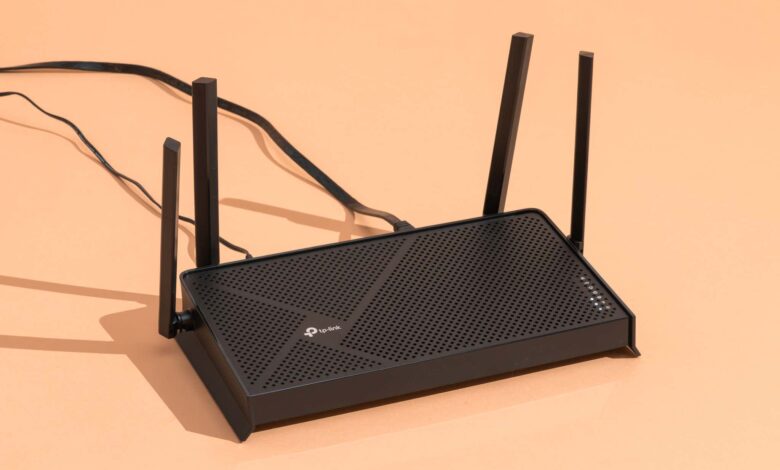
Many households are postponing a router upgrade because Wi-Fi 7 feels like the obvious next step. In practice, that move is often premature, while Wi-Fi 6 already delivers clear benefits for the devices people use every day.
The upgrade question is not only about the wireless standard printed on the box. A new router can also bring a stronger processor, more memory, and, on some models, faster Ethernet ports that improve the network as a whole.
Why a new router feels faster even for older devices
For users moving from Wi-Fi 5 to Wi-Fi 6 in a similar class of router, the biggest change is not limited to the radio side. The hardware inside the device often handles traffic more efficiently, which matters as homes connect more devices at once.
In real-world use, Wi-Fi 5 is often said to have multi-gigabit bandwidth on paper, but actual speeds usually land around 200–600 Mbps. Wi-Fi 6 does not magically transform Wi-Fi 5 devices, yet older hardware can often stay closer to the upper end of that range when the network is busy.
Household networks are carrying more than before
Modern homes now rely on a long list of connected devices, from smart speakers and smartwatches to consoles, TV boxes, and even appliances such as washing machines. Wi-Fi 5 was designed for a smaller number of high-speed connections, while Wi-Fi 6 was built with many simultaneous requests in mind.
That difference matters for stability as much as for speed. A more efficient router can help reduce congestion, improve range, and keep latency lower when several devices are competing for bandwidth at the same time.
Many devices are already ready for Wi-Fi 6
Some of the strongest arguments for Wi-Fi 6 come from the devices people already own. All PlayStation 5 models support it, and the iPhone 11 was the first iPhone to include Wi-Fi 6 support.
Many budget laptops released in recent years also support the standard, along with newer smart TVs and smart speakers. A quick device check may reveal that most of the gear used daily is already ready for Wi-Fi 6, even if each device benefits in different ways.
Wearables such as smartwatches and appliances like refrigerators do not always gain much from higher wireless speeds. By contrast, smartphones and game consoles tend to benefit more clearly from a more efficient connection.
Pricing has reached a more practical point
Wi-Fi 6 was officially released in September 2019 and has now become a mainstream standard. As a result, Wi-Fi 6 routers generally sit in a price range that is similar to older Wi-Fi 5 routers or mesh systems bought a few years ago.
There are now plenty of Wi-Fi 6 options across nearly every budget tier, while Wi-Fi 7 models are becoming more affordable but still cost more than many buyers want to spend. One example is the TP-Link AXE5400 Tri-Band Wi-Fi 6E Router, which is listed at $74.
Wi-Fi 6E offers room to grow
The “E” in Wi-Fi 6E adds the 6 GHz band for Wi-Fi 6E devices, creating space for higher speeds and more simultaneous connections. That makes some Wi-Fi 6E routers a practical stepping stone for users who want flexibility without moving straight to a full mesh setup.
Models like that can also be expanded with mesh units later. For households that are not ready to rebuild the entire network at once, Wi-Fi 6 remains a sensible upgrade with immediate benefits and a path for future expansion.