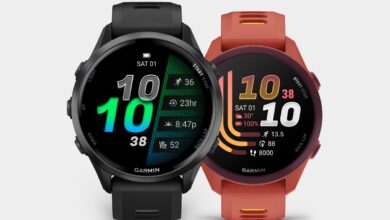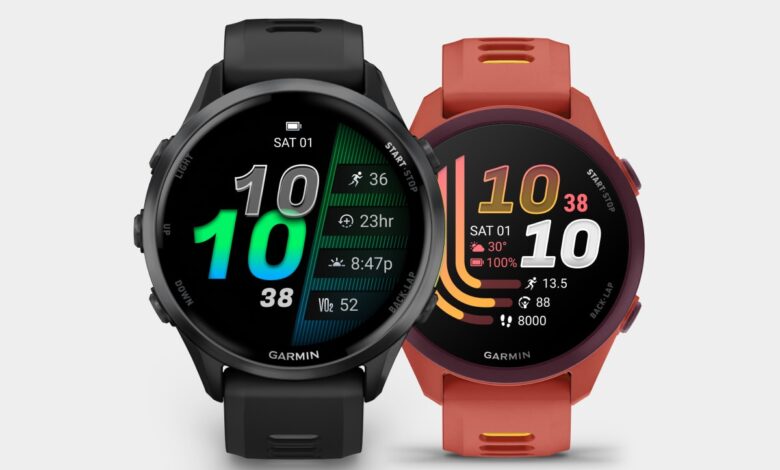
Garmin’s Race Time Prediction feature is drawing renewed scrutiny from runners who rely on training data to gauge performance. The debate centers on a simple question: can a watch be too optimistic even when the athlete feels they have already pushed as hard as possible?
The issue is more than a disagreement over numbers. It also highlights the tension between objective tracking and the mental side of racing, where effort, confidence, and day-of-race conditions can all shape the final result.
A prediction that feels out of reach
Race Time Prediction combines data from as many training sessions as possible and blends it with daily activity. The goal is to estimate what a user could deliver over a given distance when running near maximum effort.
For serious runners, that estimate can be useful for finding the right pacer, choosing an appropriate training partner, and planning race strategy with more precision. When the projection is accurate, it becomes one of the more practical tools in Garmin’s ecosystem.
Problems start when the projected time feels far beyond what the runner believes is realistic. In a discussion on Reddit, one athlete said they could complete 5 kilometers in 25 minutes when running at what they considered maximum effort.
Garmin, however, projected a 21-minute 5K for that same runner. The four-minute gap quickly became the focus of debate, especially because that kind of improvement is rarely realistic for many amateur runners in a short period.
Mental effort may not match physical effort
Some commenters argued that the feeling of being fully spent does not always mean the body has actually reached its true limit. From that perspective, a runner may stop sooner because of psychology rather than physiology.
That view places mental resilience at the center of performance. In a race, adrenaline, competition, and the presence of runners ahead often unlock a little more pace than training sessions reveal.
Other users noted that Garmin’s estimate may reflect ideal race conditions rather than ordinary training runs. One Reddit comment suggested the prediction is calculated with an ideal scenario in mind, which can make it look higher than a typical workout result.
Training data and perceived effort do not always align
Practical advice also surfaced in the discussion, including the use of a chest strap for more accurate heart-rate readings. The suggestion points to a broader issue: what a runner feels and what the device records are not always the same thing.
In the case being discussed, the runner’s average heart rate during the test run was described as high, but not at maximum. That difference led to the possibility that the perceived effort and the recorded physical load were not fully aligned.
Such gaps make Garmin’s prediction difficult to judge in absolute terms. For some athletes, the number on the screen feels useful and motivating, while for others it appears too aggressive compared with actual race-day output.
User experience remains inconsistent
The Reddit conversation also showed that Garmin’s forecast does not land the same way for every user, even among people who consider themselves strong runners. Some said their predictions were close to reality, while others saw a much larger mismatch with their real results.
That inconsistency suggests Race Time Prediction depends on more than training volume alone. Body response, mental state, and the conditions at the time of measurement all appear to shape the final estimate, which means a single number cannot tell the full story of an athlete’s performance.