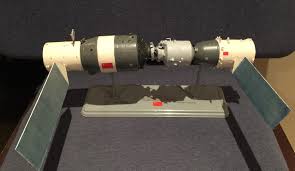
China is preparing a major expansion of its Tiangong space station, a move designed to relieve growing pressure on orbital research capacity and support a much busier future in space. The station’s current T-shaped layout will be upgraded into a cross configuration by adding new modules.
The change is more than a structural upgrade. It reflects how Tiangong has evolved from a temporary living space for astronauts into a busy orbital laboratory that now has to handle more research, more cargo flights, and more international cooperation.
Why the expansion is becoming necessary
According to China Media Group, the first phase of the expansion will add a new multifunctional module in the 20-ton class, which will dock to the core module. That addition is expected to make the station more flexible for different operations.
The upgraded design will also create more docking ports, extra hatches for extravehicular activity, and more room for storage and experiments. In practical terms, Tiangong is being prepared for heavier use and more complex orbital work.
Research demand is outpacing current space
Qian Hang of the Academy of Launch Vehicle Technology said the need for expansion is tied to the rising number of experiments being conducted in orbit. He noted that the available equipment and laboratory space are becoming increasingly constrained.
Tiangong has already supported 267 scientific and applied projects since the station began operations. Over the past year alone, 86 new experiments were added in orbit, while 1,179 kilograms of scientific materials were sent into space and 105 kilograms of experimental samples were returned to Earth.
That activity also produced more than 150 terabytes of data. The numbers show that Tiangong’s role as a research platform continues to grow faster than its current physical capacity.
More docking traffic, more backup space
The station is also expected to face heavier traffic from crewed and cargo missions. Qian said that a higher mission tempo could lead to conflicts over docking ports and leave too little emergency reserve space.
By adding more docking points, multiple spacecraft will be able to dock at the same time without disrupting main operations. The expansion is intended to prevent congestion before it becomes a problem.
Longer missions are another factor. Tiangong can currently house three astronauts at once, but future missions are expected to involve larger crews and longer stays in orbit.
That means the station will need stronger support in living space, exercise equipment, and emergency systems. China wants Tiangong ready for sustained operations rather than short visits alone.
Built to do more than just grow
Qian said the expansion is not simply about increasing volume. The station is expected to take on spacecraft maintenance, equipment repair, and a wider range of orbital services.
He also pointed out that the current layout still has limits for extravehicular work and supply storage. The goal is to turn Tiangong into a more complete space hub with broader mission coverage.
Yang Yuguang, chairman of the Space Transportation Committee of the International Astronautical Federation, said a larger station would open more opportunities for research. He added that the expansion could allow more research institutions to carry out scientific work in orbit.
International cooperation is another reason the upgrade matters. China has opened the station to the world, so potential participation from other countries in joint research and crewed missions also adds to the need for more capacity.
A long-term design that could reach six modules
The expansion is already part of Tiangong’s original development plan. Qian described it as a standardized design with a unified interface between modules, allowing new sections to be integrated quickly without major modifications to the existing station.
In a later stage, two additional laboratory modules could also be attached to the new expansion module. That detail was outlined by Pang Zhihao, a science communicator focused on space exploration technology.
Yang Hong, chief designer of China’s space station system, said the long-term plan would raise the configuration to six modules. If that stage is completed, the station’s total mass would increase from 90 tons to as much as 180 tons.
In that configuration, each module could be assigned to a specific research field, while crew capacity would also rise significantly.
How Xuntian fits into the orbital plan
One of the most notable additions in the long-term vision is the Xuntian Space Telescope. It is scheduled for launch in 2027 and will share the same orbit as the station.
Xuntian will not be permanently attached to Tiangong, so its observations remain precise and are not affected by astronaut movement or equipment vibrations. When servicing is needed, however, it will be able to dock with Tiangong.
That shared-orbit design broadens Tiangong’s role into an orbital complex that combines crew living quarters, scientific research, technology verification, and astronomical observation. For China, the expansion creates room for a more organized and more diverse rhythm of work in orbit.