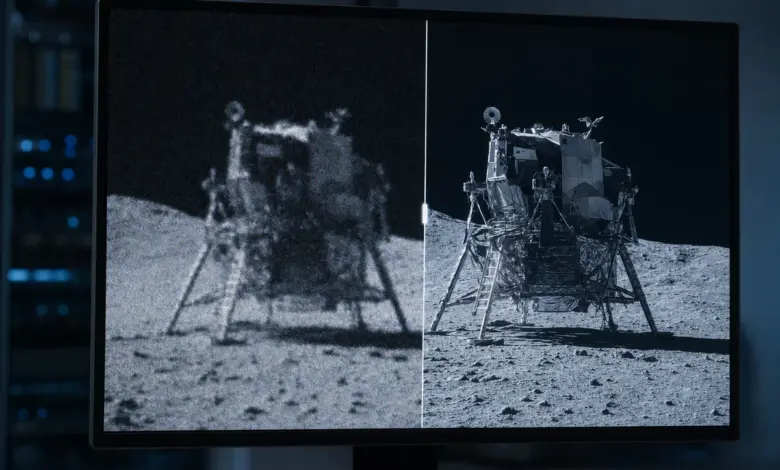
Adobe has reached an agreement to acquire Topaz Labs, a move that could reshape how AI-powered photo and video tools are delivered inside Creative Cloud and Firefly. The company says the Topaz Labs apps will still remain available as separate products after the transaction closes.
For users of Photoshop, Lightroom, and Premiere, the deal points to a broader integration of Topaz technology into existing workflows. Adobe has already used Topaz Labs as a partner model for Bloom and Gigapixel AI in Photoshop, making a wider role for its tools a logical next step.
Local AI processing becomes the key advantage
One of Topaz Labs’ most important strengths is its focus on local AI processing. Adobe specifically highlighted Neurostream, Topaz’s technology that allows large and complex AI models to run locally on a device, as part of the acquisition.
That capability fits neatly with Adobe’s broader push to expand its AI ecosystem while keeping some processing close to the hardware. It also gives the company access to a technology base that has already been built around performance-heavy enhancement tools for creators.
What Topaz Labs brings to Adobe
Topaz Labs Studio is a multi-app suite built to improve both photos and videos with AI. Its lineup includes Video for slow motion, stabilization, and video upscaling, plus Photo for focus repair, noise removal, and image resolution enhancement.
| Topaz Labs Product | Main Use |
|---|---|
| Video | Slow motion, stabilization, and resolution improvement |
| Photo | Focus correction, noise reduction, and upscaling |
| Gigapixel | Upscales low-resolution images up to 6x |
| Image | Browser-based image correction and enhancement |
| Mosaic | Restores old photos |
| Bloom | Improves clarity and detail |
| Astra | Generative upscaling for video |
Topaz Labs also offers Gigapixel, a tool known for enlarging low-resolution images by up to 6x. In addition, Image, Mosaic, Bloom, and Astra cover browser-based enhancement, old-photo restoration, detail improvement, and generative video upscaling.
Business model and deal timing
Topaz Labs uses a subscription model similar to Adobe Creative Cloud, with annual plans, annual plans billed monthly, and monthly subscriptions. Adobe expects the transaction to close in the second half of 2026, after which Topaz Labs CEO Eric Yang will remain in charge of the team.
Adobe and Topaz Labs have not yet explained whether pricing for Topaz users will change, or whether future Topaz tools inside Adobe products will follow the same generative credits system used by some partner models in Photoshop. That detail will be clarified only after the acquisition is finalized.
For now, the clearest signal is that Adobe wants to bring more of Topaz Labs’ AI capabilities into its own products without immediately removing Topaz as an independent app family. The result could give creators more enhancement tools inside Adobe’s ecosystem while keeping the standalone Topaz Labs experience in place.