Waiting for an interview result can feel uncertain, especially when no update arrives for several days. In that situation, a follow-up email can help a candidate stay visible while still appearing professional and respectful.
The timing matters. Career seekers are generally advised to send a follow-up email about 3 to 7 business days after the interview, unless the recruiter has already given a clear announcement schedule.
Why timing makes a difference
If the interviewer says the result will be shared in two weeks, the follow-up is better sent near the end of that period. Reaching out too early, such as the day after the interview, can create the impression of impatience.
This approach helps preserve a professional tone. It also shows that the candidate understands the hiring process and respects the timeline already communicated by the company.
What a follow-up email should include
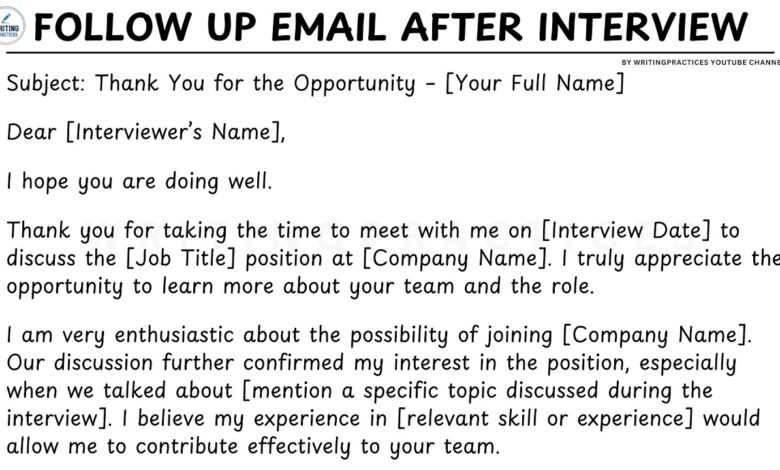
A clear subject line is the first step. A format such as “Follow Up Interview – [Your Name] – [Position Name]” helps the recruiter immediately understand the purpose of the message.
The opening should begin with thanks for the interview opportunity. After that, the candidate can briefly remind the recruiter of their name and the role they applied for.
The main point of the email should remain polite and direct. A brief question about the recruitment status is enough, as long as the wording stays soft and does not sound demanding.
The closing should also stay courteous. A short thank-you message and a hopeful tone for the next update are usually enough to end the email on a professional note.
A simple structure that works
A typical follow-up message starts with a greeting to HR, then moves to a short self-introduction. The candidate then mentions the position and reminds the recipient that the interview has already taken place.
After that, the email can express appreciation for the time and attention given during the interview. It can then ask whether there is any update on the hiring process.
This kind of message keeps the tone positive and shows continued interest in the role. At the same time, it avoids pressure and leaves room for the recruiter to respond on their own schedule.
Why follow-up is still important
Follow-up after an interview is not considered inappropriate when handled carefully. In hiring, communication style can matter just as much as the content of the answers given during the interview itself.
A well-written email can strengthen a positive impression and give the candidate a chance to seek clarity without crossing professional boundaries. For many applicants, that balance is what makes the follow-up useful rather than awkward.