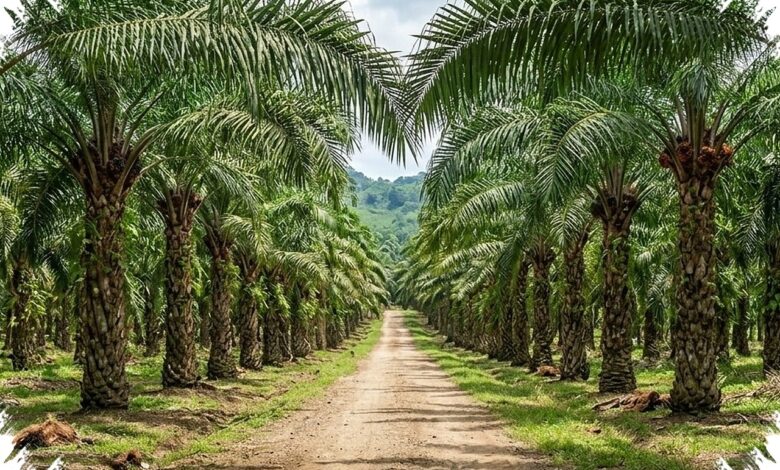
Palm oil wastewater has long been seen as an environmental burden, but new research is showing that it can also become a raw material for useful products. Through microalgae, Palm Oil Mill Effluent or POME is being tested as part of a cleaner industrial cycle.
The appeal is straightforward: the same process that helps reduce pollution can also produce biomass with economic value. That combination is pushing microalgae higher on the agenda for industries looking for practical sustainability solutions.
Why POME matters
Indonesia is the world’s largest producer of palm oil, which means the scale of its liquid waste is also enormous. Around 60% of every ton of fresh fruit bunches processed can turn into POME.
If it is not properly managed, the waste can pollute surrounding ecosystems. The Food and Agriculture Organization has stressed that sustainable waste management is an important part of building a more environmentally friendly agricultural industry.
Why microalgae is drawing attention
Microalgae are attracting research interest because of their high photosynthetic efficiency, which is estimated to be 10 to 50 times greater than that of land plants. They are also known for their ability to absorb carbon efficiently.
Studies cited in the article show that 1 kilogram of microalgae biomass can absorb about 1.83 kilograms of carbon dioxide. Microalgae are also estimated to produce around 50% of the oxygen on Earth, underscoring their importance in natural systems.
| Key Figure | Microalgae Detail | Environmental Relevance |
|---|---|---|
| 10 to 50 times | Higher photosynthetic efficiency than land plants | Supports fast biomass growth |
| 1 kilogram | Microalgae biomass can absorb about 1.83 kilograms of CO2 | Helps with carbon capture |
| Around 50% | Estimated share of oxygen produced by microalgae | Shows its major ecological role |
What the research is finding
Microalgae can grow by using palm oil waste as a growth medium, which means a material once treated only as a problem can become a biological input. That approach gives industries a way to improve waste quality while creating new biomass at the same time.
Research from BRIN, Diponegoro University, and several publications in the Journal of Water Process Engineering points to strong results. In those studies, microalgae were reported to reduce pollutant levels in POME by more than 80%.
More than waste treatment
The value of the process does not stop at cleaning wastewater. The biomass produced by microalgae can be processed further into biodiesel, organic fertilizer, animal feed, and even ingredients for cosmetics and pharmaceuticals.
That makes the method more than a disposal solution. It creates a pathway where waste handling can also generate new revenue-bearing materials.
The circular economy link
This approach fits the circular economy model promoted by the United Nations Environment Programme. In that model, waste is not simply discarded but returned to the production cycle as a useful resource.
Resource efficiency becomes the central idea, and technologies that can connect pollution reduction with product creation are increasingly relevant for the future of industry.
What still stands in the way
Despite the promise, microalgae-based treatment still faces two major hurdles: cost and production scale. Success in the laboratory does not always translate easily into wider industrial use.
Technology development, process efficiency, and investment readiness will shape how quickly the method can be adopted on a larger scale. Even so, the direction of the research suggests that microalgae is moving beyond a laboratory concept.
Its role is now being discussed in the broader context of green industry and modern waste management. Support from innovation, policy, and collaboration between researchers and industry will likely determine whether that potential becomes a working system in the field.
As pressure grows for the palm oil sector to improve its environmental performance, waste treatment is becoming a key measure of progress. Turning POME into a resource through microalgae offers one possible path for an industry that wants to remain productive while reducing its footprint.