


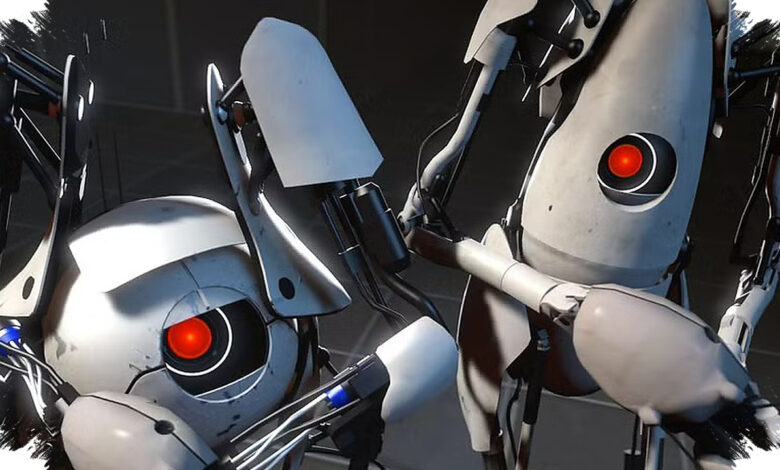
Portal 2 has surfaced as one of the most interesting early compatibility signals for Steam Frame, but the result is not a clean victory. Valve’s classic game has been labeled “Playable,” which means it runs well enough to count, yet still falls short of a fully native fit on Valve’s own upcoming VR hardware.
That detail matters because Steam Frame remains the most mysterious product in Valve’s current hardware lineup. Steam Controller is already on sale and Steam Machine has entered pre-order, but Valve has shared far less about its VR headset, making every compatibility test a useful clue.
What the “Playable” label actually means
According to Brad Lynch’s findings on X, later highlighted by Notebook Check, Portal 2 has cleared several basic compatibility checks for Steam Frame. The game displays Steam Frame button glyphs correctly, the in-game text remains readable, and the default graphics settings behave as expected.
Those are the kinds of details that usually decide whether a game feels ready on a new device. If controls are mapped properly, the interface is legible, and the standard settings work without issue, the foundation is in place for a smooth start.
| Compatibility Check | Status on Steam Frame |
|---|---|
| Button Glyphs | Displayed correctly |
| Text Readability | Readable in-game |
| Default Graphics Settings | Working properly |
| Overall Rating | Playable |
The problem appears in the next layer of testing. Portal 2 does not yet match Steam Frame’s native resolution, and the compatibility note also warns that performance may drop.
Resolution is the real obstacle
That limitation stands out because Steam Frame is expected to operate as a VR headset, where display fit matters far more than it would on a standard screen. A mismatch in native resolution can weaken the final visual result even if the game launches and responds correctly.
The performance warning reinforces that point. “Playable” is not the same as optimized, and in this case the label seems to reflect a game that works across several core areas while still missing the polish needed for a truly native experience.
There is also a touch of irony in the situation. Portal 2 is one of Valve’s most iconic titles, yet one of Valve’s own games still does not line up perfectly with the company’s new hardware.
An old game meeting new hardware demands
Portal 2 was released in 2011, long before modern VR headset expectations became part of the design conversation. Its technical assumptions were built for a very different era of PC hardware and display targets.
That age helps explain why the game can pass basic checks without becoming a perfect showcase for Steam Frame. The engine, graphics pipeline, and performance expectations were not created with a headset like this in mind.
Even so, the result is not a dead end. “Playable” still suggests that the game functions acceptably in many of the areas that matter most, and it leaves room for Valve to improve the experience later through software updates.
Why this matters for Steam Frame
The compatibility rating is important beyond Portal 2 itself because Steam Frame has offered very few public details so far. Every early signal helps shape the picture of how Valve is preparing its VR device for real-world software support.
With Steam Controller already available and Steam Machine already in pre-order, Steam Frame now stands as the least visible member of Valve’s hardware push. That makes a compatibility report on a first-party title especially notable.
For now, Portal 2 shows that the basics are coming together, but native-resolution support and performance tuning still appear to be works in progress. The game can run, the controls make sense, and the interface holds up, yet the headset still does not present it quite the way a fully optimized Steam Frame experience should.