China has paired its proposed global AI organization with concrete offers of training and weather-service technology for other countries. The approach positions Beijing as a cooperation partner for developing nations while it faces US restrictions on advanced AI chips and semiconductors.
Under the initiative, China plans to provide 5,000 AI training opportunities over five years and share AI technology for weather services with 30 countries. It also seeks to expand regional collaboration with ASEAN, the African Union, and BRICS.
Cooperation commitments
The announced programs form part of China’s broader effort to build AI capacity beyond its domestic market. They also support Beijing’s push to expand its technological influence through international partnerships.
| Program | China’s commitment | Target |
|---|---|---|
| AI training | 5,000 opportunities over five years | Developing countries |
| AI weather technology | Sharing weather-service technology | 30 countries |
| Regional cooperation | Expanded AI collaboration | ASEAN, African Union, and BRICS |
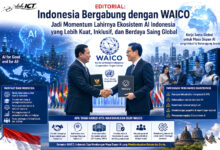
China introduced these commitments alongside plans for the World Artificial Intelligence Cooperation Organization, known as WAICO. The organization is intended to discuss AI standards, governance, and development cooperation among participating countries.
WAICO is reported to have drawn participation from around 29 countries, with particular attention directed toward developing nations. The proposal gives China a new platform to advocate a broader role in shaping global AI rules.
A response to technology restrictions
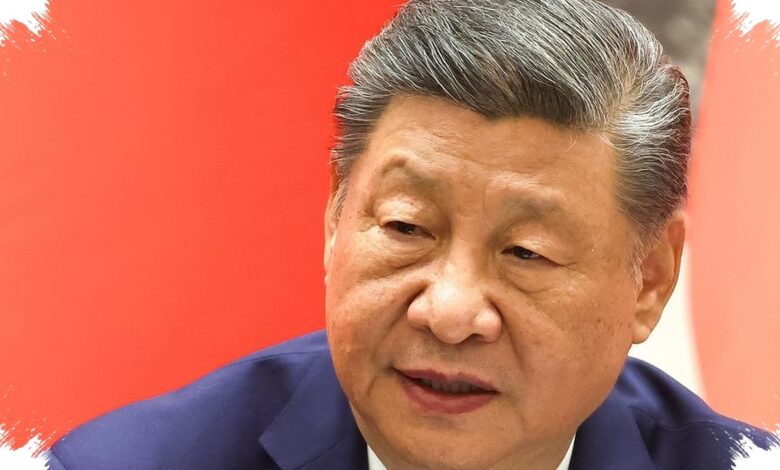
President Xi Jinping outlined the direction at the opening of the World Artificial Intelligence Conference 2026 in Shanghai on Friday, July 17, 2026. He called for international collaboration and opposed technological dominance by a small number of countries.
Xi said AI systems should remain under human control and should be governed through mechanisms that reduce security risks. He also argued that AI should function as a global public good with wider access.
Those remarks carried an implicit criticism of US export restrictions on advanced AI chips and semiconductor technologies to China. Washington has applied the measures for several years on national security grounds.
Xi warned that technological barriers could widen digital capability gaps between countries. China has therefore presented cross-border cooperation as its main route for broadening access to AI development.
Governance model faces scrutiny
Kompas Tekno reported that WAICO is seen as an effort by China to provide a counterweight to AI governance initiatives largely led by Western countries. At the same time, Beijing’s proposed governance model continues to draw attention from some observers in the West.
Critics have noted that AI regulation in China remains closely linked to government censorship policies and data controls. Beijing maintains that security, ethics, and human oversight must be central to the technology’s development.
Domestic technology on display
The Shanghai conference was not limited to diplomacy and governance discussions. It also gave Chinese AI companies an opportunity to display technologies that reflect the country’s effort to reduce reliance on US technology.
Moonshot AI introduced its open-weight Kimi K3 AI model at the event. Huawei also showcased the Atlas 950 SuperPoD AI computing system during technology demonstrations in Shanghai.
The combination of WAICO, overseas technology programs, and domestic product demonstrations illustrates China’s wider AI strategy. Beijing is seeking recognition not only as a technology developer, but also as a participant in setting the direction of global AI governance.